Req 4a — Play the Original Game
Some of the best game design lessons happen when you start with an existing game instead of a blank page. This requirement is your control test. Before you change anything, you need to understand how the original version works.
Pick a game with clear rules and enough structure that a change will matter. Sports, card games, playground games, and classic tabletop games all work well. The best choice is a game your group can actually play more than once without a huge setup.
What Makes a Good Choice?
Choose a game that meets three tests:
- the objective is easy to explain
- the rules are stable enough that players know what “normal” feels like
- one change could realistically affect decisions, emotions, or outcomes
Kickball works because changing the number of bases or outs would matter. A card game works because changing hand size or scoring could shift strategy. Chess works because even a small rule change can reshape the whole experience.
Before you play
Build a useful baseline
- State the objective: How does a player or team win?
- Summarize the normal rules: Focus on the rules that most shape decisions.
- List the players: How many people are playing, and in what format?
- Note the resources: Field, cards, timer, pieces, score sheet, or other materials.
- Record first impressions: What do players expect before the game begins?
Keep the Summary Brief but Clear
Your summary does not need every tiny rule. It should cover the main loop of play. In other words, what do players do again and again until the game ends?
For example, in a card game, the loop may be draw, choose, play, score, repeat. In a sport, it may be possession, movement, defense, scoring chance, reset. In a board game, it may be move, collect, trade, block, score.
If you cannot explain the game clearly in a short paragraph, you may not understand the design well enough yet.
Play It Normally First
This part is important. Do not rush to the “creative” part. If you skip the normal playthrough, you will not know whether later changes actually mattered.
Watch how players behave under the default rules:
- Which choices come up most often?
- Where do players get excited or frustrated?
- Does the pace feel fast, slow, or uneven?
- Are some players more engaged than others?
- Does the game feel fair?
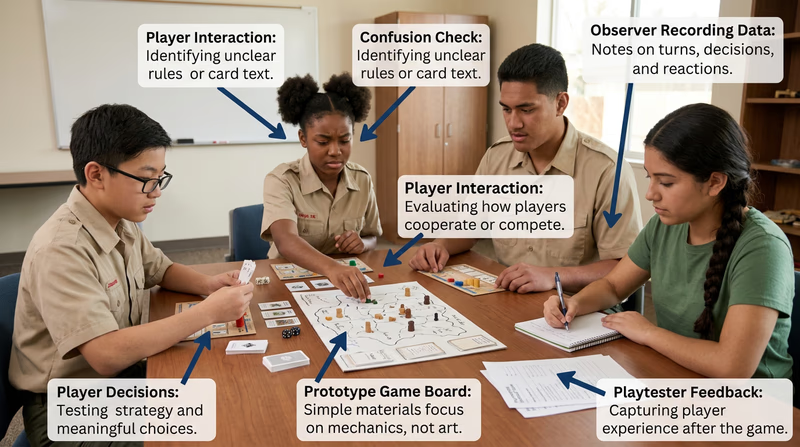
These observations will become very helpful in Req 4b and Req 4c.
Look for Pressure Points
Every game has “pressure points” — rules that strongly shape behavior. In basketball, the shot clock changes urgency. In hearts, the passing phase changes planning. In chess, piece movement defines everything. Pressure points are the best places to test rule changes later.
When you spot a pressure point, ask: if this one rule changed, what would players do differently?
Emotional Experience Counts Too
The requirement does not just ask about actions. It also leads toward player experience. Designers care about feelings because feelings drive memory and replay value. Did the normal version feel tense, silly, competitive, relaxed, or frustrating? Those emotional notes will help you measure the impact of each change later.
Common Sense Education — How Games Build Systems Thinking An education article that shows how games help players notice systems, rules, and cause-and-effect relationships.Next, you will become the designer by proposing rule changes before you test them.