Req 4b — Predict Rule Changes
This is where game design starts to feel like science. You are making a hypothesis: “If I change this rule, I think players will behave this way.” Good designers do not change rules randomly. They predict cause and effect.
The strongest changes are small enough to test clearly but big enough to matter. If you change ten things at once, you will never know what caused the result. If you change something too tiny, players may not notice.
Change One Lever at a Time
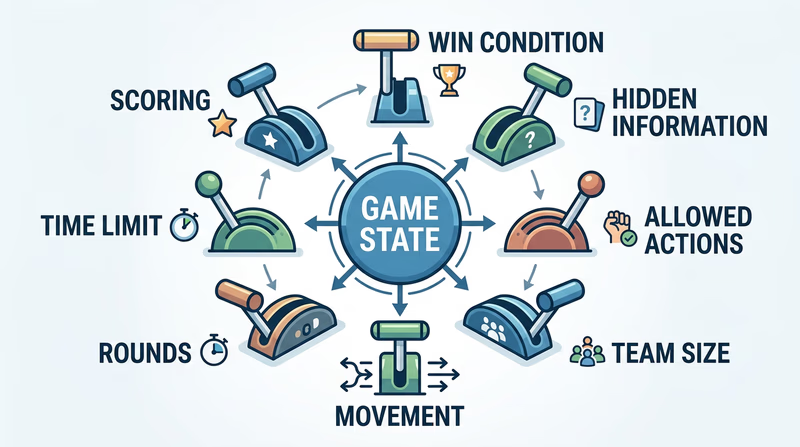
A lever is a rule that moves the rest of the system. Good levers include:
- scoring values
- time limits
- number of turns or rounds
- movement limits
- team size
- allowed actions
- information players can see or hide
- win conditions
When you change one lever, other parts of the game shift too. More points for a risky move may make players more aggressive. A shorter timer may make the game feel chaotic. A cooperative goal may reduce trash talk and increase planning.
For each rule change, record three things
This will make your later discussion much stronger
- What exactly changed? Write the new rule in one clear sentence.
- Why did you choose it? What problem or possibility were you testing?
- What do you predict? Explain how player actions and emotions will change.
Predict Actions and Feelings
A useful prediction includes both behavior and experience.
For example:
- “If we shorten the timer, players will take riskier actions and feel more pressure.”
- “If every player starts with more resources, the early game will feel friendlier and less punishing.”
- “If teams can only score from farther away, the game will become harder and players may feel more satisfied when they succeed.”
That is much stronger than saying, “It might be better.” Better in what way? Faster? Fairer? Funnier? More tense? More strategic?
Watch for Tradeoffs
Most design changes help something while hurting something else. That is normal. A faster pace may reduce downtime but also reduce thoughtful strategy. More randomness may increase surprise but lower fairness. Simpler rules may improve accessibility but reduce depth.
If you can identify a tradeoff before testing, you are already thinking like a real designer.
Try Several Different Kinds of Changes
Since the requirement says “several,” consider proposing three kinds of changes, such as:
- a change to objective or scoring
- a change to allowed actions
- a change to pace or structure
That mix will give you richer results in Req 4c, where you repeat the process with multiple changes.
Keep the Test Fair
Make sure the players understand the new rule before the round starts. If they are confused, your test may measure unclear instructions instead of game design. This lesson will matter again in Req 7a, where you write instructions for your own game.
IGDA — Game Design Resources Professional game development resources from the International Game Developers Association, including material on design and iteration.Now it is time to test those predictions with real players and real reactions.