Req 5b — Why Your Game Is Fun
This sounds simple, but it is one of the hardest questions in design. A game is not interesting just because it exists. Players need a reason to care.
That reason might be challenge, laughter, teamwork, story, creativity, competition, speed, discovery, or something else. In Req 1b, you explored different kinds of play value. Now you need to choose which value your own game is built to deliver.
Start with the Core Appeal
Ask yourself: if I invited someone to play this game tonight, what would I say to make them excited?
Your answer reveals the core appeal. Maybe you would say:
- “It is a fast bluffing game where nobody knows who to trust.”
- “You and your teammates race against the clock to rescue everyone.”
- “You get to build your own weird machine and see if it works.”
- “Every round creates funny arguments and surprise reversals.”
Those are all stronger than saying, “It is a game where players take turns.” Turns are structure. Appeal is the reason to care.
Match the Fun to the Audience
A family party game may need quick humor and simple rules. A strategy game for experienced players may need depth and tough decisions. A game for younger Scouts may need movement, clarity, and short rounds.
If your intended audience would not enjoy the kind of fun you are offering, the design will struggle no matter how clever the mechanics are.
Ways a game can attract players
Pick the ones that fit your design best
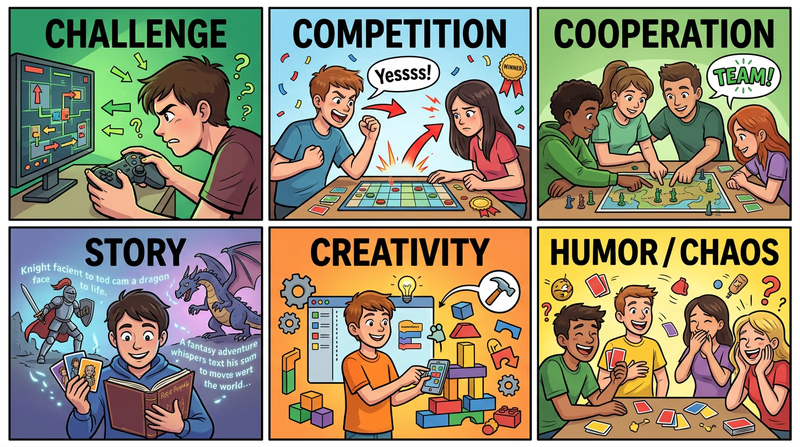
- Challenge: Players enjoy solving hard problems or mastering skill.
- Competition: Players want to beat an opponent or top a score.
- Cooperation: Players enjoy planning together and sharing success.
- Story: Players want to explore a world or role.
- Creativity: Players enjoy inventing, building, or customizing.
- Humor or chaos: Players enjoy surprise, laughter, and wild moments.
- Discovery: Players want to uncover new information, paths, or combinations.
Be Specific About the Experience
Try to finish this sentence: “Players will want to play my game because…”
Then keep going until the sentence includes real details. A strong answer might mention fast decisions, clever teamwork, dramatic reversals, or satisfying combos. A weak answer usually stays generic, like “because it is fun.”
Make Sure the Design Supports the Promise
If you say your game is fun because it is fast and exciting, but the rules force players to wait a long time between turns, your design and your promise are fighting each other. If you say it is creative, but players only have one obvious move, the game is not delivering on its goal.
That is why this requirement comes before Req 5c and Req 6bc. You need to know what the game is trying to do before you can test whether it does it.
Think Like a Player, Not Just a Creator
Designers often love their own ideas because they understand them deeply. Players do not start there. They need quick reasons to care. Try showing your concept to a friend and ask, “What sounds most interesting about this?” Their answer may show what your design is communicating — or failing to communicate.
Gamedesigning.org — Why Players Keep Playing Beginner-friendly articles about motivation, systems, and what makes game experiences stick with players.Now that you know why players should care, the next step is turning that promise into clear rules and defined resources.