Req 5d — Drawing Game Elements
A game lives partly in the player’s mind and partly in the things the player sees. The board, cards, pieces, screens, score trackers, maps, or diagrams are not just decoration. They help players understand what actions are possible.
This requirement is about turning your ideas into visible form. Your drawings do not need to look professional. They just need to communicate the design clearly enough to support your prototype.
What Counts as a Game Element?
A game element is any visual or physical piece the player uses to play. Depending on your design, that could include:
- a board or map
- cards
- tokens or pawns
- score trackers
- character sheets
- item tiles
- a field diagram
- menus or screens for a digital concept
- icons, symbols, or labels
If the player needs to see it, choose it, move it, or understand it, it is probably a game element.
Draw for Function First
At this stage, clarity matters more than beauty. Your sketch should answer questions like:
- What information is shown here?
- Where does the player look first?
- What parts can change during play?
- Are labels readable?
- Does the layout help players understand their options?
A rough but clear sketch is more useful than a polished drawing that hides how the game works.
What your sketches should communicate
Make the invisible visible
- Name of the element: Card, board section, token, player aid, menu, or map.
- Purpose: What the player uses it for.
- Important information: Numbers, symbols, instructions, or spaces.
- Interaction: How players move, choose, mark, or read it.
Think About Interface Design
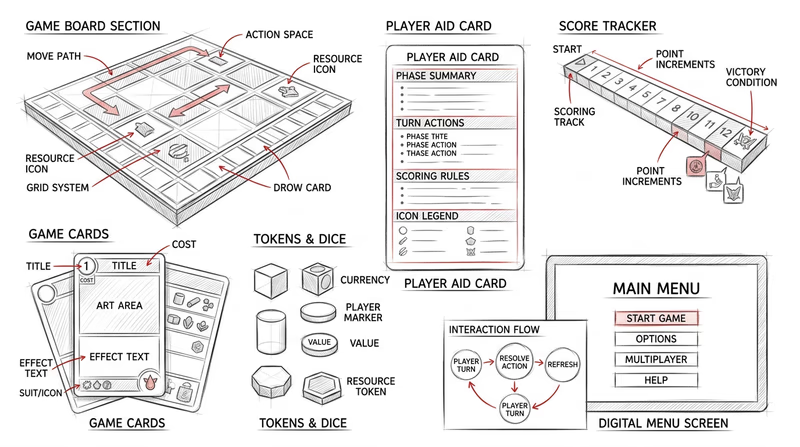
This is where Req 2 becomes useful again. Your game elements are part of the interface. If your card layout is cluttered, your players may make mistakes. If your score tracker is confusing, players may stop trusting the results. If your field boundaries are unclear, arguments may replace fun.
Good element design reduces friction. It helps the rules feel easier, even when the game itself is thoughtful.
Sketch More Than One Version
You do not have to stop with the first drawing. Many designers make two or three layout ideas and choose the clearest one. That habit will help you later when blind testers try to use your materials without your help in Req 7bc.
Physical Games Need Readable Parts
If your design is physical, imagine another player sitting across the table or moving around outside. Can they recognize the elements quickly? Are symbols too small? Are colors the only way to tell pieces apart? If so, consider adding shapes, labels, or patterns too.
Safety Matters in Physical Designs
If your game uses physical movement, equipment, or outdoor play, the elements should support safe play. Mark boundaries clearly. Avoid components that create tripping hazards or force unsafe contact.
Game Design Notebook Planner Cooper Hewitt — Design Process A museum design resource about sketching, prototyping, and improving visual ideas through iteration.You now have the key pieces of your design on paper. Next, you will turn those sketches and rules into a working prototype.