Req 6a — Build the Prototype
This page is where your game becomes real. A prototype is an early working version built for testing, not perfection. It should be playable enough to reveal what works, what confuses players, and what needs to change.
Because the parent requirement says, “Do the following: Note: You must have your counselor’s approval of your concept before you begin creating the prototype,” make sure that approval happens first. Once that is done, focus on building something fast, clear, and easy to revise.
This requirement covers three main jobs:
- build a playable version of the game from Req 5a–5d
- address player safety if the game includes physical movement or equipment
- record the work in your notebook so you can explain your process later
A Prototype Is Supposed to Be Rough
Many beginners wait too long because they want the first version to look impressive. That is not the goal. A good prototype answers questions. Can players understand the objective? Do the turns work? Is the game too short, too long, too easy, too confusing, or unexpectedly fun?
Paper scraps, index cards, sticky notes, and hand-drawn boards are all fine. If your game is active, cones, tape, and clear boundary markers may be enough for a first version. If it is digital in concept, you can still prototype menus, screens, and state changes on paper.
Build Only What You Need to Test
You do not need every future feature in version one. Focus on the minimum set of elements required to play one full session. For example:
- enough cards to test the main loop
- a basic board with key spaces marked
- tokens that stand in for fancier pieces later
- a simple score sheet
- a timer if pace matters
Prototype priorities
What version one needs most
- Clear setup: Players can begin without guessing.
- Core actions: The main decisions or moves are possible.
- Visible progress: Scores, rounds, or objectives can be tracked.
- Temporary components: Cheap, editable materials replace polished parts.
- Notebook record: Date, version notes, and what you included.
Safety Is Part of Design
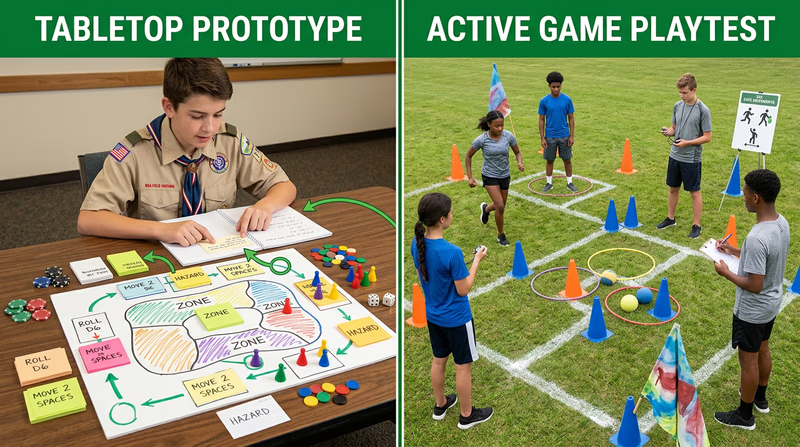
If your game involves movement, throwing, tagging, running, physical contact, or special equipment, safety belongs in the rules from the very beginning. A game is not successful if it creates avoidable risk.
Think about boundaries, spacing, contact rules, equipment choice, and the age of the players. Could someone trip, collide, or misuse the equipment? Could unclear instructions cause a dangerous situation?
Record the Version Clearly
Your game design notebook should show what version you built and what it contained. A good entry might include:
- the date
- the game version number or label
- the materials you used
- the rules included in this version
- what you hoped to learn from testing it
These notes will make Req 6bc and Req 7bc much easier.
Game Design Notebook Planner Games for Change — Student Game Design Examples and resources showing how prototypes help young designers build, test, and improve game ideas.Once the prototype exists, the real work begins: test it, revise it, and test it again.