Req 7a — Write Clear Instructions
A great game is not truly finished until new players can learn it. That is why instruction writing is a design skill, not just a writing task. If your players cannot set up the game, understand their options, or tell when the game ends, the design will fail even if the idea itself is strong.
This requirement asks for a complete instruction sheet. That means a first-time player should be able to look at your rules, set up the game, and begin without needing you to rescue them every few minutes.
What the Instruction Sheet Must Include
The requirement already gives you the main sections. Make sure your sheet clearly covers:
- the objective of the game
- setup
- how play works
- how the game ends
That sounds short, but each section should be specific enough to remove guesswork.
Put Information in Player Order
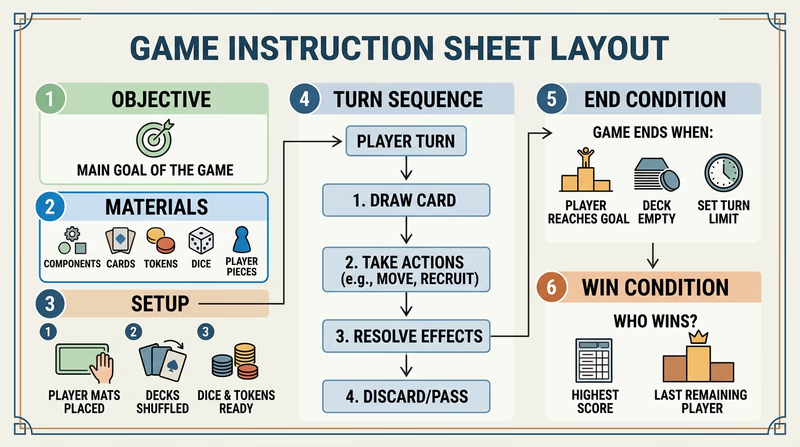
Do not explain the most advanced rule first. The best instruction sheets follow the order players will actually experience.
- What is this game and what are players trying to do?
- What materials are needed?
- How do you set everything up?
- What happens on a turn or during play?
- How does scoring or progress work?
- What ends the game?
- How do you know who won?
This is sometimes called procedural order. It helps the rulebook feel easier because it matches the player’s real questions.
Signs your instruction sheet is clear
A new player should be able to answer these quickly
- What am I trying to accomplish?
- What do I need before starting?
- What do I do first?
- What can I do on my turn?
- What am I not allowed to do?
- How does the game end?
Use Plain Language
Short sentences help. So do bullet points, numbered steps, headings, and examples. Avoid writing rules in a way that only makes sense because you already know the game.
If a term is specific to your design, define it the first time you use it. If the setup includes unusual parts, label them clearly. If timing matters, say exactly when something happens.
Anticipate Common Questions
Think back to your playtests in Req 6bc. Where did players get confused? Those moments tell you what the rule sheet must explain better.
A strong instruction sheet often answers questions before they are asked.
Include Examples if Needed
Some rules are much easier to understand with a short example. This is especially true for scoring, tie-breaking, turn order, or special effects. A two-sentence example can save a lot of confusion.
Blind Testing Is Coming Next
This page matters because Req 7bc asks you to blind test your game. That means a new group will use your instructions without coaching from you. If the sheet is weak, the blind test will show it immediately.
Game Design Notebook Planner Write the Docs — Clear Technical Writing Tips General writing guidance that helps with clarity, structure, and user-focused instructions.Next, you will put your rules to the hardest test yet: handing the game to fresh players and staying silent.