Req 7bc — Blind Test and Reflect
This requirement covers two final design tests that matter a lot:
- Req 7b — let a new group try the game using only your instructions and prototype
- Req 7c — discuss what you learned, share your notebook, and suggest improvements
Blind testing is one of the most honest tools in game design. When you stop explaining and just watch, your design has to stand on its own.
Req 7b — Let New Players Try It Without Help
A blind test shows whether your rules, layout, and components really communicate the game. Players who already know your design are often too forgiving. Fresh players reveal the truth quickly.
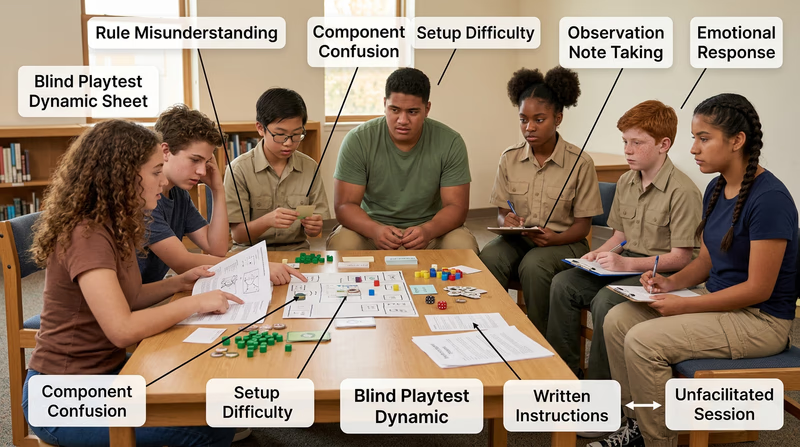
As you observe, resist the urge to help. If players misread a rule, skip a setup step, or interpret a card the wrong way, that is data. It does not mean the players failed. It means the design or the instructions need work.
What to observe during a blind test
These moments are especially valuable
- Setup confusion: Do players know how to begin?
- Rule misunderstandings: Which instructions get misread or ignored?
- Component confusion: Are cards, zones, or markers hard to interpret?
- Natural strategies: What do players try without being coached?
- Emotional response: Do they seem curious, frustrated, engaged, amused?
Req 7c — Share the Notebook and Reflect
This final conversation is about growth. Your notebook should show the journey from concept to prototype to revised design. Your counselor is not only looking at the finished game. They are also looking at how you learned from the process.
What You Learned About Design
Strong reflections often include lessons like these:
- players do not experience the game the way the designer imagines
- unclear instructions can ruin good mechanics
- small rule changes can have huge effects
- repeated testing is necessary, not optional
- fun must be supported by structure, not just theme
Those lessons connect directly back to Req 4d, where you practiced analyzing how changes affect player experience.
What You Like Most — and What Still Needs Work
Be specific. Maybe you like the teamwork, the pace, the theme, or the way the scoring creates tension. Maybe the part you like most is the one players reacted to most strongly.
Then suggest at least one more change. A thoughtful improvement idea shows that you see design as a process instead of a finished product.
NPR — How Game Designers Use Playtesting General reporting on game design often highlights the role of testing, feedback, and revision in making games better.You have now completed the full design cycle. The last requirement lets you explore real people who teach or work in the field.