Req 8a — Interview a Game Developer
A finished game may look like one smooth product, but it is usually the result of many specialists working together. Designers, writers, artists, programmers, producers, audio teams, quality assurance testers, community managers, and marketers all contribute in different ways.
This requirement helps you see the real people behind the games. Your goal is not only to learn what one person does all day. It is to understand how their role connects to the larger development process.
Get Permission and Prepare
Because the requirement says you need parent or guardian permission and counselor approval, take care of both before the visit or interview. Then prepare questions that help you learn about both the job itself and its place in the pipeline.
Roles You Might Meet
A “professional in the game development industry” could be many kinds of people, including:
- game designer
- programmer
- technical artist
- animator
- level designer
- producer
- writer or narrative designer
- quality assurance tester
- audio designer
- user experience or interface designer
Each role sees the game from a different angle.
Strong interview questions
Questions that reveal both the job and the process
- What does a normal day in your role look like?
- What part of the game do you work on most directly?
- Who do you collaborate with most often?
- At what stage of development does your work matter most?
- What skills are most important for your job?
- What is something people misunderstand about your role?
- How does feedback or playtesting affect your work?
Understand the Pipeline
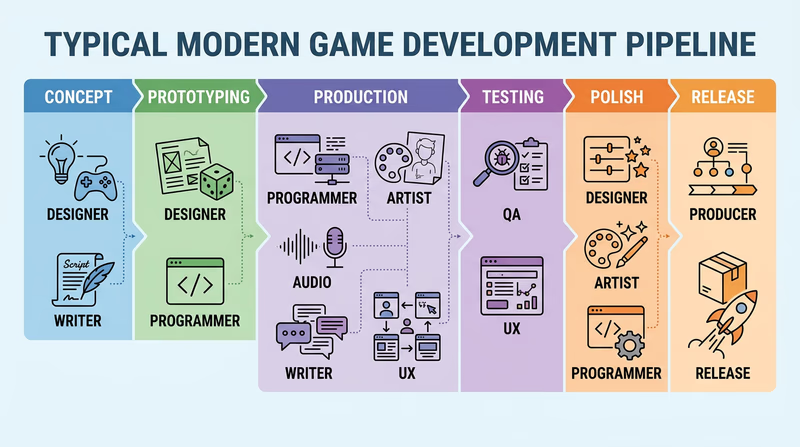
The overall development process usually includes concept development, prototyping, production, testing, revision, polishing, and release. Ask your interviewee where their role is strongest. Some jobs are central early in development. Others become especially important during production or testing.
That big-picture view can help you understand why game development is so collaborative. Even a great idea needs many people to turn it into a finished experience.
Take Notes for the Counselor Discussion
Write down specific examples, not just general statements. If the professional says they spend a lot of time rewriting features after testing, that is more useful than just writing “they improve the game.” Try to capture the role, the responsibilities, the collaborators, and how the person helps move the project forward.
International Game Developers Association A professional organization for game developers with resources about roles, communities, and career pathways in the industry. Entertainment Software Association Industry information about how the video game industry works and the many people involved in making games.If you would rather focus on learning and teaching skills than on a studio role, the next option may fit you better.