Req 8b — Meet a Game Design Educator
A teacher or mentor in game development education can give you a different kind of insight than an industry interview. Instead of focusing mostly on one job, they can explain what skills students need to practice before they are ready for bigger projects.
This option is a great fit if you want to understand how designers grow. Good game design classes usually teach much more than software. They emphasize communication, iteration, teamwork, systems thinking, and the ability to accept feedback.
Who Counts as a Game Development Educator?
This could include:
- a teacher who runs a game design class
- a college or technical school instructor
- a camp leader or workshop mentor
- an educator who teaches coding, design, or interactive storytelling with game projects
The key is that the person helps learners build game development skills in an organized teaching setting.
Skills Educators Often Emphasize
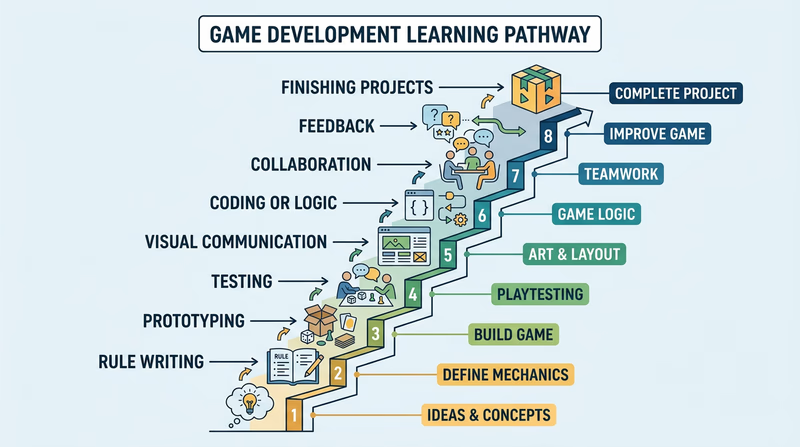
Most educators highlight a blend of creative, technical, and teamwork skills. Common examples include:
- idea development and brainstorming
- writing clear rules and documentation
- prototyping quickly
- testing and revising
- visual communication
- coding or logic building
- collaboration and communication
- giving and receiving feedback
- finishing projects instead of only starting them
Helpful questions for an educator
These can lead to a strong discussion
- What skills do beginners need first?
- What mistakes do students make most often?
- How do you teach playtesting and revision?
- Which classroom habits matter most for long-term success?
- How do students learn to work on teams?
- What matters more: technical skill or design thinking? Why?
Notice the Difference Between Tools and Habits
A lot of people think game development education is mostly about learning software. Tools matter, but educators often care even more about habits. Can students explain an idea clearly? Can they accept criticism without giving up? Can they revise based on evidence? Those habits matter in almost every design environment.
This should sound familiar. Through Req 6bc and Req 7bc, you already practiced some of the most important classroom and industry habits: iteration, observation, and reflection.
Bring It Back to Your Own Experience
A great counselor discussion will connect the educator’s advice to your own badge work. Maybe the educator emphasizes fast prototyping, and you saw why that matters in your own tests. Maybe they stress teamwork, and you saw how player communication changed your blind test.
That connection shows you are not just collecting quotes. You are learning from them.
Games for Change Student Challenge An example of educational game design programs that emphasize creativity, teamwork, iteration, and social impact.You have finished the required pages. The last page of this guide will show you where to go next if you want to keep learning game design beyond the badge.