Extended Learning
A. Keep Growing
You have done more than plant a few things for a requirement. You have learned how gardens work, how to observe change over time, and how to connect plants to food, pollinators, and healthy ecosystems. That is a strong foundation. The best part is that gardening rewards people who keep going season after season.
B. Soil Health Is the Long Game
A lot of new gardeners focus on the visible part of the garden: the leaves, flowers, fruits, and harvest baskets. Experienced gardeners know the hidden part matters just as much. Soil health is the long game. If you improve soil structure, organic matter, drainage, and biological life, many other problems become easier to manage.
Healthy soil stores water better, supports stronger roots, and helps plants recover from stress. It also makes nutrients more available. That is why compost, mulch, cover crops, and careful disturbance matter so much. Instead of treating soil as dead material, think of it as a living community.
This deeper view changes how you garden. You stop asking only, “What can I feed the plant today?” and start asking, “How do I improve the system this plant depends on?” Over time, that mindset can reduce runoff, lower fertilizer waste, and improve the resilience of your garden through heat or dry spells.
Even if you never become a farmer or horticulturist, understanding soil health gives you a powerful way to think about land. It connects home gardening to conservation, climate resilience, and long-term stewardship.
C. Gardening With Native Plants
One of the most exciting directions in modern gardening is the use of native plants. These are plants that evolved in a region over long periods of time and formed relationships with the insects, birds, and other wildlife there. A native planting can be beautiful, but it also functions as habitat.
Native plant gardening asks different questions than traditional ornamental gardening. Instead of only asking which flowers look best in a bed, you ask which plants support caterpillars, feed bees through the season, or provide seeds for birds. That ecological approach turns gardening into habitat restoration on a small scale.
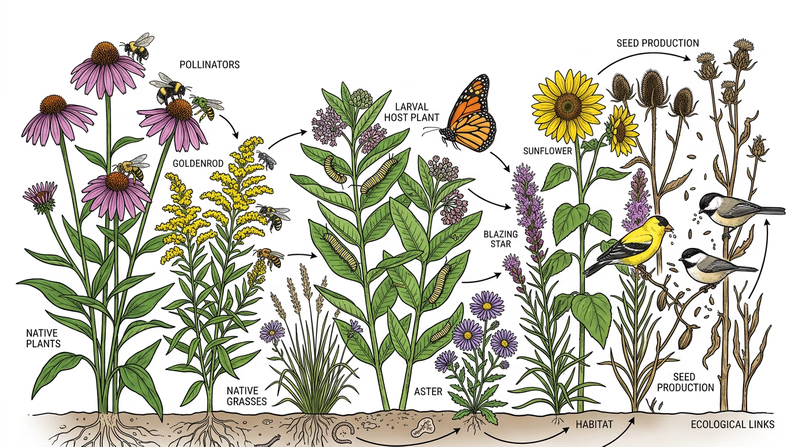
Native plants are not maintenance-free, and they are not identical in every region. But when chosen well, they often fit local conditions better than imported species because they are adapted to the climate and soil. That can mean fewer inputs over time and a stronger connection between your garden and the living things around it.
If the pollinator section of this badge interested you, native plant gardening is one of the most meaningful next steps you can take. It lets you put that knowledge into action in a way that supports entire food webs, not just one species.
D. Season Extension and Year-Round Gardening
Many people think gardening ends when summer does. In reality, experienced gardeners often stretch the season much farther. They use row covers, cold frames, hoop tunnels, mulches, indoor seed-starting shelves, and careful crop timing to keep plants going earlier in spring and later into fall or winter.
Season extension is a practical lesson in microclimates and planning. A garden bed on the south side of a building may warm faster. A low tunnel may protect greens from frost. Indoor lights may let you start seedlings weeks before outdoor planting time. These techniques can dramatically change what is possible in a small space.
This kind of gardening also teaches patience and foresight. You often need to plan backward from a desired harvest window. That means looking ahead, counting days, and understanding how temperature and day length affect growth. It feels more like strategy than simple planting.
For Scouts who enjoy problem-solving, season extension is a great next challenge. It combines science, timing, and hands-on experimentation — and it can make a home garden more productive across much more of the year.
E. Real-World Experiences
Visit a community garden
Community gardens show how gardening can support food access, neighborhood connection, and shared learning. Notice how plots are organized, what crops are most common, and how people solve irrigation, composting, and tool-sharing challenges.
Tour a botanical garden or arboretum in a new season
If you already visited one for the badge, go back during a different season. You will notice how plantings change, how bloom timing shifts, and how public gardens use succession to keep spaces interesting all year.
Volunteer at a native plant sale or pollinator garden workday
This gives you practical plant-handling experience and a close look at which plants local experts recommend. It is also a good way to ask questions and meet skilled gardeners.
Visit a farmers market and talk to growers
Ask what crops are hardest to grow well, what pests are most common, and how weather affected the season. This helps connect gardening to local food systems and real production choices.
Join a seed-starting workshop or seasonal gardening class
Hands-on classes can help you build confidence quickly, especially if you want to move from one successful project to a larger long-term hobby.
F. Organizations to Know
Cooperative Extension System
The Cooperative Extension System connects universities with local communities. Extension offices provide research-based help on soils, pests, plant diseases, home gardening, and much more.
Cooperative Extension System Learn how extension offices provide practical, research-based help for gardeners and communities.American Public Gardens Association
This organization supports botanical gardens, arboreta, and public horticulture programs. It is a strong way to learn how public gardens combine education, conservation, and plant science.
American Public Gardens Association Explore public gardens, plant conservation, and educational programs in horticulture.National Garden Clubs
National Garden Clubs connects local clubs, youth programs, and service-minded gardening efforts. If you want a gardening community, this is a helpful place to look.
National Garden Clubs Find gardening clubs, educational opportunities, and community projects across the United States.American Community Gardening Association
This group highlights how gardens strengthen neighborhoods, education, and food access. It is especially useful if you are interested in shared growing spaces.
American Community Gardening Association See how community gardens support education, food access, and neighborhood involvement.Pollinator Partnership
If the pollinator side of gardening caught your attention, Pollinator Partnership offers practical resources on helping bees and other pollinators with habitat and plant choices.
Pollinator Partnership Resources on pollinator habitat, plant choices, and how to support pollinators in real landscapes.