Req 4 — Seed Germination Testing
Gardeners do not just plant seeds and hope. Good gardeners test, compare, and learn. This requirement introduces one of the most practical science skills in gardening: checking whether seed is still alive and likely to grow well before you depend on it for a project.
What Germination Means
Germination is the moment a seed begins growing. The seed coat softens, the embryo wakes up, and the first root pushes out. If enough seeds germinate, you can trust the packet or saved seed lot. If very few sprout, you know the seed is old, damaged, or stored poorly.
A germination test does not tell you everything about future plant health, but it gives you a very useful starting point: what percentage of your seeds are likely to sprout under decent conditions.
Why 100 Seeds?
Using 100 seeds makes the math easy. If 87 sprout, your germination rate is 87%. If 64 sprout, your rate is 64%. That lets you focus on observation instead of complicated calculation.
This is also how gardeners and seed companies think. Germination is commonly described as a percentage because no seed batch is perfect.
A Simple Way to Run the Test
Many gardeners use the paper towel method because it makes the results easy to see.
- Count out 100 seeds.
- Moisten a paper towel so it is damp but not dripping.
- Spread the seeds so they are not all touching.
- Fold the towel over them and place it in a plastic bag or container that helps hold moisture.
- Keep the setup in a location with the right temperature for that crop.
- Check daily for moisture and sprouting.
- Count how many seeds germinate by the expected time.
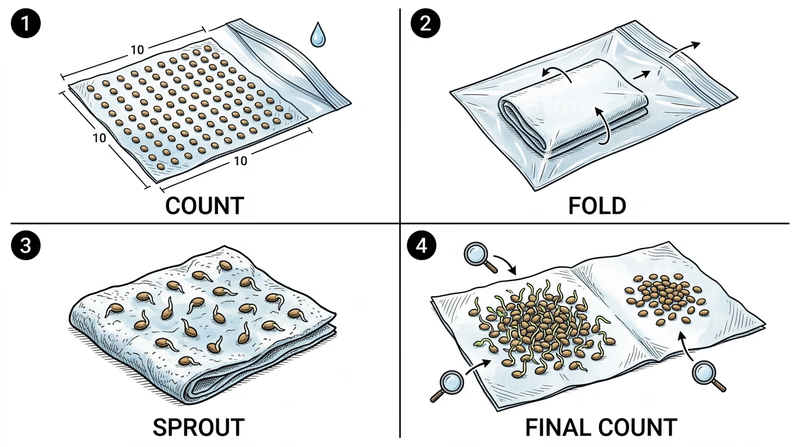
Some seeds sprout in a few days. Others take longer. Use a reasonable timeframe for the crop you chose.
What Counts as Germinated?
Use a consistent standard for your 100-seed test
- The seed coat has opened.
- A root tip has clearly emerged.
- The sprout is alive, not moldy or collapsed.
- You count each seed once, even if growth is slow after that.
Calculating the Germination Percentage
The formula is simple:
Number of seeds that germinated ÷ 100 = decimal form
Move the decimal two places to get the percentage.
With 100 seeds, you can usually skip the decimal step and just say the number of seeds that sprouted equals the percentage. For example:
- 92 germinated = 92% germination
- 75 germinated = 75% germination
- 41 germinated = 41% germination
That percentage helps you make decisions. A very high rate means the seed is vigorous and likely dependable. A low rate means you may need to sow more thickly or avoid using that seed lot altogether.
Why Some Seeds Fail to Germinate
This part of the requirement matters just as much as the counting. Not all failures mean the seed was “bad” in the same way. Different causes point to different lessons.
Seed Age
Many seeds lose viability over time. Some stay useful for years if stored well. Others decline faster. Old seed may still germinate, but at a lower percentage.
Poor Storage
Heat, moisture, and humidity damage seed. A seed packet forgotten in a hot garage or damp shed may lose viability much faster than one kept cool and dry.
Wrong Moisture Level
Seeds need water to start metabolic activity, but too much water can deprive them of oxygen or encourage rot and mold. Too little water leaves them dormant.
Temperature Problems
Different crops germinate best in different temperature ranges. If the environment is too cold or too hot, germination may be delayed or reduced.
Mechanical Damage or Immature Seed
Crushed seed, cracked seed coats, or seed collected before it was fully mature may never germinate properly.
Natural Variation
Even in a good batch, a few seeds may simply be weaker than others. Living things vary.
What Your Results Mean for Gardening
Suppose your germination rate is only 55%. That does not automatically mean the packet is useless. It means you should adjust expectations. You may need to plant extra seed, switch to fresher seed, or improve storage next time.
If your rate is 90% or higher, that is a strong sign your seed is in good shape. That kind of information is especially useful when planning Req 2a or a longer project in Req 8.
Thinking Like a Plant Scientist
This requirement is a great example of why gardening overlaps with science. You are forming a question, running a test, collecting results, and interpreting them. You are also learning to separate opinion from evidence. Instead of saying, “I think these seeds are probably fine,” you can say, “I tested 100 seeds and 83 germinated, so I know this seed lot is still pretty reliable.”
Iowa State University Extension — Testing Vegetable Seeds for Germination A straightforward guide to running a home germination test and interpreting the results.You have now tested seed like a gardener and a scientist. Next, step outside your own plot and learn from professionals, educators, and growers in the wider gardening world.