Req 8e — Honey Super Project
This is the most specialized option in Requirement 8. It connects gardening to pollination, beekeeping, and food production all at once. A honey super is the box section of a hive where bees store surplus honey. Working with one helps you see how managed bees support crops and how beekeepers harvest honey responsibly.
What a Honey Super Is
A super sits above the brood area of a hive and holds frames where bees store honey. Beekeepers add it when nectar flow is strong and remove it when frames are filled and ready for harvest. The timing matters because removing a super too early or too late can create problems for both bees and beekeeper.
Why This Option Requires Support
This is not a beginner-solo activity. Working around an active hive requires adult supervision, protective gear, calm behavior, and access to someone who knows safe beekeeping practice. If that support is not already available, another project option may be a better fit.
Preparing a Super for Use
Preparing a honey super may include assembling or checking the box, making sure frames are in good shape, confirming equipment is clean and ready, and placing it correctly when the colony can use it. The details depend on the equipment style your beekeeper mentor uses.
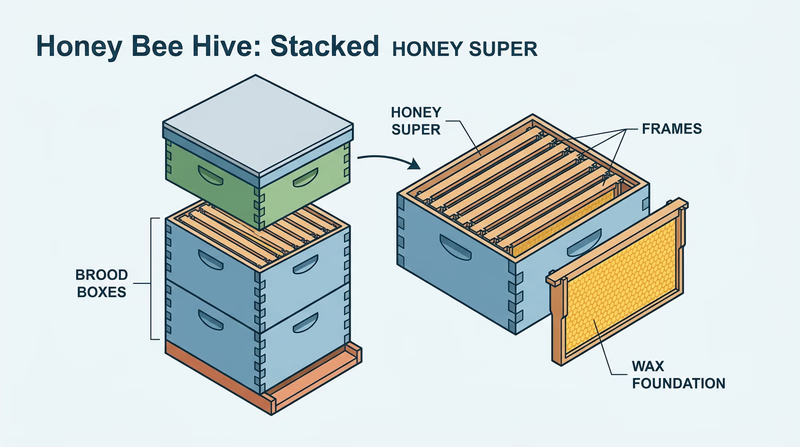
Your job is not to memorize every beekeeping tradition. Your job is to understand what the super does and how it fits into the colony’s work.
Removing a Filled Super
A filled super is heavy and full of the bees’ stored surplus honey. Removal needs to be done calmly and at the right time. Bees may be brushed or cleared from frames using methods approved by the supervising beekeeper. After removal, the honey must be handled cleanly so it stays safe and marketable.
Preparing Honey for Sale
Preparing honey for sale usually involves extraction, straining if appropriate, clean containers, careful labeling, and good sanitation. This part of the requirement helps you understand that honey is an agricultural product. It moves from living colony to human use through a process that must be handled cleanly and responsibly.
What to Observe in This Project
Focus on process, timing, and bee management
- When and why the super was added
- What made the frames ready for removal
- What protective gear and tools were used
- How bees were handled respectfully and safely
- How the honey was kept clean during preparation
Why This Option Matters in Gardening
This option may sound more like beekeeping than gardening, but the link is strong. Honeybee colonies are managed partly because of the pollination service they provide, which you studied in Req 6. Seeing the honey super process helps you understand that pollination and food systems are connected in practical ways.
Questions Worth Discussing With Your Counselor
- How did this hive support pollination in the local area?
- What signs showed the super was ready?
- What sanitation steps mattered when preparing honey?
- What did you notice about the bees’ behavior during the process?
- Would this be practical for most Scouts, or does it depend on special access?
You have now seen the most hive-focused project option. Next, return to the broadest and most traditional gardening project in the set: growing a soil-based garden of your own.