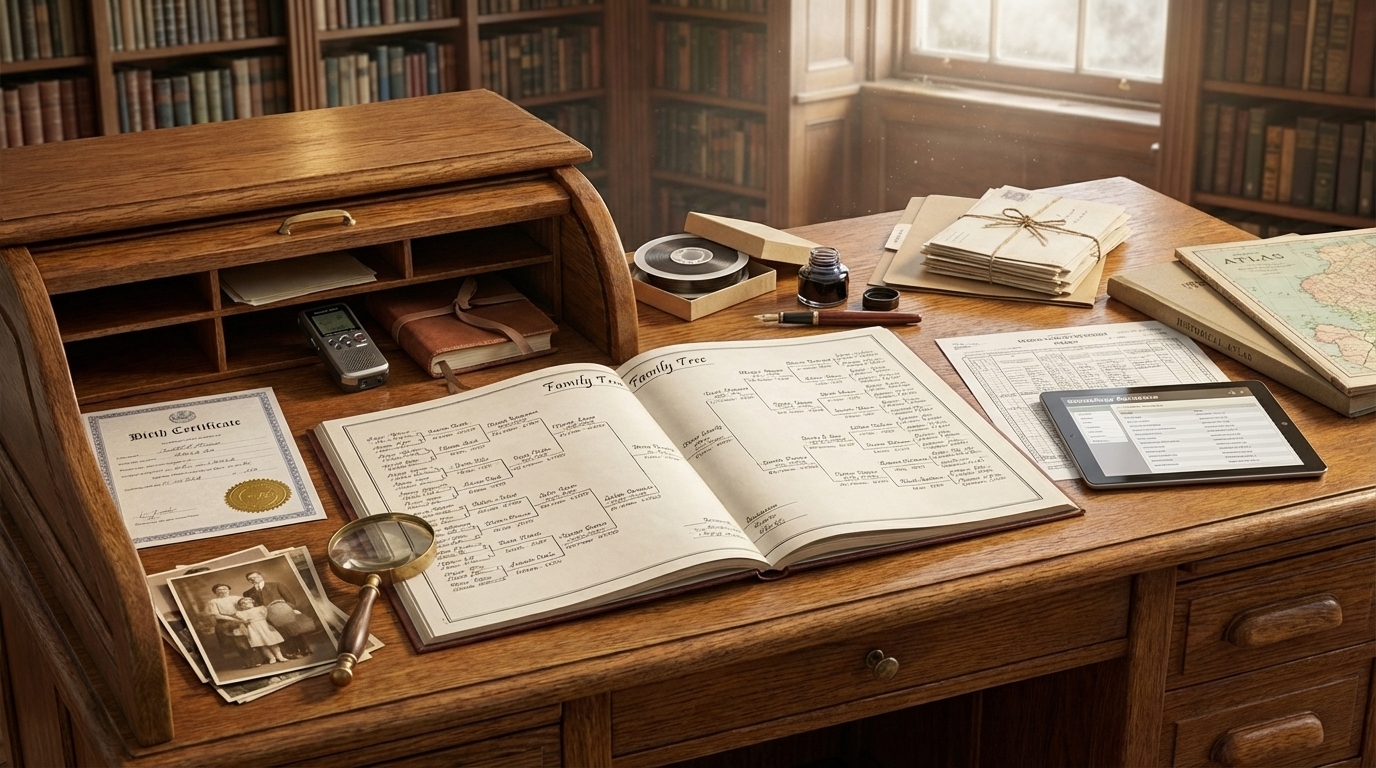
Genealogy Merit Badge — Complete Digital Resource Guide
https://merit-badge.university/merit-badges/genealogy/guide/
Introduction & Overview
A name on an old photograph can be the start of a mystery. Who was this person? Where did they live? What choices did they make that helped shape your family today? Genealogy is the study of family history, and it turns small clues like dates, records, stories, and letters into a bigger picture of where you come from.
The Genealogy merit badge helps you become a careful researcher and a good listener. You will learn how to organize information, ask smart questions, and treat family stories with respect. Along the way, you may discover surprising connections, forgotten details, and a deeper understanding of your own place in history.
Then and Now
Then — Family Memory at the Kitchen Table
For most of history, families kept their history by talking about it. Grandparents told stories. Names were written inside Bibles. Important dates were copied into notebooks, letters, or church records. If a family moved, went to war, or lost papers in a fire or flood, some of that history could disappear.
Early genealogists spent long hours visiting courthouses, churches, cemeteries, and libraries. They copied records by hand and mailed letters to relatives they had never met. Building a family tree often took years because every clue had to be found in person.
- Main tools: Family Bibles, letters, courthouse books, cemetery visits
- Main challenge: Information was scattered and slow to collect
- Main skill: Patience and careful note-taking
Now — Digital Clues and Global Connections
Today, genealogy still depends on careful research, but the tools are very different. Millions of records have been scanned and indexed online. Libraries, archives, and family history groups share collections on websites. Video calls, email, and online family tree software make it easier to connect with relatives and compare research.
Modern genealogy is faster, but it still requires the same good habits as old-school research. You need to compare sources, check dates, protect private information, and make sure one exciting clue really belongs to your family before you add it to your chart.
- Main tools: Online databases, scanned records, digital photos, genealogy software
- Main opportunity: You can search across many places from home
- Main skill: Evaluating sources instead of trusting the first result you find
Get Ready! You do not need to be an expert to start tracing your family history. You just need curiosity, respect for the people you are researching, and a willingness to follow clues one step at a time.
Kinds of Genealogy
Genealogy is broader than just drawing a family tree. Here are several parts of the subject you will explore in this badge.
Oral History
Oral history means learning from people’s memories. A grandparent’s story about moving to a new town, a cousin’s memory of a family reunion, or a neighbor’s recollection of serving in the military can point you toward names, dates, and events you would never find on your own. Oral history is often the best place to start because it gives context to the records you search for later.
Documentary Research
This is the part many people picture first. Documentary research uses records such as birth certificates, marriage licenses, census forms, obituaries, school yearbooks, land records, and church registers. These records can confirm dates, relationships, and places. In this badge, you will learn how to use both physical and digital versions of these sources.
Family Tree Building
A family tree, sometimes called a pedigree chart, is the visual map of how people in your family connect across generations. It helps you spot missing information, keep names organized, and see patterns such as where relatives lived or how families moved over time. A chart is not the whole story, but it is the framework that holds your research together.
Record Organization
Genealogy creates a lot of information quickly. You may gather interviews, photographs, forms, dates, and copies of records from several branches of a family. Good organization matters just as much as finding information. That is why genealogists use tools like family group records, research logs, labeled folders, and source notes.
Genetic Genealogy
Some genealogists also use DNA testing to study family connections. This badge does not require DNA analysis, but it is part of the modern genealogy world. DNA can suggest biological relationships and migration patterns, but it should be handled carefully because it raises privacy questions and can reveal unexpected information.
Now you have a sense of what genealogy is and why it matters. The next page introduces the basic language and tools that every family historian needs.
Req 1 — Genealogy Basics
This requirement introduces three basic ideas that every genealogist uses:
- Genealogy, ancestor, and descendant — the key vocabulary of family history
- Family trees — the charts that show how relatives connect across generations
- Family group records — the forms that organize details about one family unit
If you can explain these three ideas clearly, you will be ready for almost every other page in this guide.
Requirement 1a: Core Vocabulary
Genealogy is the study of family history and family relationships. A genealogist gathers information about people, checks whether that information is reliable, and organizes it so others can understand it. In simple terms, genealogy is detective work about your family.
An ancestor is a person you come from in an earlier generation. Your parents are your ancestors. Your grandparents, great-grandparents, and earlier family members are your ancestors too.
A descendant is the opposite. A descendant is a person who comes after someone in the family line. You are a descendant of your grandparents and great-grandparents. Your children and grandchildren, if you have them someday, would be your descendants.
A good way to remember the difference is this: ancestors are the people above you on a family tree, and descendants are the people below.
When you explain these words to your counselor, do not just memorize dictionary definitions. Try using real examples from your own family. For example, you might say that one of your great-grandparents is an ancestor, and you are that person’s descendant. Showing that you can apply the words matters more than repeating them perfectly.
🎬 Video: What is Genealogy? (And other terminology) — https://www.youtube.com/watch?v=7V-nmASSPRk
Requirement 1b: What a Family Tree Shows
A family tree is a chart that shows how people in a family are related. It usually begins with one person and then connects parents, grandparents, and earlier generations through lines or boxes. Some trees are small and simple. Others spread across many pages and include many branches.
The main job of a family tree is to show relationships clearly. It helps you answer questions like these: Who were this person’s parents? Which grandparents belong to this branch? How are two cousins connected? A chart can also help you notice missing information, like a birth date you still need or a place you have not confirmed yet.
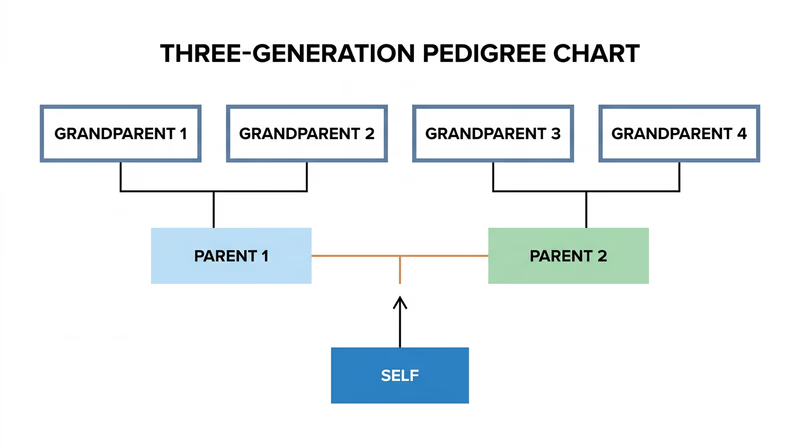
A family tree often includes:
- Full names
- Birth dates and birthplaces
- Marriage dates and places
- Death dates and burial places
- Connections between parents and children
Some family trees also include occupations, immigration information, military service, photographs, or short notes. That extra information can make the chart more meaningful, but the most important part is still the relationship structure.
When you build a tree, accuracy matters. Two people can have the same name but be completely different individuals. Dates and locations help you tell them apart. That is why genealogists do not rely on one clue alone.
🎬 Video: You Are Your Own Negative First Cousin — https://www.youtube.com/watch?v=PM79Epw_cp8
Requirement 1c: What a Family Group Record Does
A family group record, sometimes called a family group sheet, is more detailed than a family tree. Instead of showing many generations at once, it focuses on one family unit: usually the parents and their children. Think of it as a close-up view instead of a wide map.
A family group record often includes:
- Parents’ full names
- Their birth, marriage, and death information
- The names of their children
- Birth, marriage, and death information for each child
- Places connected to those events
- Notes about records or sources
This form is useful because it gathers related facts in one place. If a family had six children who lived in different states as adults, the family group record helps you keep them connected. It also helps you see gaps. Maybe you know where the parents married, but you do not know where one child was born. That missing spot shows you where to research next.
In Req 6, you will build a pedigree chart, and in Req 7, you will make family group records. Understanding the difference now will make those pages much easier.
🎬 Video: What are Pedigree Charts and Family Group Sheets? (Genealogy) — https://www.youtube.com/watch?v=mLJhNZk-BGg
Be Ready to Explain These Basics
Use this as a quick review before meeting with your counselor- Genealogy: The study of family history and relationships.
- Ancestor: A person from an earlier generation that you come from.
- Descendant: A person in a later generation who comes from an earlier ancestor.
- Family tree: A chart that shows relationships across generations.
- Family group record: A detailed form for one family unit, usually parents and children.
You now know the basic language and tools of genealogy. Next, you will choose one way to start preserving a personal story from your own life or the life of a relative.
Req 2 — Tell a Personal Story
For this requirement, you choose exactly one path. Both options teach an important genealogy lesson: family history is not just names and dates. It is also the story of real people’s lives.
Req 2a — Timeline & Biography helps you organize life events in order and then turn those events into a short written story. You might make the timeline about yourself or about a relative. This option builds skills in sequencing, summarizing, and noticing how one event can lead to another.
Req 2b — Six-Week Journal asks you to record your own life as it happens. Instead of looking backward, you become the primary source. This option teaches you how everyday details become valuable family history later.
A good genealogist learns to value both kinds of evidence. Timelines and biographies help you reconstruct the past from known events. Journals preserve the present so future family members can understand what life was like for you.
How to Choose Your Option
Pick the one that best matches your interests and schedule- Time available: Req 2a can often be completed in a shorter burst of work; Req 2b takes six weeks of steady writing.
- Writing style: Req 2a works well if you like organizing facts into a finished story; Req 2b fits you if you like short reflections over time.
- Who it focuses on: Req 2a can spotlight a relative as well as yourself; Req 2b focuses on your own current experiences.
- What you will gain: Req 2a builds biography and timeline skills; Req 2b teaches the value of keeping a primary-source record.
Now choose your path and start with the timeline-and-biography option.
Req 2a — Timeline & Biography
A timeline can turn a pile of scattered facts into a story you can actually follow. One date alone is just a fact. A birth date, a school move, a first job, military service, marriage, and a cross-country move lined up in order start to show a life.
The first step is choosing who the timeline will cover. You may choose yourself if you want a simple starting point with facts you already know. You may choose a parent, grandparent, or another relative if you want more challenge and a richer story. Either way, the goal is the same: collect events, put them in order, and notice how they connect.
Build the Timeline First
A timeline is a list of events arranged by date or year. It does not need to be fancy. It can be a straight line on paper, a digital document, or a series of dated bullet points. What matters is that the events are in order and easy to read.
Start with the basics:
- Birth
- Places lived
- School years or graduations
- Major family events
- Jobs or military service
- Important moves
- Achievements, challenges, or turning points
As you gather events, include enough detail to make each one meaningful. Instead of writing only “2018 — moved,” write “2018 — moved from Ohio to North Carolina because Dad started a new job.” That added reason makes the later biography much easier to write.
Try to use at least a few different kinds of sources. You might ask a relative, look at old photos, check school programs, read obituary details, or examine records already gathered in Req 1. When information comes from memory, write it down carefully and confirm it later if you can.
🎬 Video: Avoid mistakes by using my 2nd most important genealogy tip - it's all about timelines — https://www.youtube.com/watch?v=_hKMBqEUE1w&t=95s
Turn Facts into a Biography
A biography is a short written account of a person’s life. For this requirement, it does not need to be long. It just needs to be clear, accurate, and based on the timeline you created.
A strong short biography usually answers questions like these:
- Who is this person?
- Where and when did their story begin?
- What major events shaped their life?
- What challenges or choices changed their direction?
- Why does this person’s story matter to the family?
Do not just copy the timeline into sentence form. Instead, connect the events so they read like a real story. For example, if a relative grew up on a farm, served in the military, and later became a teacher, think about how those experiences may have shaped their values and later decisions.
A biography should stay honest about what you know. If you are missing details, do not guess. You can say, “The family moved during the 1940s, though we do not yet know the exact year.” Genealogy values accuracy more than drama.
Good Biography Habits
Use these ideas as you turn your timeline into a short life story- Keep events in order: Your reader should be able to follow the story from beginning to end.
- Use specific details: Names, places, and dates make the story stronger.
- Explain transitions: Show how one stage of life led to the next.
- Stay accurate: If you do not know something, say so instead of guessing.
- End with meaning: Explain what this person’s story teaches you or why it matters to your family.
Ask Better Questions
If you are writing about a relative, the timeline can also guide your interview questions. Instead of asking, “What was your life like?” you can ask focused questions such as:
- What do you remember about that move?
- Why did you choose that job or school?
- What was hardest about that time?
- Who influenced you most then?
These kinds of questions often produce richer stories than a general question. They also prepare you for Req 3, where you will interview a relative or family acquaintance and record the information carefully.
National Archives — Genealogy Notes Tips from the National Archives for gathering family history information and locating records that can support a timeline. Link: National Archives — Genealogy Notes — https://www.archives.gov/research/genealogyYou now know how to turn life events into a clear, meaningful sequence and then shape that sequence into a short written story. Next, look at the other option for this requirement: keeping a six-week journal.
Req 2b — Six-Week Journal
Most people think family history lives only in the distant past. But one of the smartest things a genealogist can do is record the present before it turns into memory. A six-week journal may sound simple, yet it creates a first-person record of your life that future relatives could one day treasure.
A journal is a primary source, which means it comes directly from someone who experienced the events being described. That makes it different from a story told years later or a summary written by someone else. Historians and genealogists value primary sources because they capture details that would otherwise be lost.
What to Write About
You do not need dramatic events to make a journal worthwhile. Ordinary life is often what future family members want to know most. What did a school week feel like? What activities mattered to you? What was happening in your community, your troop, or your family?
Here are some topics that make useful journal entries:
- School, sports, or troop activities
- Family celebrations or changes
- A trip, campout, or service project
- News events that affected your community
- Goals, worries, or achievements
- What daily life looked like right now
Try to include details that place your life in context. Mention the season, the place, the people involved, and why something felt important. Years from now, even small details may help explain your world.
🎬 Video: HOW TO JOURNAL *for beginners* — https://www.youtube.com/watch?v=TKOrVpuvvMA&t=52s
Keep It Consistent
The requirement says you must write at least once a week for six weeks. That means consistency matters more than length. A short, honest entry every week is better than one huge entry at the end written from memory.
Pick a format you can actually maintain. You might use a notebook, a typed document saved privately, or a printed worksheet. Some Scouts like writing on the same day each week, such as every Sunday evening. A routine makes it easier to finish the full six weeks.
Your journal should include the date for every entry. It also helps to note where you were and what was going on. A journal becomes more useful when each entry can stand on its own.
Six-Week Journal Worksheet Resource: Six-Week Journal Worksheet — /merit-badges/genealogy/guide/journal-worksheet/Write Honestly, But Wisely
A good journal sounds like a real person. It should reflect what you noticed, felt, learned, or wondered during the week. But because journals can contain private thoughts, you should think carefully about where you store them and who may read them.
You do not need to record every secret or every conflict in detail. The point is to create a useful historical record, not to overshare. If an event is sensitive, write respectfully and protect the privacy of other living people.
In genealogy, privacy matters especially when living relatives are involved. That same idea appears later in Req 8, where you will consider how technology changes the way family history is stored and shared.
Make the Journal Useful Later
A useful journal entry often includes more than feelings. It also records facts that future you may forget. For example, instead of writing only “Camp was fun,” you could write where camp was, what your patrol did, what the weather was like, what you learned, and who was with you.
Think of each entry as a small time capsule. If someone read it twenty years from now, what would help them understand your life at that moment?
Strong Weekly Entries
Use these prompts to make each week specific and useful- When was this written? Include the full date.
- What happened this week? Focus on one or two main events.
- Who was involved? Name people or roles when appropriate.
- Why did it matter? Explain what you learned, felt, or noticed.
- What might future relatives want to know? Add context they would not automatically understand.
You now understand how a simple weekly journal can become a valuable record of the present. Next, you will learn how to interview a relative or family acquaintance and capture their memories before they fade.
Req 3 — Interview a Relative
One conversation can uncover stories that never made it into any official record. A relative might remember why the family moved, what a great-grandparent was like, or how a nickname began. Those details can disappear if nobody asks.
This requirement teaches one of the most valuable skills in genealogy: interviewing people respectfully and recording what they say accurately. Records can tell you that something happened. Interviews often help you understand why it mattered.
Choose the Right Person
With help from a parent or guardian, choose someone who can share family knowledge. This could be a grandparent, aunt, uncle, older cousin, family friend, neighbor, or someone who knew an earlier generation well. You do not have to interview the oldest person in the family. Sometimes the best choice is the person who is organized, remembers stories clearly, or has access to photos and papers.
Think about what you want to learn. Are you looking for childhood memories, migration stories, military service, family traditions, or clues to names and dates? Your goal can help you choose the best person to interview.
Prepare Before You Ask Questions
A strong interview feels natural, but it starts with preparation. Before the interview, write down what you already know and what you still want to learn. That keeps you from wasting time on facts you already have and helps you ask better follow-up questions.
Good genealogy interview questions are open-ended. Instead of asking, “Did you like school?” ask, “What do you remember most about school when you were my age?” Open-ended questions encourage stories instead of one-word answers.
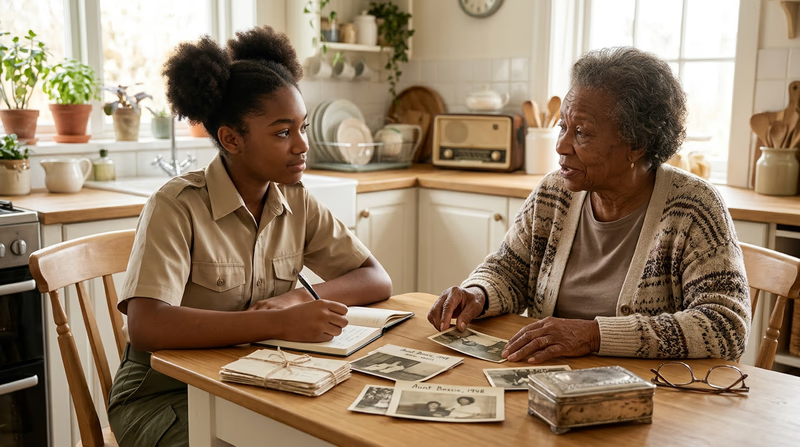
Here are some strong categories to ask about:
- Childhood home and neighborhood
- Parents, siblings, and grandparents
- School, jobs, and hobbies
- Military service or major moves
- Family traditions, holidays, and recipes
- Difficult times and how the family handled them
- Important documents, photos, or keepsakes
🎬 Video: How To Master the Art of Interviewing with 5 Easy Journalist Techniques — https://www.youtube.com/watch?v=NWDL_UYMc7Q
Record the Information Carefully
The requirement says to record what you collect so you do not forget it. That part is just as important as the interview itself. You may take notes by hand, type while you talk, or record the conversation if the person agrees and your parent or guardian is comfortable with it.
Try to capture:
- Names and spellings
- Dates or date ranges
- Locations
- Relationships between people
- Specific stories or quotes
- Leads for future research
Soon after the interview, review your notes while the conversation is still fresh. Mark anything you need to verify later. If the person mentions a family Bible, box of letters, or old military papers, write that down too. Those clues may help with Req 4, where you will work with genealogical resources and documents.
Interview Day Checklist
Use this before and during the conversation- Ask permission first: Make sure the person is comfortable with the interview.
- Bring prepared questions: Have more questions than you think you will need.
- Listen closely: Some of the best clues appear in unexpected stories.
- Record carefully: Write down names, dates, places, and follow-up leads.
- Say thank you: Family history depends on trust and generosity.
Be Respectful with Sensitive Topics
Not every family story is easy. Some topics may involve grief, divorce, illness, adoption, war, or conflict. If the person seems uncomfortable, be gentle. You can move to another question or ask whether they would prefer not to discuss it.
In genealogy, respect matters more than curiosity. You are not just collecting facts. You are talking with a real person about real memories. If you handle that well, relatives are much more likely to help you again.
StoryCorps — Great Questions A large collection of respectful, open-ended interview questions that can help you start meaningful conversations. Link: StoryCorps — Great Questions — https://storycorps.org/participate/great-questions/You now know how to prepare for a family-history interview and preserve what you learn. Next, you will move from memories to documents and discover where genealogists find evidence.
Req 4a–4b — Physical and Digital Sources
This part of Requirement 4 covers three skills that work together:
- Physical genealogical resources — records and materials you may find in person
- Digital genealogical resources — online tools and collections
- How each kind of source helps — what clues they add to your family tree
Both types of sources matter because good genealogy rarely depends on just one place or one format.
Requirement 4a: Physical Resources
Physical genealogical resources are records or materials you find in a real location instead of only on a screen. Even in the digital age, many valuable sources still live in courthouses, libraries, archives, churches, cemeteries, local museums, and family homes.
Three strong examples are:
Courthouse Records
County courthouses often hold marriage records, land records, probate files, and other legal documents. These records can prove relationships, confirm dates, and place a person in a specific county at a specific time.
Cemetery and Church Records
Gravestones may show names, dates, military service, or family connections. Church registers can include baptisms, marriages, membership lists, and burials. These are especially useful when civil records are missing or incomplete.
Family Papers and Photos
Letters, family Bibles, old photo albums, funeral cards, school programs, and certificates kept at home can be incredibly valuable. A handwritten note inside a photo album might identify several relatives at once. A Bible record may list births and marriages across generations.
The key is to explain where you would find these resources and how they help chart a family tree. They help because they connect names, dates, places, and relationships in a form you can cite and compare.
🎬 Video: Can't Find An Ancestor's Birth Record? 8 Places To Look! — https://www.youtube.com/watch?v=vhCBJEAdzkM
Requirement 4b: Digital Resources
Digital genealogical resources are online tools, databases, and scanned collections that let you search for family information from a computer or phone. These do not replace physical records, but they can save time and help you search across many places quickly.
Three strong examples are:
Online Census and Vital Record Databases
Many websites provide indexed census entries, birth records, marriage records, and death records. These can help you trace where a family lived, who lived in the household, and how family members were related.
Digital Newspaper Archives
Old newspapers often contain obituaries, wedding announcements, school news, legal notices, and local stories. These can add details that official forms do not include.
Library and Archive Collections
Many state archives, public libraries, and national organizations now scan records, photos, maps, yearbooks, and manuscripts. These collections can help you find evidence without traveling to every location in person.
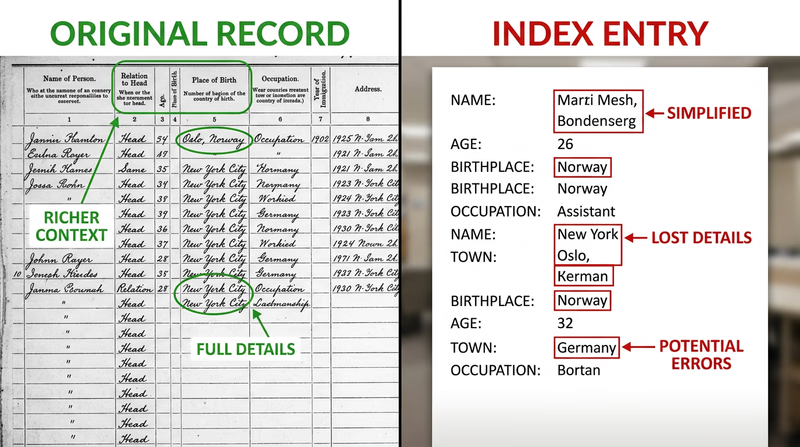
Digital sources help chart a family tree by making records searchable, shareable, and easier to compare. But they also require caution. Indexes can contain spelling mistakes. Search results can point to the wrong person. Images may be hard to read.
🎬 Video: 7 FREE Genealogy Websites You're Overlooking — https://www.youtube.com/watch?v=WQ6ELtmhnyQ
Compare the Two
Physical and digital resources are strongest when used together. You might find a census index online, then use that clue to order a paper record from a courthouse. Or you might hear a family story in an interview, then confirm it with an obituary found in a digital newspaper archive.
In Req 3, you practiced collecting memories from living people. Now you are learning how records can support, clarify, or sometimes correct those memories.
How Sources Help Your Family Tree
Use this framework when you explain the value of a source- Identity: Does it help prove who the person is?
- Relationship: Does it connect parents, children, spouses, or siblings?
- Time: Does it provide a date or date range?
- Place: Does it place the person in a city, county, or state?
- Next clue: Does it point you toward another record to search for?
You now understand where genealogists find physical and digital records and how those sources support a family tree. Next, you will practice finding a document and judging how trustworthy it really is.
Req 4c–4d — Finding and Evaluating a Document
A single record can move your family history from “someone told me” to “I have evidence.” That is why this requirement matters. It asks you to find a document that supports an event you could place on your pedigree chart or family group record, such as a birth, marriage, death, residence, or family relationship.
Requirement 4c: Obtain a Supporting Document
A genealogical document is any record that gives evidence about a person’s life. Good examples include a birth certificate, census record, marriage record, obituary, baptism record, grave photo, military draft card, or school yearbook entry.
The best document for this requirement is one that connects clearly to a family event you are already tracking. For example, if your family tree shows that a grandparent married in a certain town, a marriage record could support that event. If your chart shows that a relative lived in a certain county, a census record might support that fact.
Start with an event you already know something about. Then ask yourself:
- What fact am I trying to support?
- What kind of record would likely mention that fact?
- Where would that record probably be found?
That thinking links this page directly to Req 4a–4b, where you learned about physical and digital resources.
Requirement 4d: Explain How You Found It and How You Evaluated It
Finding a document is only half the job. You also need to explain how you found it and whether the information seems reliable.
A strong explanation usually includes the search path you followed. Maybe you started with a relative’s name and rough birth year, searched an online census index, opened the scanned image, and compared the household members to names from your interview notes. Or maybe you visited a local library and found an obituary in a newspaper archive.
Then comes evaluation. In genealogy, evaluation means asking whether the record is likely to be accurate and whether it really refers to your relative.
Important evaluation questions include:
- Was this record created close to the event, or long afterward?
- Who provided the information?
- Is the original image available, or only a transcription?
- Do the names, dates, and places match other things you know?
- Could this record belong to someone else with the same name?
A birth certificate created near the time of birth is often stronger evidence for a birth date than a much later death certificate. A census record may be useful, but the ages and spellings could still contain mistakes because the information was reported by whoever spoke to the census taker.
Explain Your Reasoning Clearly
When you report to your counselor, walk through your process in order. You might say something like this in your own words: “I wanted evidence for my grandmother’s birth. I asked my family for her full name and approximate year, then searched a state birth index. I found a record in the same county where the family lived, and the parents’ names matched what I already knew, so I believe it supports the event on my chart.”
That kind of explanation shows both research skill and judgment. Genealogy is not just collecting papers. It is deciding what those papers mean.
How to Evaluate a Genealogical Document
Use these questions before trusting a record- What event does it support? Birth, marriage, death, residence, or relationship?
- When was it created? Closer to the event is often better.
- Who supplied the information? A parent, official, neighbor, or later relative?
- Does it match other evidence? Names, places, and dates should fit what you already know.
- What questions remain? A good genealogist notices uncertainty, not just answers.
You now know how to obtain a document and judge whether it truly supports a family-history fact. Next, you will learn the likely homes of several major record types.
Req 4e — Where Records Live
If you know what kind of record you need but do not know where to search, genealogy can feel frustrating fast. This requirement helps you match common record types with the places that usually hold them.
The key word here is likely. There is not always only one answer. Laws vary by state and country, older records may have moved to archives, and some materials have been digitized. Still, there are common starting points that genealogists use again and again.
Marriage Records
A marriage record is often found at a county courthouse, county clerk’s office, town clerk’s office, or state vital records office. The exact location depends on where the marriage happened and how that place stores civil records.
Marriage records are useful because they can confirm:
- The names of the bride and groom
- The date of the marriage
- The location of the marriage
- Sometimes parents’ names, ages, occupations, or witnesses
If a marriage record is not easy to access through a government office, you may also find a church marriage register, a newspaper announcement, or a digital archive copy.
Census Records
Census records are commonly found in national archives, state archives, major genealogy websites, and library databases. In the United States, federal census records are preserved by the National Archives and widely available in indexed digital form.
Census records are valuable because they place a family in a specific location at a specific time. They may list household members, ages, occupations, immigration details, and home ownership information.
Remember that a census is a snapshot, not a complete life story. People could be missed, names could be misspelled, and ages were sometimes reported loosely. Still, census records are often some of the best starting points for tracing families over time.
Birth Records
Birth records are often found at a state or county vital records office, town clerk’s office, health department, courthouse, or archive. Church baptismal records can also help when official civil birth records do not exist or are hard to access.
Birth records can support:
- Full name at birth
- Date of birth
- Place of birth
- Parents’ names
- Sometimes addresses, occupations, or attendants
Because a birth record is usually created close to the event, it is often strong evidence for identity and parent-child relationships.
🎬 Video: Vital Records: (Where to Find Birth, Marriage, Death and Divorce Records for Genealogy) — https://www.youtube.com/watch?v=N5NT3-zvRhs
Burial Information
Burial information can come from several places: cemeteries, gravestones, sexton records, funeral homes, church burial registers, obituary notices, memorial websites, and local historical societies. A cemetery office may have plot maps or burial cards. A gravestone photo may give dates and family relationships. An obituary may explain much more about the person’s life.
Burial information is especially helpful because it can connect a death event to relatives. People are often buried near spouses, parents, or children, and shared cemetery plots can suggest relationships worth confirming.
Use the Right Starting Place
Different record types live in different systems. Government offices often hold vital records. Archives and libraries preserve older material. Cemeteries and churches may hold local records that never entered a statewide database. Online services can help you search faster, but the original home of the record still matters.
This requirement connects naturally to Req 4c–4d, because once you know where records are likely to be, you can search more efficiently and explain your process better.
Likely Homes for Common Records
Use this as a quick memory aid- Marriage record: County clerk, courthouse, town clerk, church register, or state vital records office.
- Census record: National archives, genealogy databases, library databases, or state archives.
- Birth record: Vital records office, health department, courthouse, town clerk, or church register.
- Burial information: Cemetery office, gravestone, funeral home, church records, obituary, or local historical society.
You now know where major record types are usually kept. Next, you will explore the people and organizations that can help you find and understand those records.
Req 5 — Research Helpers Overview
For this requirement, you will contact exactly one kind of helper. The goal is not just to make contact. It is to understand what role that person or institution plays in genealogy and how they support researchers.
Req 5a — Genealogical or Lineage Society focuses on groups that gather people around family history, heritage, and research support. You learn how members share knowledge, projects, and records.
Req 5b — Professional Genealogist explores experts who are hired to solve research problems, analyze evidence, and prepare reports.
Req 5c — Surname Organization looks at groups built around one family name or family line. These organizations can collect stories, records, and DNA or document projects tied to that surname.
Req 5d — Educational Facility covers places that teach genealogy, such as libraries, family history centers, or specialized learning institutions.
Req 5e — Record Repository highlights places that preserve records, such as archives, courthouses, and genealogical libraries.
Each option teaches something different. Some help you learn. Some help you search. Some preserve records. Some connect you with experienced researchers.
How to Choose Your Contact
Think about access, interest, and what you want to learn- Easy to reach: A local library, archive, or society may be simpler to contact than a specialist in another state.
- Best fit for your question: If you want to understand research methods, a professional genealogist may be ideal. If you want to learn what records exist nearby, a repository may be better.
- What you will gain: Some options teach community and networking; others teach how records are preserved or how advanced research is done.
- Available adults: Your parent, guardian, or counselor may know a safe and useful contact to start with.
Now begin with the first option and see what genealogical or lineage societies actually do.
Req 5a — Genealogical or Lineage Society
If you are new to genealogy, it can feel like you have to figure everything out alone. A genealogical or lineage society shows that family history is often a team effort. These groups bring people together to share research skills, local knowledge, records, and encouragement.
A genealogical society usually welcomes anyone interested in researching family history. Members might attend meetings, hear guest speakers, join workshops, help index records, publish newsletters, or volunteer on cemetery and archive projects.
A lineage society is more specific. It usually requires members to prove descent from a particular person or group, such as an ancestor who served in a war or lived in a certain historic period. Even if you are not eligible to join one yet, it is useful to understand what these organizations do and what documentation they require.
What Services or Activities Might They Provide?
When you contact a society, ask about the services, records, or activities it offers. Common examples include:
- Beginner workshops and classes
- Local record indexes or cemetery surveys
- Research help sessions
- Access to newsletters or journals
- Special-interest groups for regional or ethnic research
- Volunteer projects that preserve local history
- Meetings where members share methods and discoveries
A local genealogical society may know which courthouse burned, which church kept unusually strong records, or which cemetery has unreadable stones that were transcribed years ago. That kind of local expertise is hard to replace.
🎬 Video: Why Join Genealogical & Historical Societies (Help with Family History) — https://www.youtube.com/watch?v=bkMS7rfYK4s
Why This Option Matters
This option teaches you that genealogy is not only about documents. It is also about community knowledge. A society can help you find better sources, avoid beginner mistakes, and connect with people who care about the same places or family lines.
It also shows how research skills are passed from one generation to another. In some ways, a genealogical society does for researchers what a troop does for Scouts: it gives people a place to learn, practice, and help each other improve.
Questions to Ask a Society
Use these when you make contact- What services do you offer new researchers?
- Do you keep any local records, indexes, or publications?
- What meetings, classes, or volunteer projects do you run?
- How does your group help preserve family or local history?
- What would you recommend for someone just getting started?
You now know what genealogical and lineage societies contribute to family history research. Next, look at the work of a professional genealogist.
Req 5b — Professional Genealogist
Sometimes a family reaches a dead end and needs expert help. Maybe the records are in another country, maybe several people have the same name, or maybe the evidence is confusing. That is when a professional genealogist can make a big difference.
A professional genealogist is paid to research family history, analyze evidence, solve problems, and explain conclusions clearly. This job is not just “searching online.” It often includes planning research, visiting archives, reading difficult handwriting, comparing conflicting records, and writing reports that show how the conclusion was reached.
What Services Might a Professional Genealogist Provide?
When you contact a professional genealogist, ask what kinds of work they do. Common services include:
- Building or extending family trees
- Solving a “brick wall” research problem
- Locating records in archives or courthouses
- Translating or interpreting old documents
- Preparing proof summaries or written reports
- Teaching clients how to continue the research themselves
Many professionals specialize. One might focus on military records, another on African American genealogy, another on immigration research, and another on a certain region or language. That specialization matters because genealogy gets more difficult as records become older, more scattered, or harder to read.
🎬 Video: How to Hire a Professional Genealogist: Finding a Professional — https://www.youtube.com/watch?v=qDSXuz8l9es
Skills Behind the Job
A strong professional genealogist needs more than curiosity. They need patience, research planning, source evaluation, report writing, and ethics. They must separate evidence from guesses and explain uncertainty honestly.
That connects directly to Req 4c–4d, where you learned to evaluate a document instead of trusting it automatically. Professionals do that kind of analysis every day.
They also need strong communication skills. If they find a possible answer but cannot explain why it is convincing, the client cannot make good use of the research. Good genealogy is not magic. It is careful reasoning.
Questions to Ask a Professional Genealogist
Focus on services, methods, and specialties- What kinds of research projects do you take on?
- Do you specialize in a place, record type, or historical period?
- How do you report your findings to a client?
- What makes a family-history problem difficult to solve?
- What advice would you give a beginner researcher?
You now know how professional genealogists help families solve research problems. Next, you will look at surname organizations that gather people around a shared family name.
Req 5c — Surname Organization
Some genealogical groups are built around one family name. If your last name is unusual, there may already be an organization, newsletter, online group, or family association connected to it. These groups are called surname organizations.
A surname organization gathers people who share interest in the same family name, even if they do not yet know exactly how they are related. Some focus on one spelling. Others track several related spellings because names often changed over time.
What Do Surname Organizations Do?
The services and activities can vary, but many surname groups:
- Share newsletters or updates about family research
- Collect documents, photos, and family stories
- Organize reunions or online discussion groups
- Maintain a website or social media space for members
- Compare family branches from different regions or countries
- Encourage members to preserve records tied to the name
These organizations can be especially helpful when a surname appears in many places over time. A group may already know common migration routes, recurring first names, or older spelling variations that a beginner would miss.
🎬 Video: How to Use Facebook Surname Groups for Genealogy Research (Tiny Tip Tuesday #1) — https://www.youtube.com/watch?v=fv9vpbktRhs
Benefits and Cautions
Surname groups can create exciting connections, but they also require careful thinking. Just because two people share a surname does not mean they belong to the same immediate family line. Some surnames developed independently in different places. Some were changed after immigration. Others were adopted for social or legal reasons.
That means a surname organization is a place to gather clues, not a substitute for evidence. Use what you learn there as a lead to test with records, just as you learned in Req 4.
Questions to Ask a Surname Organization
Learn how the group collects and shares family information- What kinds of records or stories do you collect?
- Do you include spelling variations of the surname?
- How do members share research findings?
- Do you hold reunions, meetings, or online discussions?
- How do you help members verify whether branches are truly related?
You now understand how surname organizations connect researchers around a shared family name. Next, you will look at educational facilities that teach family-history skills.
Req 5d — Educational Facility
Learning genealogy is easier when you have a place that teaches it well. A genealogical educational facility or institution focuses on helping people build research skills, understand records, and use tools more effectively.
This kind of place might be a family history center, a major public library with genealogy classes, a historical society with workshops, or a specialized genealogy center. The main difference between this option and a record repository is the emphasis on teaching. A repository preserves records. An educational facility helps people learn how to use them.
What Might It Offer?
These institutions often provide:
- Beginner classes on how to start a family tree
- Workshops on records like census forms, military files, or immigration papers
- Help with online databases and search strategies
- Staff or volunteers who answer research questions
- Computers, scanners, or software for family-history work
- Lectures, webinars, and special events
Some facilities combine education with access to records. Others focus more heavily on classes and guidance. Either way, they can help a beginner avoid confusion and build better habits early.
🎬 Video: Getting Started with The Genealogy Center — https://www.youtube.com/watch?v=Umga_tVIME8
Why Education Matters in Genealogy
A lot of beginners assume genealogy is just typing a name into a search box. But good family history depends on asking better questions, choosing stronger sources, and organizing information well. Education helps with all of that.
A good teacher can show you how to search with spelling variations, why a timeline matters, or how to compare two possible records for the same person. Those are the same habits you have practiced in Req 2a and Req 4c–4d.
Educational institutions also make genealogy more welcoming. They create places where beginners can ask questions without feeling embarrassed and where experienced researchers can keep improving.
Questions to Ask an Educational Facility
Find out how the institution supports learners- What classes or workshops do you offer?
- Do you help beginners start family trees or organize records?
- What tools, software, or databases are available on-site?
- Can visitors get one-on-one research help?
- What makes your institution different from an archive or library collection alone?
You now know how genealogy education centers help people learn the craft of family-history research. Next, you will look at repositories that preserve the actual records.
Req 5e — Record Repository
Every family-history search eventually depends on a place that preserves records. That place is called a repository. A genealogical record repository may be a courthouse, archive, library, records center, or historical society. Its job is to keep materials safe, organized, and available for research.
Repositories matter because they often hold the original or official versions of records. A website might give you an index, but the repository may hold the full document, the original book, the map, the probate file, or the unscanned collection that never made it online.
What Services Might a Repository Provide?
When you contact a repository, ask what kinds of records it keeps and how researchers can use them. Common services include:
- Access to original records or microfilm
- Finding aids, catalogs, and indexes
- Research rooms or reference desks
- Copying or scanning services
- Rules for handling fragile materials
- Staff help locating collections
- Online guides that explain what records are available
Repositories do not all hold the same materials. A county courthouse may focus on deeds, probate, and marriages. A national archive may preserve census, military, and immigration records. A genealogical library may collect city directories, local histories, and family files.
🎬 Video: Where to Find Records for Family History Research — https://www.youtube.com/watch?v=9HH-dtvTSOw
Why Repositories Are Different
A repository is not just a storage room. It is a system for preserving evidence so it can still be used decades or centuries later. That means repositories care about cataloging, climate control, access rules, and long-term preservation.
This option ties directly to Req 4e, where you learned likely places to find marriage, census, birth, and burial records. Repositories are often those places.
It also teaches an important genealogy habit: respect the institution. Read the rules. Bring the right information. Follow staff guidance. A well-prepared researcher is easier to help.
Questions to Ask a Repository
Use these to learn what the institution preserves and how access works- What kinds of genealogical records do you hold?
- Do researchers need an appointment, ID, or special permission?
- Are your records indexed, digitized, or only available on-site?
- What help do staff provide if someone is just getting started?
- What records are most useful for local family-history research?
You now understand how repositories preserve records and make serious genealogical research possible. Next, you will start building your own pedigree chart.
Req 6 — Build a Pedigree Chart
A blank pedigree chart can look intimidating at first, but this is where your research starts to come together. Instead of keeping names and dates in separate notes, you will place people into a structure that shows how each generation connects to the next.
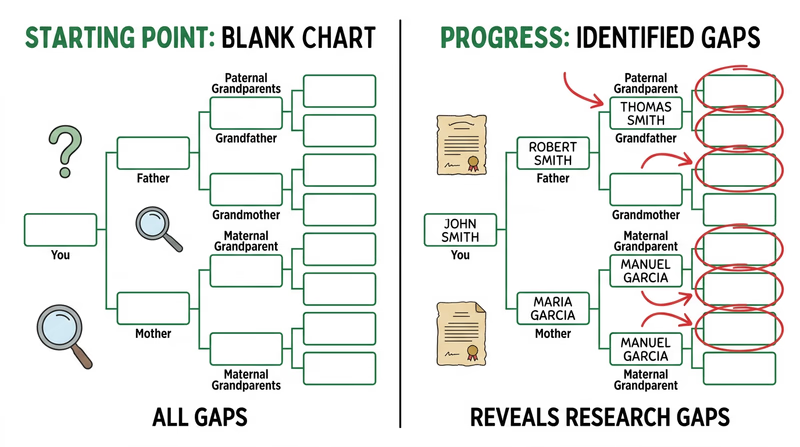
A pedigree chart is a type of family tree that starts with one person and moves backward through parents, grandparents, and earlier ancestors. For this requirement, you begin with yourself and add at least two additional generations. That means you will usually include yourself, your parents, and your grandparents at minimum.
Start with What You Know
Begin with confirmed information, not guesses. Write your own name first. Then add your parents. Then add your grandparents if you know them. Include names and any dates or places you are certain about.
You do not need every space to be complete right away. In fact, empty spaces can be useful because they show where to focus your next search.
Good sources for filling in a pedigree chart include:
- Family members you interviewed in Req 3
- Family records and documents from Req 4
- Birth, marriage, and death records
- Obituaries and cemetery information
- Old photographs with labels
Paper or Software?
The requirement lets you choose either a paper chart or genealogy software. Both approaches can work well.
A paper chart is simple, visual, and easy to bring to a counselor. It can also help you slow down and think carefully about relationships.
Software can make it easier to add notes, sources, and more generations later. But a digital chart is only as good as the information you put into it. Do not let neat-looking software fool you into thinking unverified information is automatically correct.
🎬 Video: How to make a family tree — https://www.youtube.com/watch?v=Ci55EXJtlDM
Protect Privacy While You Work
Because your pedigree chart begins with you and includes living relatives, privacy matters. You may choose to use a paper version or keep your digital chart private instead of posting it online.
That caution becomes even more important when you reach Req 8a–8c, where you will study how computers and the internet have changed genealogy.
Pedigree Chart Worksheet Resource: Pedigree Chart Worksheet — /merit-badges/genealogy/guide/pedigree-chart-worksheet/Make the Chart Useful
A good pedigree chart is more than a list of names. It should be legible, organized, and based on evidence. If you are uncertain about a date or spelling, mark it clearly or keep it in notes until you can verify it. Genealogy rewards accuracy.
As you build the chart, notice patterns. Did several generations live in the same county? Did one branch move across states? Do certain names repeat? Those patterns may suggest where to search next.
Pedigree Chart Basics
Use this to build a chart you can explain confidently- Start with yourself: Then move backward to parents and grandparents.
- Use confirmed facts first: Add uncertain information only if you label it clearly.
- Keep it readable: Neat charts are easier to discuss with your counselor.
- Track your sources: Know where each fact came from.
- Notice gaps: Blank spaces are research goals, not failures.
You now know how to begin a pedigree chart and why accuracy and privacy both matter. Next, you will switch from a broad chart to a more detailed family group record.
Req 7 — Family Group Records
A pedigree chart gives you the big picture. A family group record zooms in. Instead of showing many generations at once, it focuses on one household or family unit and captures more detail about parents and children.
For this requirement, you will complete two family group records:
- One with you and your siblings listed as the children
- One with one of your parents and that parent’s siblings listed as the children
This requirement helps you organize families sideways as well as upward. That matters because siblings, not just direct ancestors, often provide the clues that break through research problems.
Why Family Group Records Matter
Suppose two men named James Carter live in the same county. A pedigree chart alone may not tell you which one belongs to your family line. But a family group record that includes spouse, children, dates, and places can help you separate them.
That is why genealogists use both charts and family group records. The chart shows the framework. The group record captures the details inside one branch.
🎬 Video: How Family Group Sheets can help preserve and share genealogy research for future generations — https://www.youtube.com/watch?v=nb2C3z7C_R8
What Goes on a Family Group Record?
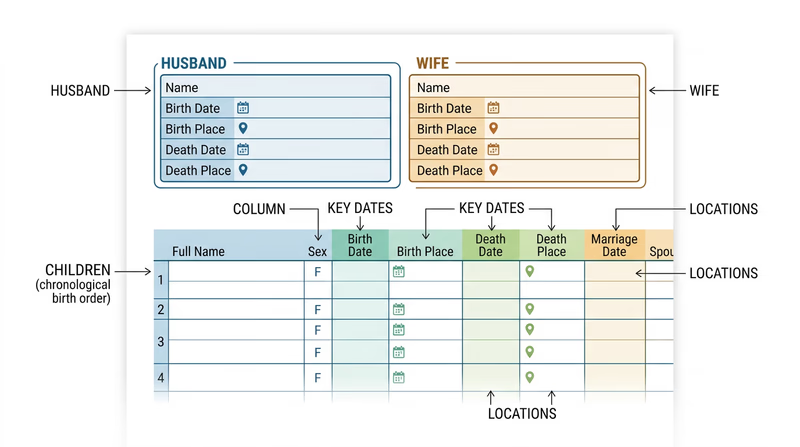
A family group record usually includes:
- Full names of the parents
- Birth, marriage, and death information for the parents
- Names of the children
- Birth and death information for each child
- Places connected to those events
- Notes or source information
For this requirement, focus on making the relationships and core facts clear. If you do not know every date, write in what you can support and leave room to add more later.
Why Siblings Matter in Genealogy
Beginning genealogists sometimes pay attention only to direct ancestors. But siblings are often the key to understanding a family. One child’s obituary may name parents more clearly. One sibling may have stayed in the hometown while another moved away. One brother’s military paper may confirm the family address.
By creating a group record for siblings, you begin to see family history as a network instead of a straight line.
Strong Family Group Records
Use these habits while you fill out each form- Keep the family unit clear: One set of parents and their children on each form.
- List siblings carefully: Birth order can matter.
- Include places as well as dates: Location often helps prove identity.
- Track missing facts: Empty spaces show where you need more research.
- Use evidence, not assumptions: Confirm names and relationships whenever possible.
Learn from the Comparison
The most useful part of this requirement may be comparing the two forms. Your own generation may be easy to fill out because you know the people directly. Your parent’s generation may reveal gaps, new relatives, or questions you had not thought about.
That is normal. In genealogy, every finished form also becomes a map of what to research next.
In Req 6, you built a pedigree chart. Together, these two requirements form the core record-keeping tools of the badge.
FamilySearch — Genealogy Forms Examples of common genealogy forms and explanations of how family group records help organize research. Link: FamilySearch — Genealogy Forms — https://www.familysearch.org/en/wiki/Genealogy_Research_FormsYou now know how family group records capture the detail that broad family trees cannot. Next, you will explore how technology has reshaped genealogy itself.
Req 8a–8c — Technology Changes Genealogy
This requirement covers three big changes that transformed genealogy:
- Computers and the internet made records easier to search and share
- Photography and microfilming preserved records and images that might have been lost
- Record indexing turned massive collections into searchable tools
Together, these changes made genealogy faster and more accessible, but they also created new responsibilities around accuracy and privacy.
Requirement 8a: Computers and the Internet
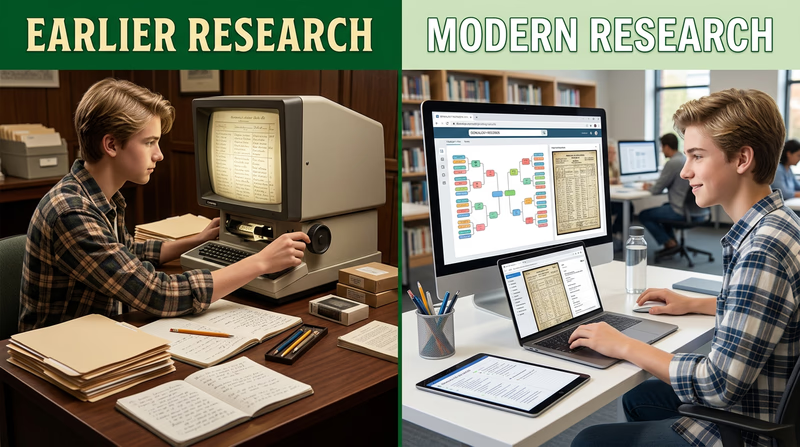
Computers changed genealogy by giving researchers better ways to store, search, organize, and compare information. Instead of keeping everything in handwritten notebooks or paper folders, genealogists can now build family trees in software, scan old records, label photos, and search huge databases in minutes.
The internet changed things even more. It made it possible to search census records, military files, newspaper archives, cemetery databases, maps, and local-history collections from home. It also made collaboration easier. Relatives in different states can compare photos or documents without mailing copies back and forth.
But speed can create problems. When records are easy to click, people sometimes copy bad information without checking it. Public family trees can spread mistakes quickly. Good genealogy still requires the habits you practiced in Req 4c–4d: compare sources and test evidence.
🎬 Video: How to Use the Internet Archive for Genealogy — https://www.youtube.com/watch?v=Ltc0EjJzB5k
Requirement 8b: Photography and Microfilming
Photography changed genealogy by preserving images of people, places, gravestones, and documents. A photograph can freeze details that would otherwise fade from memory: clothing, school uniforms, house styles, military insignia, or handwritten notes on the back of a picture.
Photography also helped archives copy fragile materials. Later, microfilming became one of the most important preservation tools in genealogy. Microfilm stores miniature photographic copies of documents on reels. Before large-scale digitization, microfilm allowed libraries and archives to share census schedules, deeds, newspapers, and church records without moving the originals.
That matters because many original records are too fragile, too rare, or too valuable for heavy handling. Photography and microfilm helped save access to records that may have been damaged, worn out, or destroyed later.
🎬 Video: Getting Involved: Quick Name Review — https://www.youtube.com/watch?v=tP-m8IWX6vU
Requirement 8c: Record Indexing
Indexing is one of the quiet heroes of genealogy. An index is a searchable guide to records. Instead of reading every page of a 500-page book or every image in a census reel, you can search a name, place, or date and jump to likely matches.
Indexing usually happens when volunteers or staff read records and enter key details into a searchable system. That system might include names, dates, locations, relationships, or document numbers. Once indexed, the records become much easier to find.
Indexing has influenced genealogy by making large collections practical for beginners and experts alike. It saves time, helps researchers spot patterns across thousands of records, and opens access to people who cannot travel to the archive.
Still, indexes are not perfect. Handwriting can be hard to read. Spelling can vary. A person may be indexed under the wrong letter or misspelled entirely. That is why genealogists still check the original image whenever possible.
🎬 Video: Getting Involved: Quick Name Review — https://www.youtube.com/watch?v=tP-m8IWX6vU
🎬 Video: New: How to "Get Involved" with FamilySearch indexing on your phone! — https://www.youtube.com/watch?v=cFjbF7sGNoA
🎬 Video: FamilySearch: Get Involved Introduction | RootsTech 2022 — https://www.youtube.com/watch?v=fzd619Xv7N8
Technology's Effects on Genealogy
Use these ideas to explain the big picture- Computers and internet: Faster searching, easier organization, and easier sharing.
- Photography and microfilm: Better preservation and wider access to fragile records.
- Indexing: Searchable collections that save time and reveal useful clues.
- Main caution: Easy access does not guarantee accuracy.
You now understand how technology reshaped genealogy from searching to preservation to indexing. Next, you will step back and reflect on what family-history research taught you about your own family.
Req 9 — What You Learned About Family
After all the charts, records, and interviews, this requirement brings you back to the real point of genealogy: understanding people. Family history is not just about collecting facts. It is about seeing how those facts reveal lives, choices, challenges, traditions, and connections.
By this point in the badge, you may have discovered patterns in where your relatives lived, what work they did, how they moved, what hardships they faced, or how they supported one another. You may also have noticed how some stories were remembered clearly while others almost disappeared.
What Genealogical Research Can Teach You
Genealogical research often teaches lessons in several areas at once.
Identity and Belonging
You may learn more about where your family came from geographically, culturally, or historically. That can deepen your sense of identity, not by locking you into one label, but by showing the many paths that came together in your family.
Change Over Time
A family tree stretches across different decades and generations. When you compare those generations, you may see changes in jobs, education, travel, family size, housing, or opportunities. Those comparisons help you understand that your own life sits inside a much larger story.
Character and Resilience
Many family histories include examples of perseverance. A relative may have immigrated, served in the military, survived illness, rebuilt after loss, or worked difficult jobs to support others. Learning those stories can build respect and gratitude.
Unfinished Questions
Genealogy also teaches humility. Not every question gets answered right away. Some records are missing. Some memories conflict. Some branches are still unclear. That does not mean the research failed. It means family history is an ongoing project.
How to Have the Discussion
When you talk with your counselor, focus on what genuinely surprised, interested, or moved you. Maybe you learned that several generations lived in one place longer than you expected. Maybe you discovered a relative’s career or military service. Maybe the biggest lesson was how much everyday records can reveal.
Try to discuss both facts and meaning. Facts answer questions like who, where, and when. Meaning answers why the discovery matters to you.
Ideas for Your Discussion
Use these prompts to organize what you want to share- One thing that surprised you about a family member or branch of your family
- One pattern you noticed across generations, such as movement, jobs, or traditions
- One source that taught you a lot, like an interview, obituary, census record, or photo
- One question you still want to answer in future research
- One reason genealogy matters to you now that you have done some of it yourself
Respect What You Learn
Some discoveries may be joyful. Others may be complicated. A family history can include loss, secrets, migration, poverty, conflict, or unexpected relationships. Discuss those findings with maturity and care, especially when living relatives are involved.
That respectful attitude is part of being a good genealogist. You are not just solving puzzles. You are handling real people’s stories.
Smithsonian — Preserving Family History Ideas for thinking about family records, memories, and why preserving them matters. Link: Smithsonian — Preserving Family History — https://www.si.edu/spotlight/preserving-family-historyYou have reached the end of the requirements, but family history is never really finished. Keep going with ideas for deeper research, real-world experiences, and organizations on the Extended Learning page.
Extended Learning
A. Keep Following the Story
You finished the Genealogy merit badge, but you have only seen the beginning of what family history can reveal. Every chart you built and every document you found points to more questions, more stories, and more connections. If this badge sparked your curiosity, you already have what you need to keep going: patience, respect for evidence, and a growing sense of what makes a family story worth preserving.
B. Deep Dive: Become a Better Record Detective
One of the best next steps in genealogy is learning how to compare several records about the same person. A birth record, census entry, obituary, city directory, and gravestone may all describe one individual, but each source was created for a different reason and may contain slightly different details. That means the next level of genealogy is not just finding more records. It is learning how to weigh them.
Try choosing one ancestor or relative and building a mini evidence file. Gather at least three sources that describe that person. Then compare names, ages, places, occupations, and relationships. Ask which source was created closest to the event, who likely gave the information, and which details appear consistently across multiple records. You may find that one source corrects another or that a small mismatch opens a new research question.
This kind of comparison also teaches patience. Real genealogy is often less like uncovering one dramatic secret and more like piecing together a puzzle from many ordinary clues. The skill of careful comparison will help you far beyond this badge. It is useful in school research, journalism, science, and any situation where you need to judge whether evidence is strong.
C. Deep Dive: Study a Place, Not Just a Person
Family history becomes much richer when you understand the places where your relatives lived. If an ancestor farmed in one county for forty years, what crops were common there? Was there a railroad nearby? Did the town grow or shrink? Were there major events such as floods, factory openings, wars, or migrations that shaped local life?
This kind of place-based research helps you turn a family tree into a lived story. A census record that lists an occupation means more when you know what work was available in that area. A move from one state to another makes more sense when you learn about land prices, military service, immigration patterns, or new industries.
You do not need a huge project to start. Pick one hometown or county connected to your family and explore local newspapers, old maps, school histories, or historical society websites. Even a few hours of local-history research can make a relative’s life feel more real.
D. Deep Dive: Preserve Family History for the Future
Another important next step is preservation. Many family records survive only because one person took the time to label photos, scan documents, store papers safely, or write down names before an older relative forgot them. You can become that person for your family.
Start small. Choose one set of family photos and identify as many people, places, and dates as you can. Scan fragile items carefully. Store originals in safe, dry places. Ask relatives whether they have boxes of papers, letters, military records, or certificates that no one has organized yet. If they do, offer to help make a simple inventory.
Preservation is not glamorous, but it is one of the most meaningful gifts a genealogist can give. A story that is unlabeled can become useless in one generation. A photo with names, dates, and context can remain valuable for many generations.
E. Real-World Experiences
Real-World Genealogy Experiences
Try one of these to keep learning beyond the badge- Visit a local cemetery: Practice reading gravestones, family groupings, and dates. Compare what you see with online memorial records.
- Spend an afternoon in a library genealogy room: Ask what local collections they keep that are not easy to find online.
- Attend a genealogy society meeting or webinar: Listen to how experienced researchers talk about evidence and research problems.
- Interview another relative: Ask about a different branch of the family and compare that conversation to your first interview.
- Label family photos with a parent or grandparent: This is one of the fastest ways to preserve information before it disappears.