Req 4c–4d — Finding and Evaluating a Document
A single record can move your family history from “someone told me” to “I have evidence.” That is why this requirement matters. It asks you to find a document that supports an event you could place on your pedigree chart or family group record, such as a birth, marriage, death, residence, or family relationship.
Requirement 4c: Obtain a Supporting Document
A genealogical document is any record that gives evidence about a person’s life. Good examples include a birth certificate, census record, marriage record, obituary, baptism record, grave photo, military draft card, or school yearbook entry.
The best document for this requirement is one that connects clearly to a family event you are already tracking. For example, if your family tree shows that a grandparent married in a certain town, a marriage record could support that event. If your chart shows that a relative lived in a certain county, a census record might support that fact.
Start with an event you already know something about. Then ask yourself:
- What fact am I trying to support?
- What kind of record would likely mention that fact?
- Where would that record probably be found?
That thinking links this page directly to Req 4a–4b, where you learned about physical and digital resources.
Requirement 4d: Explain How You Found It and How You Evaluated It
Finding a document is only half the job. You also need to explain how you found it and whether the information seems reliable.
A strong explanation usually includes the search path you followed. Maybe you started with a relative’s name and rough birth year, searched an online census index, opened the scanned image, and compared the household members to names from your interview notes. Or maybe you visited a local library and found an obituary in a newspaper archive.
Then comes evaluation. In genealogy, evaluation means asking whether the record is likely to be accurate and whether it really refers to your relative.
Important evaluation questions include:
- Was this record created close to the event, or long afterward?
- Who provided the information?
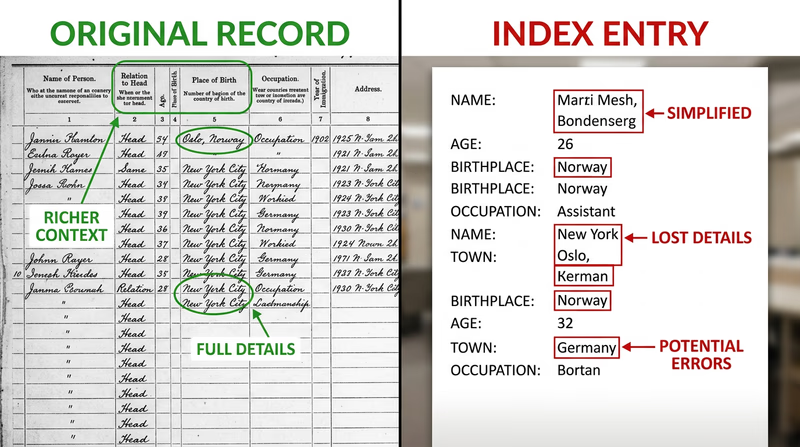
- Is the original image available, or only a transcription?
- Do the names, dates, and places match other things you know?
- Could this record belong to someone else with the same name?
A birth certificate created near the time of birth is often stronger evidence for a birth date than a much later death certificate. A census record may be useful, but the ages and spellings could still contain mistakes because the information was reported by whoever spoke to the census taker.
Explain Your Reasoning Clearly
When you report to your counselor, walk through your process in order. You might say something like this in your own words: “I wanted evidence for my grandmother’s birth. I asked my family for her full name and approximate year, then searched a state birth index. I found a record in the same county where the family lived, and the parents’ names matched what I already knew, so I believe it supports the event on my chart.”
That kind of explanation shows both research skill and judgment. Genealogy is not just collecting papers. It is deciding what those papers mean.
How to Evaluate a Genealogical Document
Use these questions before trusting a record
- What event does it support? Birth, marriage, death, residence, or relationship?
- When was it created? Closer to the event is often better.
- Who supplied the information? A parent, official, neighbor, or later relative?
- Does it match other evidence? Names, places, and dates should fit what you already know.
- What questions remain? A good genealogist notices uncertainty, not just answers.
You now know how to obtain a document and judge whether it truly supports a family-history fact. Next, you will learn the likely homes of several major record types.