Req 6 — Build a Pedigree Chart
A blank pedigree chart can look intimidating at first, but this is where your research starts to come together. Instead of keeping names and dates in separate notes, you will place people into a structure that shows how each generation connects to the next.
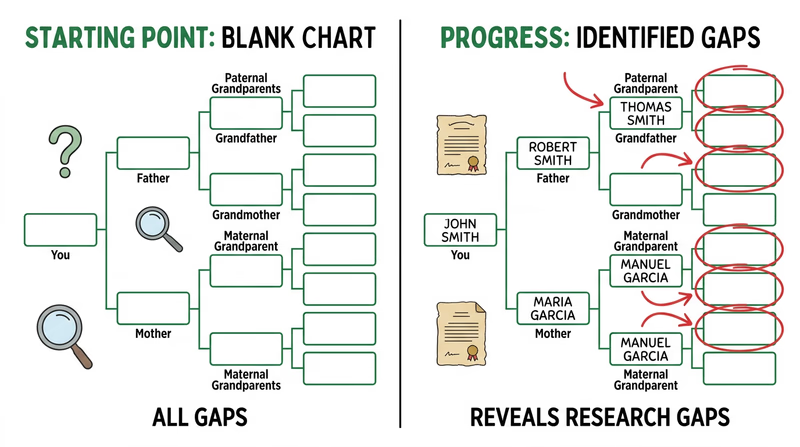
A pedigree chart is a type of family tree that starts with one person and moves backward through parents, grandparents, and earlier ancestors. For this requirement, you begin with yourself and add at least two additional generations. That means you will usually include yourself, your parents, and your grandparents at minimum.
Start with What You Know
Begin with confirmed information, not guesses. Write your own name first. Then add your parents. Then add your grandparents if you know them. Include names and any dates or places you are certain about.
You do not need every space to be complete right away. In fact, empty spaces can be useful because they show where to focus your next search.
Good sources for filling in a pedigree chart include:
- Family members you interviewed in Req 3
- Family records and documents from Req 4
- Birth, marriage, and death records
- Obituaries and cemetery information
- Old photographs with labels
Paper or Software?
The requirement lets you choose either a paper chart or genealogy software. Both approaches can work well.
A paper chart is simple, visual, and easy to bring to a counselor. It can also help you slow down and think carefully about relationships.
Software can make it easier to add notes, sources, and more generations later. But a digital chart is only as good as the information you put into it. Do not let neat-looking software fool you into thinking unverified information is automatically correct.
Protect Privacy While You Work
Because your pedigree chart begins with you and includes living relatives, privacy matters. You may choose to use a paper version or keep your digital chart private instead of posting it online.
That caution becomes even more important when you reach Req 8a–8c, where you will study how computers and the internet have changed genealogy.
Pedigree Chart WorksheetMake the Chart Useful
A good pedigree chart is more than a list of names. It should be legible, organized, and based on evidence. If you are uncertain about a date or spelling, mark it clearly or keep it in notes until you can verify it. Genealogy rewards accuracy.
As you build the chart, notice patterns. Did several generations live in the same county? Did one branch move across states? Do certain names repeat? Those patterns may suggest where to search next.
Pedigree Chart Basics
Use this to build a chart you can explain confidently
- Start with yourself: Then move backward to parents and grandparents.
- Use confirmed facts first: Add uncertain information only if you label it clearly.
- Keep it readable: Neat charts are easier to discuss with your counselor.
- Track your sources: Know where each fact came from.
- Notice gaps: Blank spaces are research goals, not failures.
You now know how to begin a pedigree chart and why accuracy and privacy both matter. Next, you will switch from a broad chart to a more detailed family group record.