Req 8a–8c — Technology Changes Genealogy
This requirement covers three big changes that transformed genealogy:
- Computers and the internet made records easier to search and share
- Photography and microfilming preserved records and images that might have been lost
- Record indexing turned massive collections into searchable tools
Together, these changes made genealogy faster and more accessible, but they also created new responsibilities around accuracy and privacy.
Requirement 8a: Computers and the Internet
Computers changed genealogy by giving researchers better ways to store, search, organize, and compare information. Instead of keeping everything in handwritten notebooks or paper folders, genealogists can now build family trees in software, scan old records, label photos, and search huge databases in minutes.
The internet changed things even more. It made it possible to search census records, military files, newspaper archives, cemetery databases, maps, and local-history collections from home. It also made collaboration easier. Relatives in different states can compare photos or documents without mailing copies back and forth.
But speed can create problems. When records are easy to click, people sometimes copy bad information without checking it. Public family trees can spread mistakes quickly. Good genealogy still requires the habits you practiced in Req 4c–4d: compare sources and test evidence.
Requirement 8b: Photography and Microfilming
Photography changed genealogy by preserving images of people, places, gravestones, and documents. A photograph can freeze details that would otherwise fade from memory: clothing, school uniforms, house styles, military insignia, or handwritten notes on the back of a picture.
Photography also helped archives copy fragile materials. Later, microfilming became one of the most important preservation tools in genealogy. Microfilm stores miniature photographic copies of documents on reels. Before large-scale digitization, microfilm allowed libraries and archives to share census schedules, deeds, newspapers, and church records without moving the originals.
That matters because many original records are too fragile, too rare, or too valuable for heavy handling. Photography and microfilm helped save access to records that may have been damaged, worn out, or destroyed later.
Requirement 8c: Record Indexing
Indexing is one of the quiet heroes of genealogy. An index is a searchable guide to records. Instead of reading every page of a 500-page book or every image in a census reel, you can search a name, place, or date and jump to likely matches.
Indexing usually happens when volunteers or staff read records and enter key details into a searchable system. That system might include names, dates, locations, relationships, or document numbers. Once indexed, the records become much easier to find.
Indexing has influenced genealogy by making large collections practical for beginners and experts alike. It saves time, helps researchers spot patterns across thousands of records, and opens access to people who cannot travel to the archive.
Still, indexes are not perfect. Handwriting can be hard to read. Spelling can vary. A person may be indexed under the wrong letter or misspelled entirely. That is why genealogists still check the original image whenever possible.
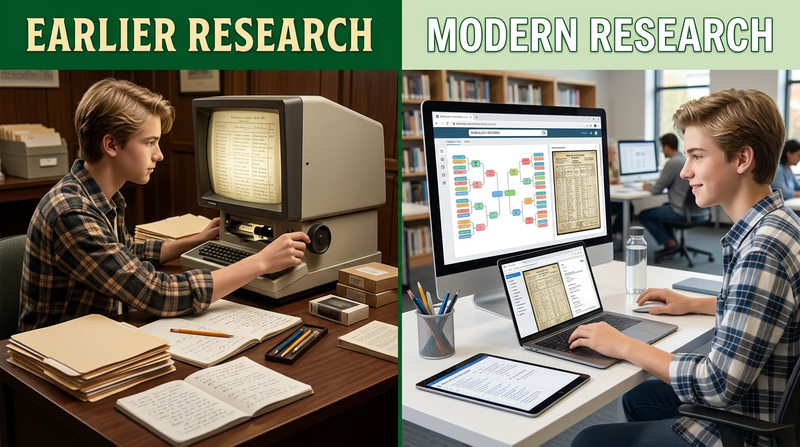
Technology's Effects on Genealogy
Use these ideas to explain the big picture
- Computers and internet: Faster searching, easier organization, and easier sharing.
- Photography and microfilm: Better preservation and wider access to fragile records.
- Indexing: Searchable collections that save time and reveal useful clues.
- Main caution: Easy access does not guarantee accuracy.
You now understand how technology reshaped genealogy from searching to preservation to indexing. Next, you will step back and reflect on what family-history research taught you about your own family.