Req 2 — Geocaching Etiquette and Leave No Trace
This requirement is about the rules that protect geocaching itself. It covers three big ideas:
- Why cache placement must not damage the land
- How geocachers act responsibly when hiding, seeking, and maintaining caches
- How Scout outdoor ethics apply every time you search
A geocache may be small, but bad behavior around one can damage trails, disturb wildlife, annoy land managers, or get caches removed. Good etiquette keeps the hobby welcome in public places.
Requirement 2a: Why You Never Bury a Cache
If a cache were buried, seekers would have to dig for it. That simple fact creates a long list of problems. Digging damages roots, disturbs soil, increases erosion, and can harm fragile plants or habitat. It also makes public land managers much less likely to support geocaching, because buried objects can look suspicious and destructive.
A hidden cache should be concealed, not excavated. Tucked under natural cover that can be replaced gently is very different from burying something underground. If finding the container requires digging, the cache has been placed poorly.
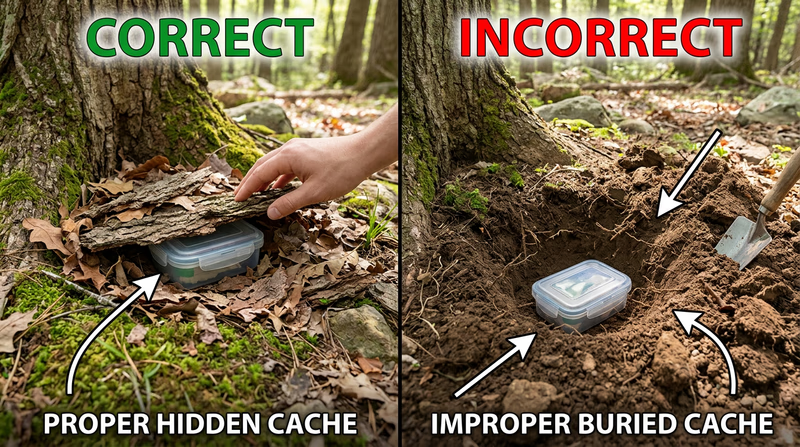
Why buried caches are a problem
- They invite repeated digging by every future seeker.
- They damage soil structure and plant life.
- They can disturb archaeological or historic resources.
- They make geocachers look careless and disrespectful.
- They are harder to maintain and easier to lose.
Requirement 2b: Geocaching Etiquette for Hiding, Seeking, and Maintaining
Geocaching works because people trust one another. Cache owners trust finders to put things back correctly. Finders trust owners to choose safe, legal, well-maintained locations. Good etiquette is what keeps that trust working.
When you are seeking a cache
Search quietly and carefully. Avoid making the hiding spot obvious to bystanders. Respect the area, especially if other visitors are around. Sign the log neatly, return items exactly as found unless the cache allows trading, and place the container back so the next seeker gets the same experience.
If you cannot find the cache, that is okay. Not every search becomes a find. Read the listing again, check the hint, and decide whether to try later. Do not turn the area upside down just to avoid logging a DNF, which means did not find.
When you are hiding a cache
A good cache location is legal, safe, publicly accessible, and not environmentally sensitive. The container should keep the log dry, the description should be accurate, and the coordinates should be as precise as possible. Cache owners also have to think about whether the spot will attract damaging search behavior. If dozens of people stomping around the site would harm the area, it is not a good cache location.
After you submit a cache listing, it is reviewed before publication. That review process helps protect the game, the environment, and landowner relationships.
When you are maintaining or dismantling a cache
A cache owner stays responsible for the cache after it is published. That means replacing damaged logbooks, checking container condition, responding to maintenance problems, and archiving the cache if they can no longer care for it. Abandoned caches become litter. Responsible cache owners do not let that happen.
Good Geocaching Etiquette
What responsible geocachers do
- Be discreet: Do not reveal the cache to bystanders or spoil the location for others.
- Protect the site: Search gently and replace the cache exactly as you found it.
- Log honestly: If you found it, log it. If you did not, log that too.
- Own the responsibility: If you hide a cache, maintain it or archive it when you cannot.
Requirement 2c: Leave No Trace and the Outdoor Code in Geocaching
This is where geocaching becomes very Scout-like. Finding hidden containers outdoors is exciting, but your search should never leave obvious damage behind. Leave No Trace and the Outdoor Code give you a clear way to think about what good geocaching looks like.
Leave No Trace in geocaching
Plan Ahead and Prepare means checking the weather, route, permissions, and terrain before you leave. It also means knowing whether the cache is appropriate for your group.
Travel and Camp on Durable Surfaces means staying on trails or durable ground when possible instead of trampling vegetation just because your GPS arrow points off to one side.
Dispose of Waste Properly means packing out your trash and picking up litter when you can.
Leave What You Find is especially important in geocaching. Do not move natural objects more than necessary, and return anything you do move to its exact position.
Minimize Campfire Impacts may not matter on every cache hunt, but the principle reminds you to reduce your overall effect on a site.
Respect Wildlife means not pushing into nests, dens, or habitat just to reach a container.
Be Considerate of Other Visitors means staying respectful in shared public spaces. Not everyone in a park wants to watch someone tearing around in circles because they are chasing coordinates.
The Outdoor Code in geocaching
A Scout is clean in the outdoors by leaving the place better than they found it.
A Scout is careful by preventing damage to trails, plants, structures, and cache sites.
A Scout is considerate by respecting other visitors, land managers, and the people who maintain the cache.
A Scout is conservation-minded by understanding that the health of the place matters more than getting one more smiley online.
Leave No Trace — The 7 Principles The official Leave No Trace overview, useful for connecting each principle to your choices on a geocaching trip. Geocaching.com — How to Play A helpful starting point for understanding how the geocaching community expects seekers to find, log, and replace caches. Outdoor Code A Scout-focused reminder that outdoor fun and outdoor responsibility always go together.The best geocachers do not treat ethics as extra rules. They treat them as part of the game. In Req 3, you will learn the words and ratings geocachers use to describe what they are doing and what they find.