Req 3 — Geocaching Terms and Ratings
Every hobby has its own language. In geocaching, the words matter because they help you understand the listing before you ever leave home. A Scout who knows the vocabulary can decide whether a cache is a good fit, what gear to bring, and what to expect once they arrive.
The core terms every Scout should know
Waypoint
A waypoint is a saved location described by coordinates. In geocaching, the cache location itself is usually the main waypoint, but parking areas, trailheads, or stages in a multi-cache can also be saved as waypoints. Think of a waypoint as a digital map pin with exact location data.
Log
A log can mean two related things. There is the physical logbook inside the cache where you sign your name and date. There is also the online log you post afterward to record whether you found it, did not find it, or noticed a problem. Both forms of logging matter because they create the history of the cache.
Cache
A cache is the hidden container itself. It may be tiny, small, regular, or another listed size, but it usually contains at least a logbook. Some caches also include trade items or trackables. A cache is not random litter because it is intentionally placed, described online, and maintained by an owner.
Accuracy
Accuracy is how close your GPS reading is to your true location. GPS is good, but it is not perfect. Trees, buildings, weather, and device quality can all affect the reading. That is why geocaching always requires observation in addition to technology.
Difficulty rating
The difficulty rating tells how hard the cache is to find or solve. A low-difficulty cache is usually straightforward. A higher-difficulty cache may have a very clever container, a challenging hiding style, or a puzzle that takes real effort.
Terrain rating
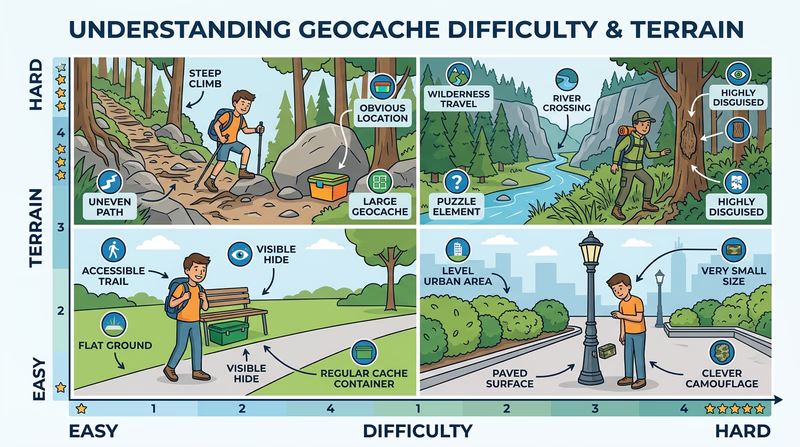
The terrain rating tells how physically challenging it is to reach the cache. A low-terrain cache may be accessible from a sidewalk or short easy trail. A higher-terrain cache may involve steep ground, longer hiking, uneven footing, or special conditions.
Attributes
Attributes are small symbols on a cache listing that quickly tell you useful facts. They may suggest whether the cache is kid-friendly, available at night, winter-friendly, short-hike, dog-friendly, or has other special conditions. Attributes help you decide if a cache fits your time, group, and gear.
Trackable
A trackable is an item with a unique tracking code that is meant to travel from cache to cache. Travel Bugs® and geocoins are common examples. People log their movements online so the owner can watch the journey.
Five more useful geocaching terms
You need five additional terms for your counselor discussion. Here are several strong choices. Pick the ones you understand best and explain them in your own words.
Muggle
A muggle is a non-geocacher who may not know what you are doing. You should be polite around muggles and avoid drawing attention to the cache location so it does not get disturbed or removed.
DNF
DNF means did not find. Logging a DNF is not failure. It is honest information that helps future seekers and alerts the owner if the cache may be missing.
TFTC
TFTC stands for Thanks For The Cache. It is a common short log phrase online, though a better log often includes a specific sentence or two about your experience.
Ground zero
Ground zero is the spot where your GPS says you have reached the listed coordinates. Geocachers often shorten it to GZ. Once you reach GZ, your search shifts from navigation to observation.
Hint
A hint is optional text in the cache listing that gives seekers extra help. Good geocachers try the search first, then use the hint when needed instead of destroying the area in frustration.
Reviewer
A reviewer is the person who checks new cache listings before they are published. Reviewers help make sure caches meet guidelines and are placed appropriately.
FTF
FTF means first to find. It describes the first person to locate a cache after publication.
How ratings and terms work together
When you read a cache listing, do not focus on only one piece of information. Combine several clues:
| Listing clue | What it tells you |
|---|---|
| Difficulty | How hard the hide or puzzle may be |
| Terrain | How physically demanding the trip may be |
| Attributes | Special conditions, accessibility, or timing clues |
| Hint | Extra help if the location is tricky |
| Recent logs | Whether the cache is active, damaged, or hard to find |
A cache with low terrain but higher difficulty might be an easy walk to a very sneaky hide. A cache with low difficulty but high terrain might be obvious once you get there, but the hike itself may be the hard part.
Before You Attempt a Cache
Use the listing language to prepare
- Read the difficulty and terrain ratings together: One measures challenge of the find, the other measures challenge of the trip.
- Check the attributes: They can tell you whether the cache fits your situation.
- Save helpful waypoints: Parking, trailheads, and stages matter.
- Read recent logs: They often reveal whether the cache is healthy, wet, crowded, or missing.
Now that you can speak the language of geocaching, you are ready to understand the technology under it. Req 4 shows how GPS works and how to teach another person to use it with the Teaching EDGE method.