Req 4a3 — Reading Stream Features
A meandering stream is always doing two jobs at once: eroding in some places and depositing in others. If you can spot where the current is strongest and where it slows down, you can predict what features will form and what sediment size is most likely to collect there.
The Main Features
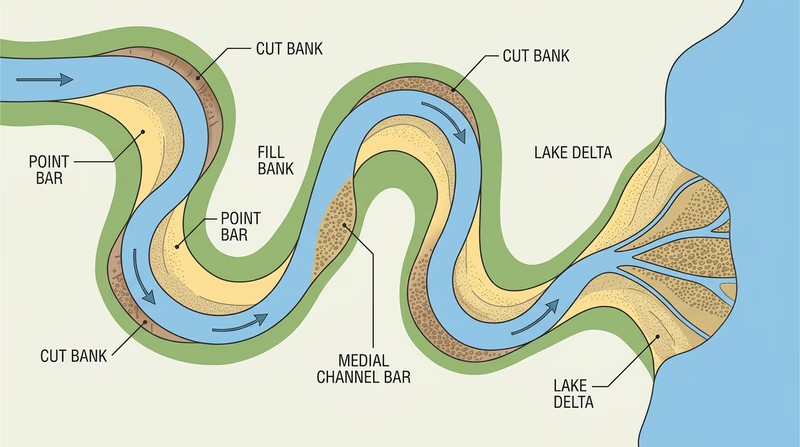
Cut Bank
A cut bank forms on the outside of a bend where water moves faster and erodes the bank. Because the flow has more energy there, finer material may be swept away and the bank may expose coarser layers or fresh sediment.
Fill Bank and Point Bar
A fill bank or point bar forms on the inside of a bend where water slows down and drops sediment. Point bars often contain sand and finer gravel because the current loses energy compared with the outside bend.
Medial Channel Bars
A medial channel bar forms in the middle of a channel or between split channels where sediment piles up. These bars often contain sand and gravel, especially where the stream still has enough power to carry coarse material but not enough to keep it moving all the way downstream.
Lake Delta
A delta forms where a stream enters a lake or other still body of water. The stream suddenly loses energy, so coarser material drops first near the mouth while finer silt and clay travel farther out into quieter water.
Relative Grain Size
The requirement asks for relative grain size, which means you are comparing one area with another rather than giving exact measurements.
| Feature | Typical Relative Grain Size | Why |
|---|---|---|
| Cut bank | Often coarser or mixed exposed material | Fast current erodes and removes finer particles more easily |
| Fill bank / point bar | Fine to medium sand, sometimes fine gravel | Slower water deposits sediment on the inside of bends |
| Medial channel bar | Sand to gravel | Sediment drops where the flow splits or slows enough in-channel |
| Lake delta near stream mouth | Coarse to medium near the front, finer outward | Energy drops quickly as stream water enters still water |
How to Explain It Clearly
A strong answer connects the feature to water energy. For example: “I put the point bar on the inside of the bend because the water slows there and deposits sediment. I would expect finer or medium grains there compared with the faster outside bank.”
The official video below is useful because it focuses specifically on two of the most important stream features in this requirement.
Official Resources
Next you will focus on a detail that is easy to miss in the field: sediment so fine that you may not notice it without magnification.