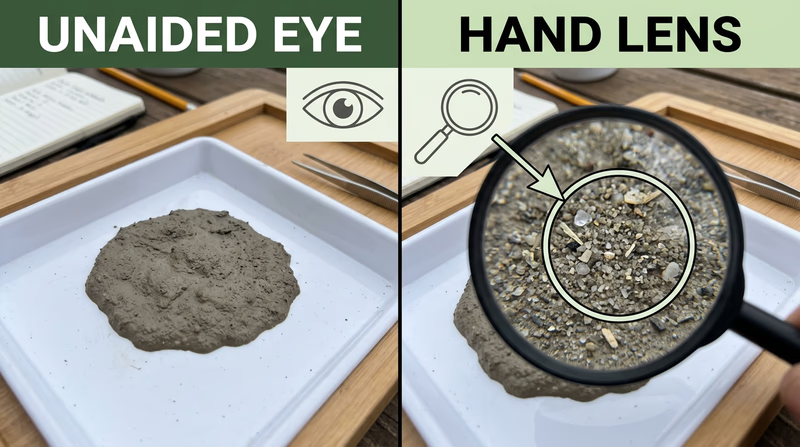
Conduct an experiment approved by your counselor that shows how some sedimentary material carried by water may be too small for you to see without a magnifier.
A stream can look clear enough to wade, yet still be carrying a huge load of very fine sediment. Some grains are too small to pick out with your eyes alone, especially once they spread through moving water. This requirement helps you realize that what you cannot easily see can still matter a lot in geology.
Why Fine Sediment Matters
Very fine sediment such as silt and clay affects water color, settling behavior, habitat quality, and the kinds of layers that may later form into rock. It also changes how geologists interpret old deposits. A rock that formed from tiny grains tells a different environmental story from one made of visible sand or pebbles.
Experiment Ideas
Your counselor may approve a comparison such as:
Water with visible sand versus water with very fine muddy sediment
A dried sample examined with and without a hand lens
A settling test that leaves a thin layer of fine material only visible up close
The key is to compare what you notice with your unaided eye and what becomes obvious when you use a magnifier or hand lens.
Observation Questions
Focus on what changed when you used magnification
Could you see individual grains before magnifying?
What details appeared with the hand lens? Grain size, shape, color, or mixed materials?
Did the fine material settle into a thin layer?
How would fast or slow water affect whether this material stayed suspended?
The Geology Lesson
Fine sediment can travel farther than coarse sediment because it stays suspended more easily. That means a quiet pond, lake bottom, or floodplain may collect material too fine to notice in moving water. Over time, those tiny grains can build mud layers that preserve details about calm-water environments.
Explaining the Result to Your Counselor
You might say: “The water looked almost uniform at first, but the magnifier showed very fine particles that were hard to see with the naked eye. This matters because streams can carry tiny sediment that settles later in quieter water, creating fine-grained deposits.”
Official Resources
Sediment in Streams (video)
Now you are ready for the field step in this option: visiting a real stream and reading the clues water leaves behind.