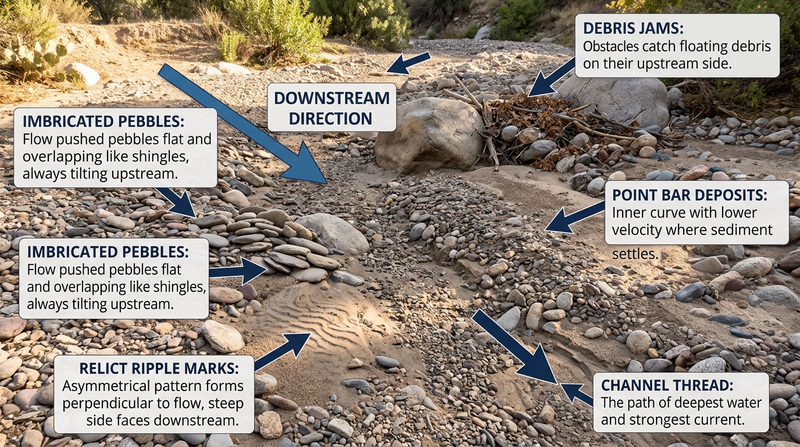
Visit a nearby stream. Find clues that show the direction of water flow, even if the water is missing. Record your observations in a notebook, and sketch those clues you observe. Discuss your observations with your counselor.
An empty stream channel is not silent to a geologist. Even when the water is gone, the banks, gravel bars, ripple marks, and deposited branches can still show where the current moved and where it had enough energy to erode or deposit material.
Clues to Flow Direction
Look for evidence that points downstream or shows where the current was stronger.
Point bars: These build on the inside of bends where water slows.
Cut banks: These form on the outside of bends where erosion is stronger.
Ripple marks or small dunes: Their shapes can show current direction.
Imbricated pebbles: Flat pebbles may lean in a preferred direction in flowing water.
Log jams and debris: Sticks and plant material often pile up on the downstream side of obstacles.
Channel shape: Narrower, deeper zones may mark the stronger flow path.
What to Put in Your Notebook
Record more than a sentence or two. Your notebook should help you reconstruct the site later.
Field Notes for This Visit
What to capture while you are on site
Date, time, and location
Weather and recent rain conditions
Whether water was flowing, standing, or absent
At least three clues to flow direction
A sketch of the channel or one important feature
Your conclusion about the likely direction of flow
Sketches Matter
A sketch does not have to be artistic. It just needs to show what you noticed. Label the inside and outside of bends, bars, banks, ripple shapes, or debris piles. This is exactly the kind of field habit geologists use because sketches force you to look carefully.
The official resource below focuses on noticing current behavior and surface clues, which is exactly the habit you need here.
Official Resources
How to Read Water (video)
You have now finished the stream and sediment option. The next pages shift to a different geology path focused on energy resources underground.