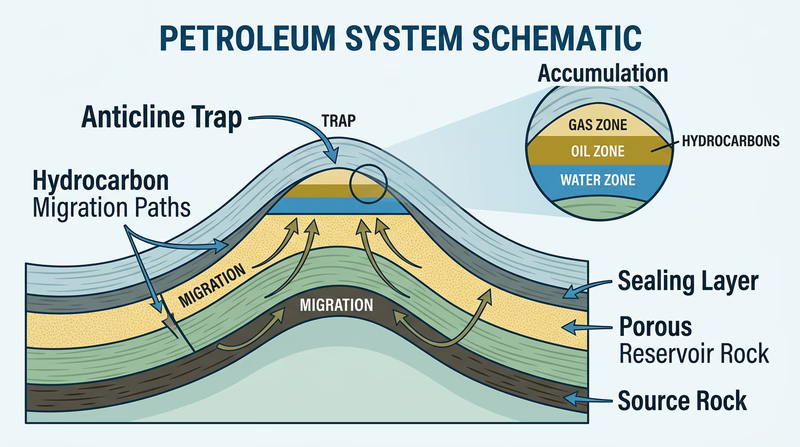
Discuss source rock, trap, and reservoir rock—the three components necessary for the occurrence of oil and gas underground.
Oil and gas do not just sit in giant underground caves waiting to be found. They are part of a geologic system. If one key piece is missing, the resource may never accumulate in a useful amount.
The Three Essential Parts
Source Rock
A source rock is the rock where the organic material originally built up and, under heat and pressure, was transformed into oil or gas. These are often fine-grained sedimentary rocks such as shale rich in ancient microscopic life or plant material.
Reservoir Rock
A reservoir rock is the rock that can store oil or gas. It needs enough porosity for fluids to occupy open spaces and enough permeability for fluids to move through connected spaces. Sandstone and some limestones are common examples.
Trap
A trap is the geologic arrangement that stops oil or gas from continuing to migrate upward. Without a trap, the fluids may escape. Traps can be structural, like an anticline or fault trap, or stratigraphic, where rock layers change in a way that blocks movement.
How the Pieces Work Together
Organic-rich sediment becomes a source rock.
Heat and pressure generate oil or gas.
The fluids migrate through permeable pathways.
The fluids collect in a porous reservoir rock.
A trap and seal keep them from escaping farther upward.
If you are missing the source, there is no petroleum to begin with. If you are missing a good reservoir, there is nowhere practical for it to collect. If you are missing a trap, it may leak away.
Three-Part Petroleum System
What to mention when you discuss this with your counselor
Source rock: where hydrocarbons form
Reservoir rock: where hydrocarbons collect and can be stored
Trap: what keeps them from migrating away
Seal: often a low-permeability layer such as shale that helps hold the trap closed
Official Resources
Formation of Reservoir Rock (video)
Up next, you will look at the tools geologists use to find these hidden systems underground.