Define rock. Discuss the three classes of rocks including their origin and characteristics.
A rock is not just “a thing you pick up outside.” In geology, a rock is a naturally occurring solid material made of one or more minerals, mineraloids, volcanic glass, or fragments of older rocks. The important part is how it formed, because that is what places it into one of the three major rock classes.
The Three Rock Classes
Igneous Rocks
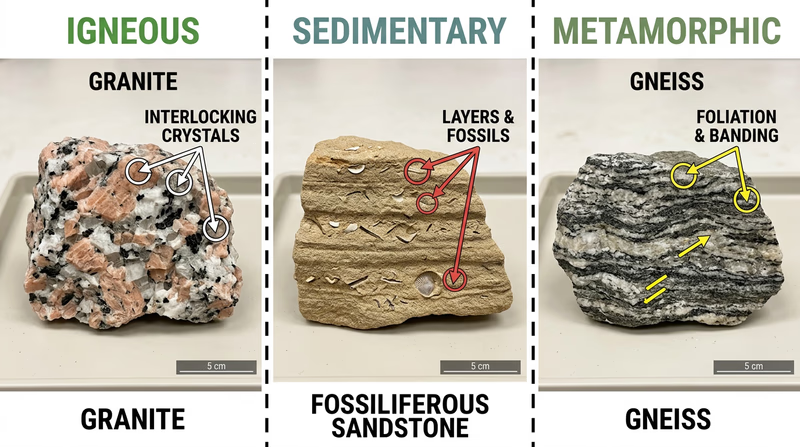
Igneous rocks form when molten material cools and hardens. If magma cools underground, crystals usually have more time to grow and the rock may be coarse-grained, like granite. If lava cools at the surface, crystals may stay tiny and the rock can be fine-grained, like basalt.
Sedimentary Rocks
Sedimentary rocks form from deposited material that is compacted or cemented over time, or from chemical or biological accumulation. Sandstone, shale, limestone, and conglomerate are classic examples. Sedimentary rocks often preserve layers, fossils, ripple marks, or mud cracks.
Metamorphic Rocks
Metamorphic rocks begin as older rocks but change because of heat, pressure, and chemically active fluids. The rock does not fully melt. Instead, its minerals recrystallize or realign. Slate, schist, gneiss, quartzite, and marble are common examples.
How to Tell Them Apart
Clues to Rock Class
Questions to ask when you hold a specimen
Are there visible layers or fossils? Often points to sedimentary rock.
Are the crystals interlocked from cooling? Often points to igneous rock.
Are the minerals stretched, flattened, or banded? Often points to metamorphic rock.
Does the rock look like it changed from an older rock under heat and pressure? That supports a metamorphic origin.
Why Origin Matters
Two rocks can look similar at first glance but tell different stories. A fine-grained dark igneous rock and a dark metamorphic rock may both seem “black and hard,” but one records cooling magma while the other records pressure and heat acting on an older rock. Geology is always about the story behind the specimen.
Official Resources
Rocks for Kids (video)Types of Rocks (video)
Next you will zoom in from rocks to the minerals that make many rocks up and learn the property tests geologists use for identification.