Explain to your counselor the processes of burial and fossilization, and discuss the concept of extinction.
Most living things do not become fossils. They decay, get eaten, or break apart long before they can be preserved. That is why fossils are special. They represent the rare situations where burial and chemistry work in just the right way.
Burial Comes First
Rapid burial is often the key step. Sediment must cover an organism or its traces before weather, scavengers, and decay destroy them. Mud, volcanic ash, river sand, or seafloor sediment can all do the job.
Fossilization Paths
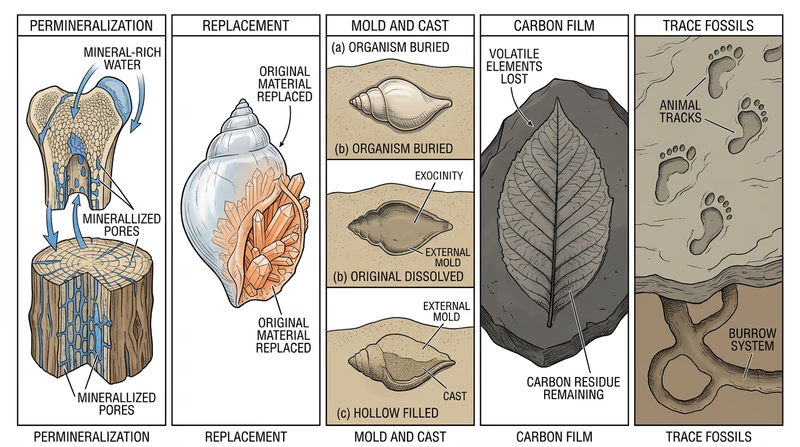
Fossils can form in more than one way:
Permineralization: Minerals fill pore spaces in bones or wood.
Replacement: Original material is replaced by new minerals.
Molds and casts: The organism dissolves away but leaves an impression or a filled-in replica.
Carbon films: Thin carbon remains preserve outlines of leaves or soft parts.
Trace fossils: Tracks, burrows, and coprolites preserve behavior instead of body parts.
Extinction
Extinction happens when a species disappears completely. In the fossil record, extinctions may be linked to climate shifts, habitat loss, sea-level changes, volcanic events, asteroid impacts, competition, disease, or other environmental pressures.
The next requirement takes the next step: using fossils not just as preserved objects, but as evidence for ancient environments and food-gathering habitats.