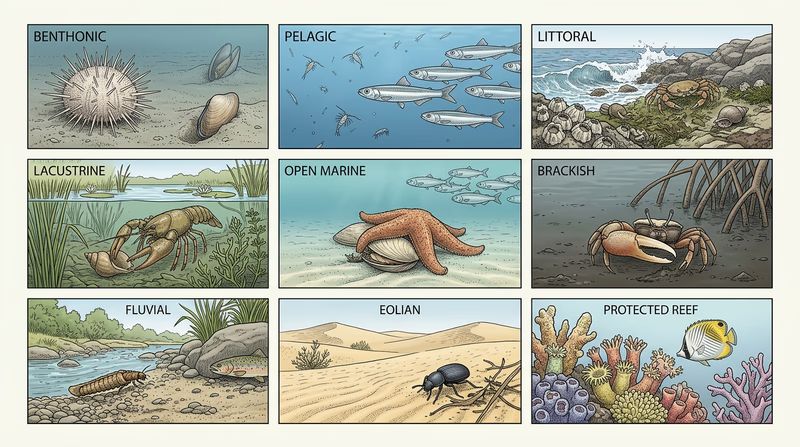
Explain to your counselor how fossils provide information about ancient life, environment, climate, and geography. Discuss the following terms and explain how animals from each habitat obtain food: benthonic, pelagic, littoral, lacustrine, open marine, brackish, fluvial, eolian, and protected reef.
A fossil is more than a preserved shell, tooth, or leaf. It is a clue about an entire world. The shape of the organism, the rock around it, the other fossils nearby, and the environment suggested by the sediment all help geologists and paleontologists reconstruct what ancient places were like.
What Fossils Can Reveal
Fossils can tell you:
Ancient life: what kinds of organisms lived there
Environment: shallow sea, river, lake, desert, reef, shoreline, and more
Climate: warm, cold, wet, dry, tropical, seasonal
Geography: whether an area was once underwater, coastal, inland, or near certain habitats
A coral fossil in limestone suggests a warm shallow marine environment, not a mountain forest. Plant fossils in coal suggest lush swampy conditions. A trackway in ancient sand can suggest a dry land surface or shoreline.
Habitat Terms in This Requirement
Benthonic
Benthonic organisms live on or near the bottom of a water body. They may crawl, burrow, attach to surfaces, or filter food from passing water.
Pelagic
Pelagic organisms live in the open water column rather than on the bottom. They often swim, drift, or float and obtain food from plankton, other animals, or suspended material.
Littoral
The littoral zone is the near-shore area where water meets land. Organisms there may graze, filter-feed, or prey on animals in shallow, light-filled water.
Lacustrine
Lacustrine environments are lake environments. Animals may feed on plankton, plants, bottom material, smaller animals, or organic matter in calm freshwater settings.
Open Marine
Open marine settings are farther from shore in the ocean. Organisms may filter-feed, swim after prey, scavenge, or feed within the water column or on the seafloor.
Brackish
Brackish water is a mix of fresh and salt water, such as estuaries. Organisms there must tolerate changing salinity and may feed on plankton, detritus, plants, or small prey.
Fluvial
Fluvial environments are river and stream settings. Organisms may graze, scavenge, hunt, or filter food carried by moving fresh water.
Eolian
Eolian environments are shaped by wind, especially deserts and dune fields. Food sources may be sparse, so animals often rely on scattered plants, insects, seeds, or other animals.
Protected Reef
A protected reef environment often provides shelter and abundant food. Organisms may graze on algae, filter-feed, browse, or hunt smaller reef animals.
How to Talk About an Ancient Habitat
Use this structure with your counselor
What fossils are present?
What environment do they suggest?
What clues in the rock support that idea?
How would animals there get food? Filter-feeding, grazing, hunting, scavenging, or drifting in the water column?