 Getting Started
Introduction & Overview
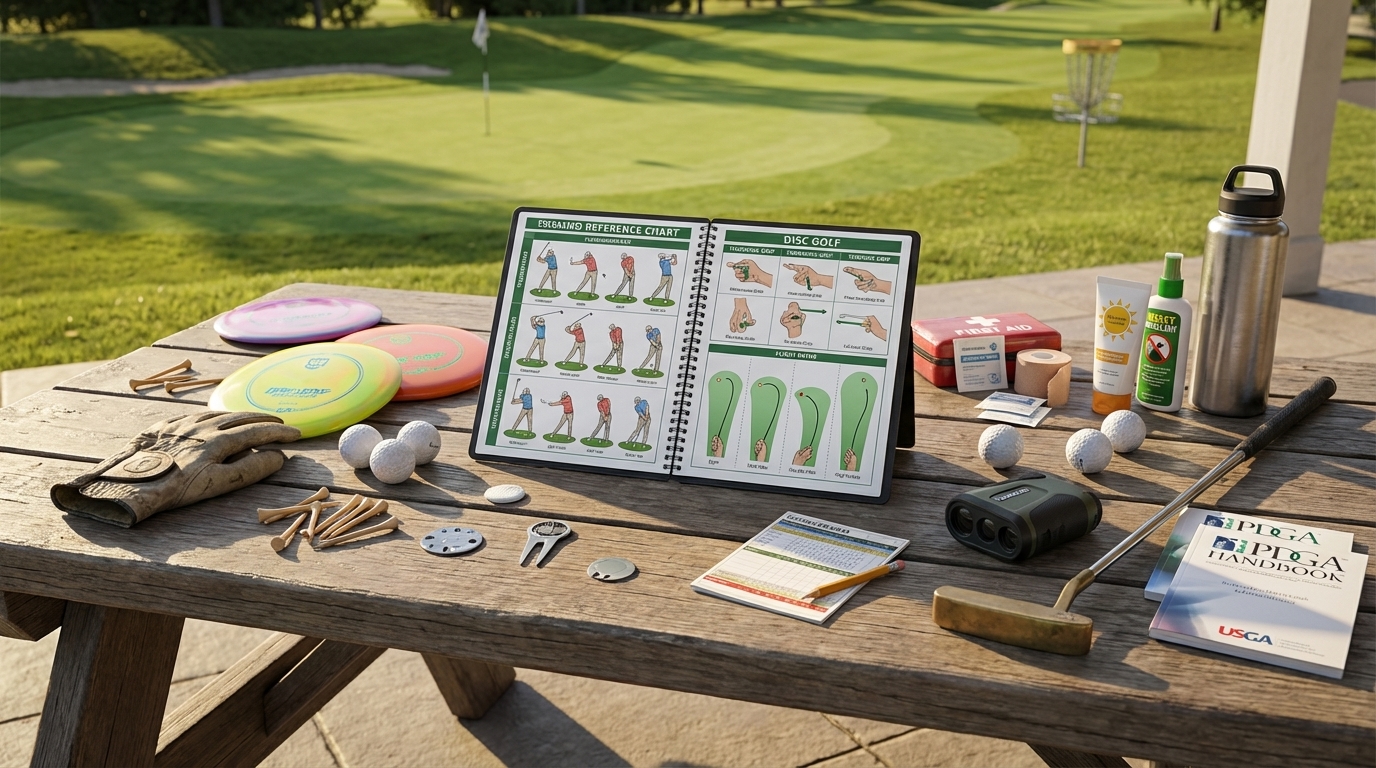
Golf is really two badges in one. You can choose traditional golf with clubs and a ball, or disc golf with flying discs and baskets. Either way, this badge teaches more than how to score points — it teaches focus, honesty, self-control, outdoor etiquette, and how to improve through steady practice.
Then and Now
Then
Traditional golf goes back hundreds of years, with roots in Scotland where players knocked a ball across rough ground toward a target. Early courses were windy, uneven, and full of surprises. The game spread because it mixed skill, patience, and strategy in a way people loved.
Disc golf is much newer. It grew from people throwing flying discs at natural targets, then at specially designed baskets. As courses were built in parks and schools, the game became one of the easiest lifetime sports to try because a beginner can start with very little equipment.
Now
Today, golf includes both traditional golf and disc golf, and both are played by people of many ages and skill levels. Traditional golf ranges from short public courses to famous tournament venues. Disc golf ranges from simple nine-hole park courses to championship layouts with wooded fairways, water carries, and tight landing zones.
Both versions reward the same habits: play by the rules, respect the course, care about safety, and keep learning. That makes golf a strong Scouting sport. You are not just trying to win a hole — you are practicing character every time you play.
Get Ready!
You do not need to be an expert before you begin. You just need a willingness to learn, practice, and play with integrity. This guide will help you understand the game, choose your path, and show your counselor that you know both the skills and the spirit of golf.
Kinds of Golf
Traditional Golf
Traditional golf uses clubs to hit a ball into a hole in as few strokes as possible. You will learn about clubs, etiquette, handicaps, course play, and different shots from the tee box, fairway, rough, bunker, and putting green. It is a game of precision, patience, and decision-making.
Disc Golf
Disc golf uses flying discs instead of clubs and a ball. Players throw from a tee area toward a metal basket, counting each throw as a stroke. Disc golf is often cheaper and easier to access than traditional golf, but it still demands skill, accuracy, rules knowledge, and respect for other park users.
Casual Play, Practice, and Competition
Some golfers play for fun with friends. Others practice specific skills like putting, approach shots, or form. Competitive players may enter tournaments, track handicaps or ratings, and work hard to improve. The badge does not require you to become a tournament player, but it does ask you to understand how the game is played fairly and respectfully.
Lifetime Recreation
One reason golf matters is that it can stay with you for decades. You can play with family members, friends, patrol members, or neighbors. You can also keep improving for years because there is always a better shot, a smarter choice, or a steadier routine to learn.
Next Steps
Your first requirement is the same no matter which option you choose: safety. Before you worry about scores, swings, or shot selection, you need to know how to stay safe on the course and how to respond when someone is injured or sick.