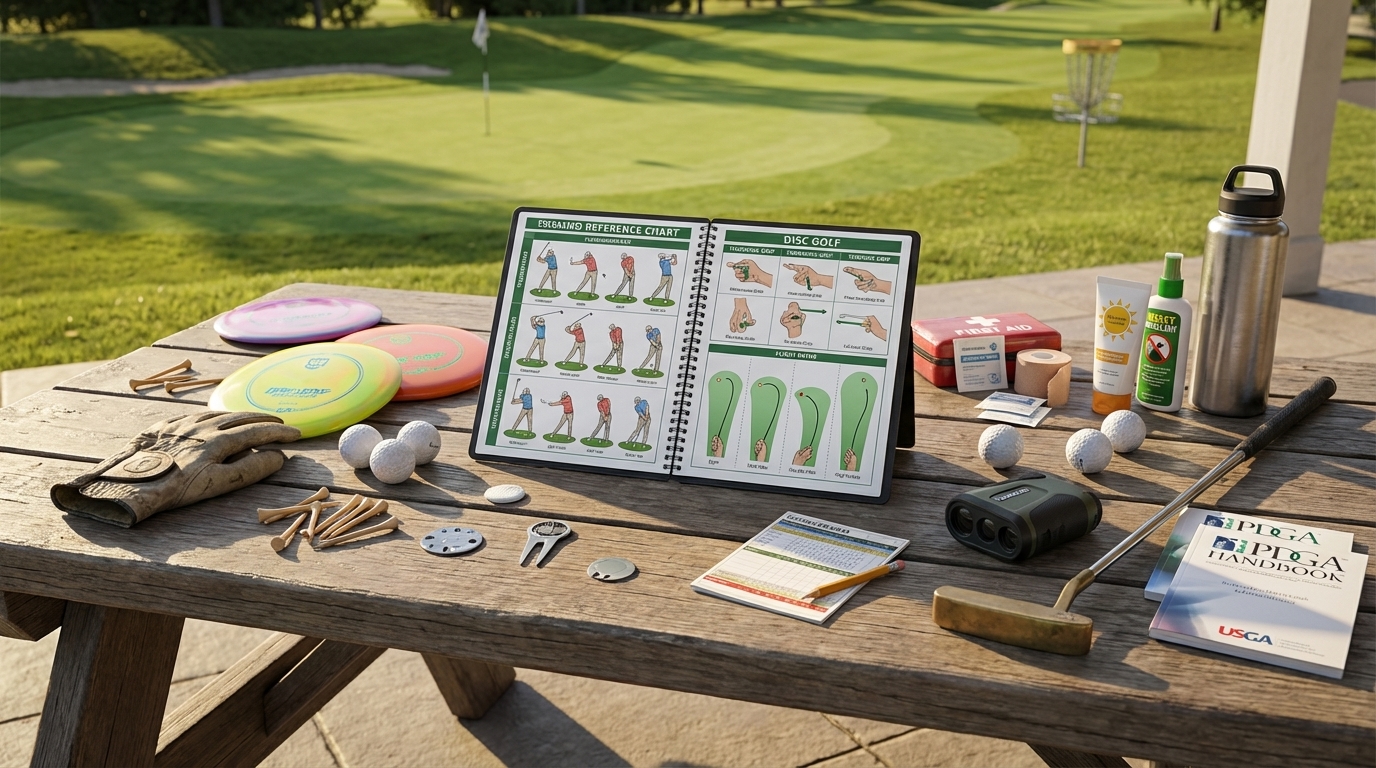
Golf Merit Badge — Complete Digital Resource Guide
https://merit-badge.university/merit-badges/golf/guide/
Introduction & Overview
Golf is really two badges in one. You can choose traditional golf with clubs and a ball, or disc golf with flying discs and baskets. Either way, this badge teaches more than how to score points — it teaches focus, honesty, self-control, outdoor etiquette, and how to improve through steady practice.
Then and Now
Then
Traditional golf goes back hundreds of years, with roots in Scotland where players knocked a ball across rough ground toward a target. Early courses were windy, uneven, and full of surprises. The game spread because it mixed skill, patience, and strategy in a way people loved.
Disc golf is much newer. It grew from people throwing flying discs at natural targets, then at specially designed baskets. As courses were built in parks and schools, the game became one of the easiest lifetime sports to try because a beginner can start with very little equipment.
Now
Today, golf includes both traditional golf and disc golf, and both are played by people of many ages and skill levels. Traditional golf ranges from short public courses to famous tournament venues. Disc golf ranges from simple nine-hole park courses to championship layouts with wooded fairways, water carries, and tight landing zones.
Both versions reward the same habits: play by the rules, respect the course, care about safety, and keep learning. That makes golf a strong Scouting sport. You are not just trying to win a hole — you are practicing character every time you play.
Get Ready!
You do not need to be an expert before you begin. You just need a willingness to learn, practice, and play with integrity. This guide will help you understand the game, choose your path, and show your counselor that you know both the skills and the spirit of golf.
Kinds of Golf
Traditional Golf
Traditional golf uses clubs to hit a ball into a hole in as few strokes as possible. You will learn about clubs, etiquette, handicaps, course play, and different shots from the tee box, fairway, rough, bunker, and putting green. It is a game of precision, patience, and decision-making.
Disc Golf
Disc golf uses flying discs instead of clubs and a ball. Players throw from a tee area toward a metal basket, counting each throw as a stroke. Disc golf is often cheaper and easier to access than traditional golf, but it still demands skill, accuracy, rules knowledge, and respect for other park users.
Casual Play, Practice, and Competition
Some golfers play for fun with friends. Others practice specific skills like putting, approach shots, or form. Competitive players may enter tournaments, track handicaps or ratings, and work hard to improve. The badge does not require you to become a tournament player, but it does ask you to understand how the game is played fairly and respectfully.
Lifetime Recreation
One reason golf matters is that it can stay with you for decades. You can play with family members, friends, patrol members, or neighbors. You can also keep improving for years because there is always a better shot, a smarter choice, or a steadier routine to learn.
Next Steps
Your first requirement is the same no matter which option you choose: safety. Before you worry about scores, swings, or shot selection, you need to know how to stay safe on the course and how to respond when someone is injured or sick.
Req 1 — Course Safety & First Aid
A golf course can look calm and peaceful, but it still has real hazards. A fast-moving golf ball, a metal club in a thunderstorm, hours in hot sun, uneven ground, and insects or plants along the edge of play can all turn a fun round into an emergency. This requirement is about learning to notice those risks early and respond the right way.
Course Safety Basics
Whether you choose traditional golf or disc golf, good safety starts before the first shot.
Safe Golf Habits
Use these habits every time you play- Watch the people around you: Never swing a club or throw a disc if someone is within range.
- Stay out of the hitting area: Stand well behind or beside the player, not near the backswing or flight path.
- Call out danger: In traditional golf, yell “Fore!” if a ball is heading toward people. In disc golf, warn people immediately if a throw is drifting toward them.
- Dress for the conditions: Hat, sunscreen, water, and weather-appropriate clothing matter.
- Know the course: Notice water hazards, steep slopes, cart paths, roots, bunkers, and out-of-bounds areas.
- Respect storms: Stop play right away if lightning is nearby.
First Aid Problems Golfers Commonly Face
Lightning
Lightning is the most serious weather threat on a golf course because players are often in wide-open spaces. If someone is struck, call 911 immediately. A lightning victim does not carry an electrical charge, so it is safe to touch them. Check breathing and responsiveness first. If the person is not breathing and you are trained, begin CPR and use an AED if one is available.

Heat Reactions
Heat exhaustion can build slowly during a long round. Warning signs include heavy sweating, weakness, dizziness, headache, nausea, and pale or clammy skin. Move the person to shade, loosen tight clothing, cool them with wet cloths, and give small sips of water if they are awake and not vomiting. Heat stroke is an emergency: the person may be confused, stop sweating, or have hot, dry skin. Call 911 right away.
Sunburn and Dehydration
Sunburn may seem minor at first, but it can ruin a round and make the body less able to cool itself. Treat mild sunburn by getting out of the sun, cooling the skin, and drinking fluids. Dehydration often shows up as thirst, dry mouth, headache, tiredness, and dark urine. The best first aid is prevention: drink before you feel thirsty and keep drinking during the round.
Blisters
Blisters are common in both kinds of golf because hands and feet repeat the same motion over and over. A hot spot on the heel or palm can quickly turn into a painful blister. Cover hot spots early with moleskin, athletic tape, or a blister bandage. If a blister is already formed, protect it with a clean covering and avoid popping it unless a trained adult or medical professional tells you to do so.
Animal or Bug Bites
Mosquitoes, ants, bees, wasps, ticks, and even snakes may be present along rough, wooded, or grassy edges of a course. For typical insect bites or stings, wash the area, use a cold pack, and watch for swelling. If the person has trouble breathing, widespread hives, or swelling of the face or throat, this may be an allergic reaction and needs emergency help immediately.
Poison Ivy Exposure
If skin brushes against poison ivy, poison oak, or poison sumac, wash the area with soap and water as soon as possible. Wash clubs, shoes, towels, or discs that may have touched the plant too. Avoid scratching because that can break the skin and lead to infection.
Sprains and Strains
Golf involves twisting, bending, and sudden force. Ankles, wrists, elbows, shoulders, and lower backs can all get hurt. For a sprain or strain, stop playing, rest the area, use a cold pack, and get adult help if the pain is strong, swelling increases, or the person cannot bear weight.
How to Think Through an Injury
Official Resource
🎬 Video: First Aid on the Golf Course (video) — https://youtu.be/26c7909-iKg?si=ZUt8TQ5_jKrBFdJh
The video is a good review tool because it connects course-specific situations to first-aid responses. As you watch, pause and ask yourself what you would do first, what danger you would check for, and when you would call for emergency help.
American Red Cross — First Aid Steps A clear guide to checking the scene, getting help, and giving first aid for common emergencies. Link: American Red Cross — First Aid Steps — https://www.redcross.org/take-a-class/first-aid/performing-first-aid/first-aid-stepsNow that you know how to stay safe and respond to common injuries, you are ready to choose which path of the badge you want to complete.
Req 2 — Traditional Golf or Disc Golf?
You must choose exactly one option from this requirement. Both paths teach rules, history, fitness, skills, and careers, but the equipment, places you play, and style of the game are different.
Your Options
- Req 2a — Traditional Golf Roadmap: You will learn club types, golf etiquette, amateur status, handicaps, course play, and the full set of shots used in traditional golf. This path builds patience, touch, and course-management skills.
- Req 2b — Disc Golf Roadmap: You will learn PDGA rules, disc golf courtesy, disc design, throwing and putting skills, and how to play a full disc golf round. This path builds throwing form, park awareness, and creative shot-making.
How to Choose
| Factor | Traditional Golf | Disc Golf |
|---|---|---|
| Equipment | Requires clubs, balls, tees, and usually access to a golf course or range | Usually needs only a few discs and access to a disc golf course |
| Cost | Often higher because of course fees and equipment | Usually lower and often free to play in public parks |
| Where you play | Golf courses, practice ranges, and putting greens | Public parks, schools, and dedicated disc golf courses |
| What you practice | Swing mechanics with different clubs, short game, putting, course strategy | Different throws, release angles, footing, putting styles, and disc selection |
| What you gain | A strong introduction to the classic game and its traditions | A fast-growing outdoor sport that is easy to keep playing after the badge |
Choosing Your Option
Ask yourself these questions before you decide- What can I access easily?: Pick the path you can actually practice and complete with your counselor’s approval.
- What gear can I borrow or use?: If a family member, troop adult, or local course can help you with clubs or discs, that may make the choice easier.
- What style of play sounds fun to me?: Traditional golf is slower and more technical with many clubs. Disc golf is more portable and often more casual at beginner level.
- What do I want to learn?: Traditional golf teaches you a long-established game with formal etiquette and handicaps. Disc golf teaches a growing sport with a strong park and community feel.
If you already know that one path fits your situation, move ahead. If not, talk with your counselor about access to courses, equipment, and adults who can supervise your round.
Req 2a — Traditional Golf Roadmap
This path takes you from understanding the game’s rules and history to actually playing a round with another golfer your age. Think of this page as your map. Each child page covers a different part of becoming a responsible beginner golfer.
What You’ll Complete
- Req 2a1 — Rules, Terms & Amateur Status: Learn the language and rule system of traditional golf so you can talk about the game clearly and play fairly.
- Req 2a2 — Understanding the Handicap System: See how golfers of different skill levels can compare scores in a fair way.
- Req 2a3 — Golf History & Great Players: Explore where golf came from, how it grew in the United States, and what made famous players stand out.
- Req 2a4 — Fitness for Golf: Connect golf to physical and mental health, and learn how basic exercise supports better play.
- Req 2a5 — Traditional Golf Skills: Study the key shots and body positions you need on the course.
- Req 2a6 — Playing a Real Round: Apply the rules and etiquette during actual play with the right supervision.
- Req 2a7 — Careers in Traditional Golf: Look past the badge and see how golf connects to real jobs.
How This Path Builds
Traditional golf works best when you learn it in order. The rules and vocabulary in Req 2a1 make the handicap discussion in Req 2a2 easier. The history and fitness pages give context for why golfers train and why the sport values honesty and self-control. Then the skill page gets you ready for the real round in Req 2a6.
What to Gather
Before you move deeply into the traditional golf path- Access to a range or course: You will eventually need a place to practice and play.
- Clubs that fit you reasonably well: Borrowed clubs are fine if they are safe and usable.
- Basic golf clothing and footwear: Follow local course expectations.
- A notebook or phone notes app: Helpful for terms, rules, and questions for your counselor.
You are ready to start with the foundation: the rules, the language of golf, and the standards that keep competition fair.
Req 2a1 — Rules, Terms & Amateur Status
This requirement is about more than memorizing rule numbers. It teaches you how golfers keep the game fair even when no referee is standing nearby. The three parts below fit together: etiquette tells you how to behave, terminology helps you discuss the game clearly, and amateur status explains how competition stays true to the spirit of the sport.
USGA Rules of Golf (website) The official USGA rules site lets you browse the current rules and clarifications used in play. Link: USGA Rules of Golf (website) — https://www.usga.org/rules/rules-and-clarifications/rules-and-clarifications.html#!ruletype=fr§ion=rule&rulenum=1 USGA Rules of Golf (Free Course) (website) A beginner-friendly course that explains the rules in smaller lessons with practical examples. Link: USGA Rules of Golf (Free Course) (website) — https://rules.usga.org/courses/rules-101/🎬 Video: The Golf Clubs in Your Bag (video) — https://youtu.be/jbCekejTJXA?si=bsNNU6FHDV0kRcmb
Knowing your clubs supports the rules because many golf terms are tied to how and where different clubs are used. As you study, match the words you hear to real situations on a course.
Requirement 2a1a
Golf etiquette is usually grouped into three big ideas: safety, consideration for others, and care of the course. Safety means you never hit until the players ahead are clearly out of range, you stay clear of another player’s swing, and you warn others if a ball is heading toward them. Consideration means keeping noise down, being ready when it is your turn, and not distracting another player. Care of the course means repairing ball marks, replacing divots when required, raking bunkers, and leaving the course better than you found it.
Three Categories of Golf Etiquette (PDF) A short official reference that organizes golf etiquette into the main categories Scouts should know. Link: Three Categories of Golf Etiquette (PDF) — https://filestore.scouting.org/filestore/Merit_Badge_ReqandRes/Requirement%20Resources/Golf/three_categories_of_golf_etiquette.pdfA good way to explain these categories to your counselor is to connect each one to a real moment in play. For example, waiting until the group ahead is clear is safety, standing still while someone putts is consideration, and fixing a pitch mark on the green is care of the course.
Requirement 2a1b
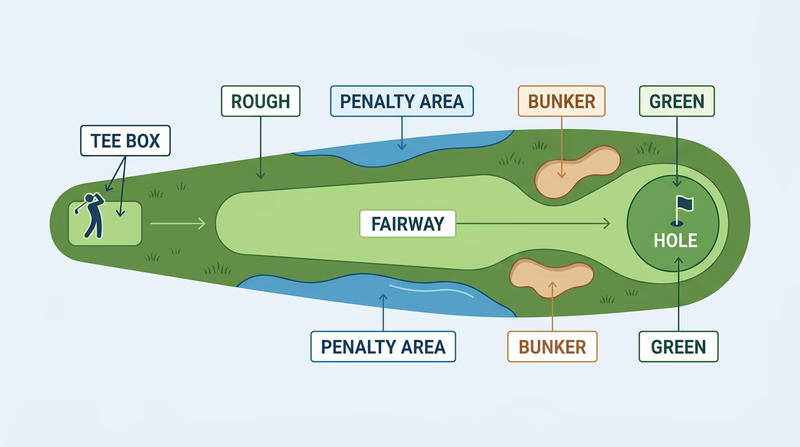
Golf has its own vocabulary, and learning it makes the game far less confusing. Words like par, birdie, bogey, tee box, fairway, rough, hazard, bunker, green, stroke, and penalty area come up constantly. You do not need to sound like a TV announcer. You do need to understand what the terms mean so you can follow directions, talk with your counselor, and know what is happening during play.
🎬 Video: Basic Golf Terminology (video) — https://youtu.be/3qWh2Wruokg?si=8wh6SORdQITXot0t
Requirement 2a1c
Amateur status is about keeping the game based on skill, competition, and integrity rather than turning every event into a money contest. In simple terms, amateur golfers may compete and win certain prizes under the rules, but there are limits on accepting prize money or acting like a professional player without changing status. You should understand that the rules protect fairness and keep amateur competition separate from professional golf.
🎬 Video: Rules of Amateur Status (video) — https://youtu.be/TeMdMFFOaTo?si=v2Fu90PKhD6_ixkf
If your counselor asks why amateur status matters, a strong answer is that it protects the purpose of amateur competition. Scouts, junior golfers, school teams, and everyday players can compete without the game being driven mainly by cash rewards.
Before moving on, make sure you can explain not just what the rules say, but why they matter. That will help a lot when you get to handicaps, playing a round, and talking with your counselor about how golf stays fair.
Req 2a2 — Understanding the Handicap System
A handicap lets golfers of different ability levels compete on fairer terms. Without one, a beginner and an experienced golfer could play the same course, but the raw scores would not tell the whole story. The World Handicap System, often shortened to WHS, gives golfers a way to compare performance across courses and playing conditions.
What a Handicap Does
A handicap is not a label that says whether you are a “good” or “bad” golfer. It is a number that estimates your playing ability based on recent scores. The lower the handicap, the stronger the player usually is. A golfer with a handicap of 5 generally scores closer to par than a golfer with a handicap of 20.
The point is fairness. If two golfers of different skill levels play together, the handicap system can adjust the competition so both have a real chance.
Why the System Is Called “World”
Before the WHS, different countries used different handicap systems. That made it harder for golfers to compare results fairly across regions. The World Handicap System created a common method so golfers around the world could use the same general approach.
Ideas You Should Understand
- Score posting: Golfers enter scores after rounds.
- Course difficulty matters: A score on a very hard course is not judged the same way as the same score on an easier course.
- Your best recent play counts most: The system uses recent scoring information to estimate ability.
- The number can change: If your play improves, your handicap can go down. If you struggle, it can go up.
🎬 Video: World Handicap System (video) — https://youtu.be/IGZ9IGOAWLw?si=2SS8GJeIHCLr5WRq
The video helps because handicap math can sound more complicated than it really is. For this badge, you do not need to become a handicap official. You do need to understand that the system adjusts for player ability and course challenge so competition is more equal.
How to Explain WHS to Your Counselor
Keep your explanation simple and accurate- What it is: A system that estimates a golfer’s ability.
- Why it exists: To help golfers of different skill levels compete fairly.
- What affects it: Your recent scores and the difficulty of the courses you played.
- Why it changes: Because your current playing level changes over time.
In the next requirement, you will step back and look at how golf developed over time. That history helps explain why the game values tradition, records, and fair competition so strongly.
Req 2a3 — Golf History & Great Players
This requirement covers three connected topics: where golf began, how it took root in the United States, and how individual players helped shape the sport. Together, they show that golf is both an old tradition and a changing modern game.
Requirement 2a3a
Most historians trace the modern game of golf to Scotland in the 1400s. Players used clubs to strike a ball over open land toward a target. Over time, natural dunes and rough linksland near the sea helped shape the game’s early style. Golf became organized enough that written rules began to appear, and famous courses such as St Andrews became deeply connected to the sport’s identity.
🎬 Video: History of Golf (video) — https://youtu.be/B8hKb4r0yh4?si=tVKbyMEubsrkD-Xx
When you explain early golf, focus on a few big ideas: Scottish roots, the development of courses and rules, and the fact that the game started outdoors on natural terrain rather than on highly designed modern fairways.
Requirement 2a3b
Golf reached the United States in the late 1800s and grew quickly as clubs, courses, and championships were formed. As American cities expanded and leisure time changed, golf became more accessible. Organizations such as the USGA helped standardize rules and competition. Over time, public courses and junior programs opened the game to far more people than the earliest private clubs did.
🎬 Video: The Incomplete History of Golf in America (video) — https://youtu.be/dlGT57kHEQs?si=fTnLU-rMoGewBsX3
A good discussion point for your counselor is that American golf did not stay the same. It moved from elite club culture toward broader participation, youth development, public access, and televised competition.
Requirement 2a3c
This is your chance to pick a player you genuinely want to learn about. You might choose a golfer known for major championships, steady consistency, groundbreaking achievements, sportsmanship, or influence on the game. Your counselor will probably care less about which player you pick and more about whether you can explain why that golfer matters.
LPGA Player Profiles (website) Browse official player profiles to research major wins, career highlights, and personal background for LPGA golfers. Link: LPGA Player Profiles (website) — https://www.lpga.com/athletes/directory PGA Player Profiles (website) Use the PGA Tour player directory to find statistics, achievements, and career summaries for top golfers. Link: PGA Player Profiles (website) — https://www.pgatour.com/playersPutting the History Together
Golf history is not just a list of dates. It explains why the game cares so much about honor, rules, records, and tradition. In Req 2a1, you studied rules and etiquette. This page shows where that culture came from.
Next, you will see how golf connects to health and training. That is important because golf may look slow from the outside, but strong balance, mobility, and focus all matter.
Req 2a4 — Fitness for Golf
This requirement covers two related ideas. First, golf can help your physical and mental health. Second, smart exercise makes your swing more stable, repeatable, and powerful. Golf improvement is not just about buying better clubs. It is about building a body that can move well.
Requirement 2a4a
Golf gets you outside, keeps you walking, and asks you to focus for long stretches of time. Even a casual round can involve several miles of movement. Beyond the physical side, golf also trains patience, emotional control, and decision-making. A bad shot is not the end of the round. You reset, think, and try again.
🎬 Video: Health Benefits of Golf (video) — https://youtu.be/5AIr-qbUpQo?si=ku6iDEKLyB3xyiHf
Physical benefits can include walking, balance, coordination, and flexibility. Mental benefits can include stress relief, concentration, time outdoors, and the confidence that comes from gradual improvement. Because golf is social, it can also strengthen friendships and family connections.
Requirement 2a4b
A golf swing is an athletic movement. To repeat it well, you need balance, rotation, and control. An exercise plan helps by improving mobility in the hips and shoulders, strength in the legs and core, and stability through the swing.
🎬 Video: Exercises to Improve Your Game (video) — https://youtu.be/02KhVJJEFvM?si=PqS213Jy6w1kVfjm
Two useful examples are:
- Torso rotation drill: Improves the ability to turn through the swing without losing posture.
- Single-leg balance drill: Helps you stay steady during the swing and finish under control.
You might also mention bodyweight squats, hip mobility drills, resistance-band shoulder work, or core exercises like planks. The best answer is one that connects the exercise to a golf need.
How Exercise Helps Your Swing
Link the movement to the result- Better balance: Helps you stay centered instead of swaying.
- More flexibility: Makes it easier to complete a full turn.
- Stronger core and legs: Creates a steadier base for power.
- Less fatigue: Helps your form hold together late in the round.
The next requirement is the most hands-on part of the traditional golf path: learning the major shots and body positions used on the course.
Req 2a5 — Traditional Golf Skills
This page covers the core traditional golf shots and fundamentals you need before you play a supervised round. The goal is not perfection. The goal is to understand what each shot is for, how your setup changes, and what good control looks like.
Requirement 2a5a
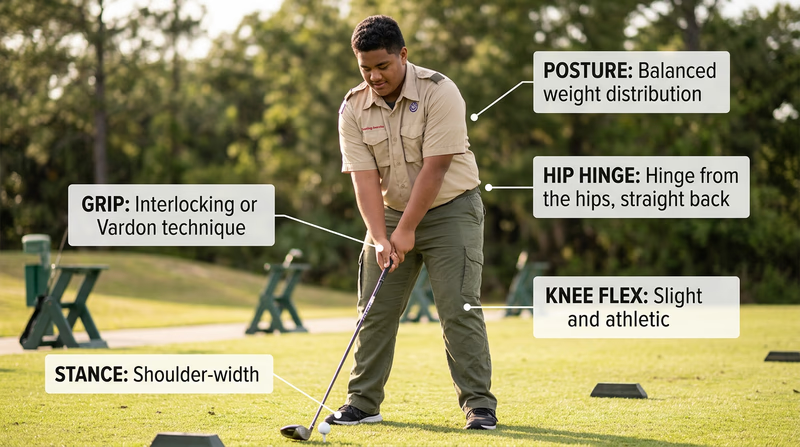
Every golf shot starts with setup. A balanced stance, athletic posture, and secure grip make the rest of the swing much easier. Your feet should usually be about shoulder-width apart, your knees slightly flexed, and your upper body tilted from the hips rather than slumped from the shoulders. A good swing stays in balance and returns the clubhead to the ball consistently.
🎬 Video: How to Swing a Golf Club: 5 Steps for Beginners (video) — https://youtu.be/Txjm1TjageQ?si=rXGhp-AOdEgGXYCV
Requirement 2a5b
The driver is used for distance from the teeing area. Because the ball is teed up, the club can sweep through impact with a longer, more upward motion than many other shots. Accuracy still matters. A huge drive into trees is not as useful as a solid one that stays in play.
🎬 Video: How to Hit a Driver from the Tee (video) — https://youtu.be/cia6EeHF7ZQ?si=ISZcQzXQSUXnpgo5
🎬 Video: How to Hit an Iron from the Tee (video) — https://youtu.be/JVsRCPjYTKQ?si=ErMm05iwjCb7DlMr
Requirement 2a5c
Fairway woods are designed for long shots from the turf or sometimes from the tee. They require a sweeping strike but often reward smooth tempo more than raw force. Many beginners hit them better when they focus on balance and brushing the grass after the ball rather than trying to lift the ball into the air.
🎬 Video: How to Hit a Fairway Wood (video) — https://youtu.be/Fl-20OtZVoY?si=ReNADzqYp58hFvNT
Requirement 2a5d
Long irons are harder for many players because they have less loft and demand solid contact. They are useful for lower, longer shots, but they punish poor balance and bad timing. A good explanation to your counselor would include the need for clean contact, body rotation, and staying down through the shot.
🎬 Video: How to Hit a Long Iron Shot (video) — https://youtu.be/hoVIDS6UmFk?si=ubkrvt82P9QLD6lt
Requirement 2a5e
Short irons are used for more controlled approach shots. They have more loft, so they launch the ball higher and are often easier to hit accurately than long irons. Good short-iron play depends on tempo, ball-first contact, and aiming for a safe landing area.
🎬 Video: How to Hit a Short Iron Shot (video) — https://youtu.be/AAOoy8PPlsY?si=TTb4MX_e1u-zkB56
Requirement 2a5f
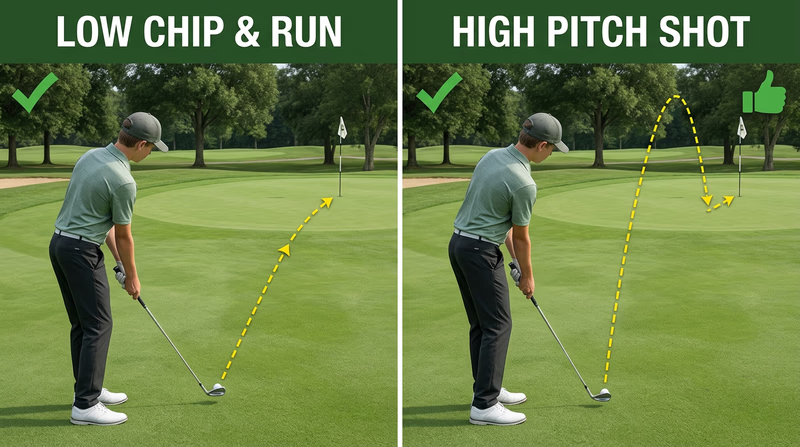
These shots are part of the short game. An approach shot is played toward the green, often from farther away. A chip-and-run stays lower and rolls more after landing. A pitch shot goes higher and lands softer. Learning when to roll the ball and when to fly it is a big part of scoring well.
🎬 Video: How to Hit a Chip Shot (video) — https://youtu.be/dwubg2qgV0A?si=4oC8kpT64DEGCXjv
Requirement 2a5g
Recovery shots are about solving problems, not looking perfect. From a bunker, you usually need the club to move through sand in a way that helps the ball pop out. From heavy rough, the grass can grab the club and reduce control. The smart play is often to get the ball back into a good position instead of trying a miracle shot.
🎬 Video: How to Hit a Bunker Shot (video) — https://youtu.be/ipY-LZUAYrY?si=Asanfyw1idi8Pe-u
🎬 Video: How to Hit from the Rough (video) — https://youtu.be/4DT-DAOfAHk?si=TvRiMY0-fHv48rE0
Requirement 2a5h
Putting is about distance control, face control, and calm focus. A sound stroke keeps the putter face stable and the motion smooth. Long putts are mainly about speed so the next putt is manageable. Short putts require commitment and a steady routine.
🎬 Video: How to Make Long Putts (video) — https://youtu.be/AuyVMXl5iYQ?si=HW_Mtm5l3jq35rE0
🎬 Video: How to Make Short Putts (video) — https://youtu.be/vexw6VaGZPM?si=fIs9fpc1p2J11teS
What Your Counselor Will Likely Notice
These habits matter across all the shots- Balance: Finish under control instead of falling backward or lunging forward.
- Setup: Use a stance and posture that fit the shot.
- Tempo: Swing smoothly instead of forcing power.
- Purpose: Know what each shot is trying to do.
You now have the shot overview. Next comes the real test: using rules, etiquette, and control during an actual round of golf.
Req 2a6 — Playing a Real Round
This requirement is where the traditional golf path becomes real. The round is not only about score. It is about showing that you can follow the rules, practice etiquette, and treat other people with respect while you play.
🎬 Video: How to Play Your First Round of Golf (video) — https://youtu.be/RQv8w3kmwjo?si=IRz_DEL9yuh_Ehjo
Watch the video with a beginner’s question in mind: “What habits make someone pleasant and safe to play with?” That is just as important here as hitting clean shots.
Requirement 2a6a
During your round, this means playing honestly, taking proper penalties when needed, and not improving your lie unfairly. You do not need to know every rule in the book from memory, but you should be able to handle basic situations with integrity. If a question comes up, ask the supervising adult or make a note to discuss it later.
Requirement 2a6b
Etiquette during a real round means being ready to play, staying quiet when others hit, caring for the course, and keeping a pace that respects other groups. Replace divots if the course expects it, repair marks on the green, and leave bunkers in good condition. These small actions show that you understand the spirit of the game.
Requirement 2a6c
Not every Scout will play with a committee, sponsor, or gallery nearby, but the idea is still important. Golf asks you to show respect to everyone connected to the event or course. That includes your playing partners, the people maintaining the facility, and anyone watching. Respect looks like good sportsmanship, patience, honesty, and calm behavior even after a poor shot.
Round-Day Habits
What to remember before and during play- Bring enough water and weather gear: Long rounds are tiring.
- Arrive ready: Have tees, balls, clubs, and any course items you need.
- Keep up the pace: Be ready when it is your turn.
- Stay honest: Count strokes accurately and follow the rules.
- Stay respectful: Your attitude matters as much as your score.
This round should bring together things you learned earlier in Req 2a1 and Req 2a5. The last traditional golf page looks beyond playing and asks where golf can lead as a career.
Req 2a7 — Careers in Traditional Golf
Golf includes far more jobs than tournament players. A course needs teachers, turf experts, managers, event staff, rules officials, club fitters, and media professionals. This requirement helps you see golf as an industry as well as a sport.
Three Career Ideas to Explore
Here are three strong examples you could research:
- Golf professional or teaching pro: Gives instruction, runs programs, and often helps manage golf operations.
- Golf course superintendent: Oversees turf, irrigation, course conditions, and maintenance crews.
- Golf operations or club manager: Handles scheduling, customer service, events, merchandise, and day-to-day business.
Other possibilities include tournament administration, sports media, equipment design, rules officiating, physical therapy for golfers, and hospitality roles at clubs or resorts.
What to Research for One Career
When you pick one profession, be ready to talk about:
- Education: Does it require high school, college, a turfgrass program, business degree, or specialty training?
- Training: Is there certification, apprenticeship, or an association pathway?
- Experience: Do people usually start as assistants, interns, or seasonal staff?
- Why it interests you: What part of the work sounds meaningful or exciting to you?
🎬 Video: How to Become a Golf Professional (video) — https://youtu.be/aeSCbYugQAk?si=7YprTcdLuTWEaugk
🎬 Video: How to Become a Golf Instructor (video) — https://youtu.be/FV0vJxab0QI?si=ezjS41VOHd8kh4nD
These videos are useful because they show that golf careers usually involve both playing knowledge and people skills. Teaching, communication, organization, and reliability matter a lot.
A Good Career Discussion Includes
Use these points when preparing for your counselor- What the job actually does each day
- How someone gets started
- What education or certification helps
- What parts of the job sound appealing to you
If you chose the traditional golf option for your badge, this is the end of that path. The next page begins the disc golf option, which you can still read for comparison even if it is not the path you completed.
Req 2b — Disc Golf Roadmap
Disc golf is easy to start, but playing it well still takes skill, course awareness, and discipline. This path moves from rules and history into fitness, shot types, real-round behavior, and careers connected to the sport.
What You’ll Complete
- Req 2b1 — Rules, Courtesy & Scoring: Learn the PDGA rules, course courtesy, and how scoring works.
- Req 2b2 — Disc Golf History & Inclusion: Understand where the sport came from and why many people see it as an accessible game.
- Req 2b3 — Disc Design & Disc Golf Leaders: Study important people, how discs changed over time, and what top players have accomplished.
- Req 2b4 — Fitness for Disc Golf: Connect the sport to physical and mental health and learn how exercise supports better throws.
- Req 2b5 — Disc Golf Skills: Explore grips, footwork, throws, putting styles, and marking your lie.
- Req 2b6 — Playing a Full Disc Golf Round: Show you can follow the rules and respect the course during actual play.
- Req 2b7 — Careers in Disc Golf: Discover ways people work in and around the sport.
What Makes Disc Golf Different
Disc golf shares some values with traditional golf — honesty, etiquette, and self-control — but the game feels different. Courses are often in public parks. Throws can curve, skip, roll, or bend through trees in creative ways. Players also share space with walkers, families, and wildlife, so awareness matters a lot.
Before You Begin the Disc Golf Path
Helpful things to have ready- A few safe, usable discs: You do not need a huge collection.
- A nearby course or practice area: Public park courses are often the easiest option.
- Comfortable shoes and water: You will walk, throw, and sometimes hike over uneven ground.
- An adult approved by your counselor: You will need the right supervision for your round.
Start with the rules and the culture of the sport. They shape everything else on this path.
Req 2b1 — Rules, Courtesy & Scoring
Disc golf feels relaxed compared with many organized sports, but it still depends on clear rules. The PDGA rulebook explains how to take throws, mark lies, count strokes, and share a course fairly with other players. Start here because every later disc golf requirement depends on knowing how the game is supposed to work.
The biggest themes on this page are:
- Courtesy: How players protect safety and respect one another.
- Scoring: How strokes are counted and how a hole score becomes a round score.
- Rule awareness: How to use the PDGA rulebook as a reference instead of trying to memorize every line.
🎬 Video: PDGA Rules 1: Overview (video) — https://youtu.be/iYxbSRG7xjc
🎬 Video: PDGA Rules School (playlist) — https://www.youtube.com/playlist?list=PLo_ubqHIquFvqTqm8C8UkLT7dMzc2sd_d
Requirement 2b1a
Courtesy in disc golf is more than just being polite. It is a set of habits that keeps people safe, preserves concentration, and helps public courses stay welcome in parks. When your counselor asks about Courtesy under rule 812, be ready to explain it in everyday language, not just repeat rule numbers.
The six areas are easiest to understand like this:
- Do not distract another player: Stay quiet, still, and out of the thrower’s line of sight while they throw.
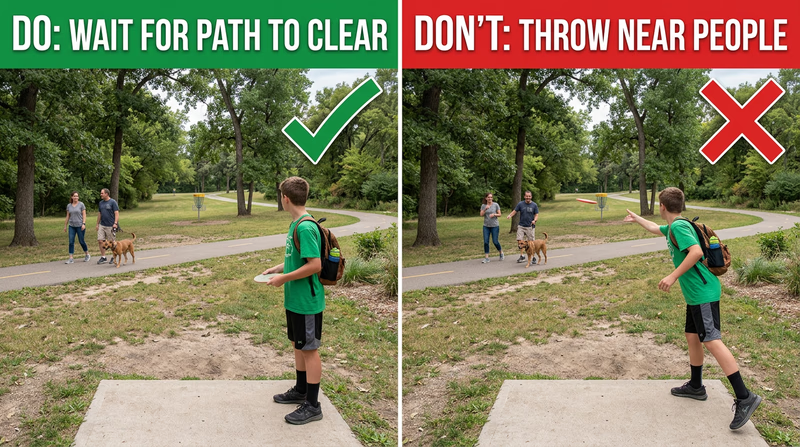
- Do not throw when people, animals, or park users could be hit: Safety comes before speed.
- Help maintain pace of play: Be ready for your turn, watch where discs land, and move efficiently.
- Take care of the course: Do not damage trees, signs, baskets, benches, or park property.
- Put trash in its place: Leave the course cleaner than you found it.
- Show respect to groups around you: That includes your card, other cards, and people who are not playing at all.
Unlike a private golf course, a disc golf course often shares space with walkers, children, cyclists, dogs, or picnic groups. That makes Courtesy especially important. A player who knows the rules but ignores other park users is still not playing the game the right way.
🎬 Video: Disc Course Etiquette (video) — https://youtu.be/8_80I2NenwQ?si=7tHglRmPTWy59pey
What Courtesy Looks Like
Habits a counselor will notice right away- You wait until the landing area is clear: No throw is worth risking injury.
- You stay quiet during another player’s throw: Focus is part of fairness.
- You move with purpose: You are not rushing, but you are also not holding up the group.
- You protect the park: No breaking branches or stomping through plants just to reach a disc.
- You clean up after yourself: Water bottles, wrappers, and broken pencils all count as litter.
Requirement 2b1b
Scoring in disc golf sounds simple at first: count every throw until the disc comes to rest in the basket. The details matter because players still need a fair way to handle missed mandatories, penalty throws, out-of-bounds shots, unfinished holes, and score disputes.
A Scout-friendly way to describe the seven scoring areas is to explain the main ideas that section 808 covers:
- Each throw counts as one stroke.
- Penalty throws add to the score when the rules require them.
- The hole score is total throws plus penalties for that hole.
- The round score is the sum of all hole scores.
- A hole is finished when the disc is holed out correctly in the target.
- Players are responsible for checking and confirming scores before the card is submitted.
- Incorrect or incomplete scoring can lead to penalties or corrections.
The key idea is honesty. Disc golf usually relies on players in the group to keep and confirm one another’s scores. That means you should know your throws, admit penalties, and pay attention when the group reviews each hole.
Disc Golf Scoring Rules (website) Read the official PDGA scoring section to see exactly how throws, penalties, hole completion, and scorekeeping are defined. Link: Disc Golf Scoring Rules (website) — https://www.pdga.com/rules/official-rules-disc-golf/808A few examples make the rules easier to picture:
- If you throw from the tee, then throw an approach, then hole out, your score is 3.
- If your drive goes out of bounds and the rule adds one penalty throw, your score includes that extra stroke.
- If a player holes out but marks the wrong score on the card and nobody catches it, that can create a rules problem after the hole is finished.
Good Scoring Habits
Simple ways to avoid mistakes during a round- Know your lie and penalties: Do not guess after the hole is over.
- Listen during score review: Pay attention when each player says their number.
- Ask questions right away: It is easier to fix confusion before moving to the next tee.
- Keep the card neat and complete: Accurate recordkeeping is part of the game.
You do not need to become a tournament rules official for this badge. You do need to show that you know how disc golf stays fair: players follow the published rules, protect each other, and keep scores honestly. That same rule knowledge will matter even more when you play a full round in Req 2b6.
Req 2b2 — Disc Golf History & Inclusion
Disc golf grew from a simple idea: take a flying disc, aim at a target, and make the game challenging enough that skill matters. Long before permanent baskets were common, people played informal object courses by throwing at poles, trees, trash cans, or other agreed targets. Over time, the game developed official equipment, standard targets, published rules, and organized events.
One reason the sport spread so quickly is that it did not require a private club, expensive membership, or highly specialized clothing. Many courses were built in public parks, and a beginner could start with only one or two discs. That low barrier to entry is a big reason many people describe disc golf as an inclusive game.
A Short History of Disc Golf
Modern disc golf took shape in the second half of the 1900s as flying discs became popular recreational equipment. Informal throwing games existed first. Then players started turning those games into organized rounds with tees, targets, and scores. Inventors and promoters helped create purpose-built targets and more standardized course design, which made it easier for different communities to play the same sport.
As the game matured, organizations such as the Professional Disc Golf Association helped publish official rules, support competition, and promote course development. That gave players a shared rulebook and helped local clubs connect to the wider sport.
Why Disc Golf Can Be Inclusive
Disc golf is not automatically inclusive just because the equipment is simple. It becomes inclusive when courses, players, and communities make the game welcoming.
Here are several reasons the sport often reaches a wide range of people:
- Lower startup cost: A beginner can play with a small number of discs.
- Public locations: Many courses are in city or county parks instead of private facilities.
- Flexible skill levels: New players can enjoy short, simple throws while advanced players still face technical challenges.
- Mixed ages and backgrounds: Families, youth groups, casual players, and tournament competitors can all share the same course.
- Many ways to participate: Some people play for exercise, some for social time, and some for competition.
Inclusivity also means attitude. A course may be open to everyone, but new players will not feel included if experienced players are impatient, rude, or dismissive. The Disc Golfer’s Code is useful because it focuses on respect, care for the course, and safe shared use of public space.
PDGA Disc Golfer's Code (website) This short official guide shows how safety, respect, and course care help make disc golf welcoming to many kinds of players. Link: PDGA Disc Golfer's Code (website) — https://www.pdga.com/files/disc-golfers-code-en-us_1.pdfSigns a Sport Feels Inclusive
What a new player notices on their first visit- People explain the basics kindly: Beginners are not mocked for mistakes.
- The course is shared respectfully: Players make room for families, walkers, and slower groups.
- Equipment needs stay reasonable: You can begin without buying a giant collection.
- Different goals are accepted: Fun, exercise, and competition all have a place.
In the next requirement, you will go deeper than the broad story. You will look at one of the key people in the sport, how disc technology changed, and what top players have accomplished.
Req 2b3 — Disc Design & Disc Golf Leaders
This requirement connects four parts of disc golf that belong together: the sport’s history, one of its most influential innovators, the changing design of the disc itself, and the achievements of elite players. If you understand all four, you can explain not just how disc golf is played, but how it became the game people know today.
This page covers:
- How disc golf developed over time
- Why Ed Headrick matters so much to the sport
- How discs changed from simple flying toys into specialized equipment
- How to research a top player and describe real accomplishments
🎬 Video: The History of Disc Golf (video) — https://youtu.be/U0sNVO5anuk?si=d_6UcMdJxIxfF98w
Requirement 2b3a
By now you have already seen that disc golf grew from informal throwing games into an organized sport with rules, courses, and tournaments. A good answer here should mention that the sport spread because it was fun, relatively affordable, and easy to introduce in parks and schools. Many players could join without the cost and formality of some other sports.
The word inclusive matters here again. Disc golf can welcome a wide range of ages, skill levels, and backgrounds because the game can scale up or down. A beginner can throw short, safe shots and still enjoy the round. An expert can play the same hole and see more strategy, risk, and shot-shaping choices.
When you explain the history, try to connect the growth of the sport to the growth of access. Courses in public spaces, simpler equipment needs, and a culture that values shared play all helped the game expand.
Requirement 2b3b
Ed Headrick is one of the most important people in disc golf history. He is often called the father of disc golf because he helped turn scattered throwing games into a more standardized sport. One of his biggest contributions was developing and promoting the modern disc golf target, which made it possible for courses in different places to use a recognizable, repeatable goal.
Headrick also helped shape the sport’s early organization and growth. Standard targets, clearer rules, and course-building efforts made it easier for clubs and communities to create permanent courses. That kind of structure helped disc golf move from casual recreation into something that could support leagues, tournaments, and long-term development.
A strong discussion with your counselor might include questions like these:
- What problem did the modern target solve?
- How did standard equipment help course designers?
- Why does a growing sport need rules and organization, not just enthusiasm?
Requirement 2b3c
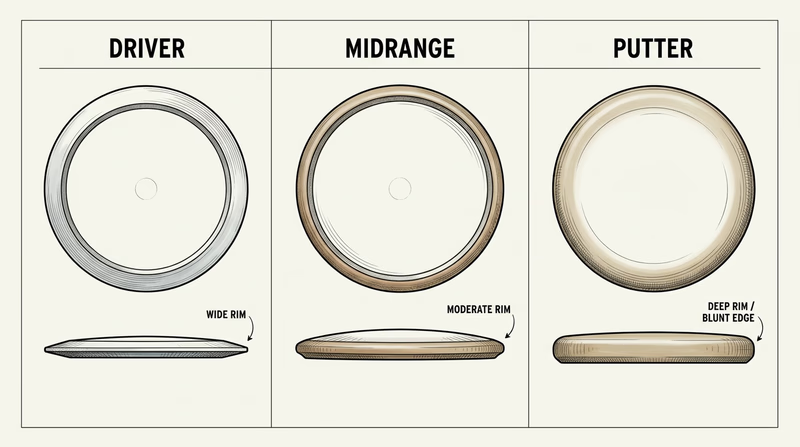
Early flying discs were general-purpose toys. As disc golf developed, players and manufacturers learned that different shapes and rim styles produced different flight patterns. That led to more specialized discs designed for distance, control, approach shots, and putting.
Today, disc golfers usually talk about a few broad categories:
- Drivers: Built for speed and longer throws.
- Midranges: Built for control and versatile fairway shots.
- Putters: Built for touch, accuracy, and short-range consistency.
Disc design also changed through plastic blends, rim widths, and stability differences. Some discs resist turning more strongly. Others glide longer or respond better to slower arm speeds. That does not mean a beginner needs a huge collection. It means the sport learned how to make equipment more specialized as players understood flight better.
How Disc Design Changed
Simple ways to explain the evolution- Targets became standardized: Players could finish holes the same way on many courses.
- Discs became more specialized: Different molds fit different kinds of throws.
- Materials improved: Plastic types affected grip, durability, and flight feel.
- Players gained more shot options: Equipment began to support more advanced strategy.
Requirement 2b3d
For this part, choose a real player and focus on actual accomplishments you can describe clearly. That might include world titles, major tournament wins, long-term rankings, influence on the sport, or a reputation for a specific skill. You do not need to choose the most famous name. You need to choose someone you can explain well.
Top Disc Golfers in the World (website) Use the PDGA world rankings to find current top players and compare their standing in the sport. Link: Top Disc Golfers in the World (website) — https://www.pdga.com/world-rankingsA good counselor discussion might include:
- What events has the player won?
- How long have they competed at a high level?
- What style or strengths are they known for?
- Why did you choose that player over someone else?
This page shows how disc golf became a real sport with real equipment, real leaders, and real high-level competition. Next you will turn back to your own body and game by looking at how disc golf supports health and how exercise can improve your throws.
Req 2b4 — Fitness for Disc Golf
Disc golf looks easy from a distance. You walk through a park and throw a plastic disc at a basket. But a full round can involve hills, uneven ground, repeated throwing, mental focus, and lots of small decisions. This requirement asks you to connect disc golf to both health and performance.
This page covers two things every player should understand:
- How disc golf can support a healthy lifestyle
- How exercise can improve throwing form, balance, and consistency
Requirement 2b4a
Disc golf can support physical health because it gets you moving outdoors. Even a casual round usually includes walking, bending, carrying gear, and repeated throwing motions. On a hilly or wooded course, that movement adds up quickly.
The game also supports mental health in useful ways. A round asks you to focus on one throw at a time, recover from mistakes, and stay patient when the course gets difficult. That kind of reset-and-respond mindset is one reason many players find the game calming as well as challenging.
Physical benefits may include:
- better general activity through walking
- improved coordination and balance
- time outside in fresh air and sunlight
- gentle endurance over the course of a full round
Mental and social benefits may include:
- stress relief
- concentration and decision-making
- emotional control after a bad throw
- time with friends, family, or other players
🎬 Video: Health Benefits of Disc Golf (video) — https://youtu.be/SkZaOSeLMZw?si=SXifoCdgqPr_99RM
Requirement 2b4b
A good disc golf throw depends on more than arm speed. You need balance, core control, hip rotation, and the ability to stay smooth from the ground up. An exercise plan helps because it improves how your body moves before, during, and after the release.
Two strong examples you could show are:
- Single-leg balance drill: Stand on one foot for a set time, then switch. This helps stability during the plant and release.
- Torso or hip rotation drill: Controlled rotational movement helps you coil and uncoil more efficiently during a backhand or forehand throw.
Other helpful exercise ideas include bodyweight squats, lunges, planks, band work for shoulders, and mobility drills for hips and upper back. The important part is connecting each exercise to a disc golf need.
🎬 Video: Disc Golf Exercise Plan (video) — https://youtu.be/Pe3rtET4RUs?si=Ys_Ni1kDwdws-Ra1
How Exercise Helps Your Disc Golf Game
Link the movement to the result- Better balance: Makes your plant foot and follow-through more controlled.
- More mobility: Helps you rotate without forcing the throw.
- Stronger legs and core: Gives you a steadier base for power.
- Less fatigue: Helps your form stay cleaner late in the round.
Good fitness supports good technique. The next requirement gets even more hands-on by walking through the main disc golf skills you will need to show.
Req 2b5 — Disc Golf Skills
This requirement is the skill-building center of the disc golf path. It asks you to show grips, footwork, several types of throws, two putting stances, putting mechanics, and the proper use of a mini marker. You do not need pro-level power. You do need to show that you understand what each movement is for and how to perform it with control.
As you work through these skills, keep three ideas in mind:
- Smooth is better than violent: Good form beats trying to overpower the disc.
- Balance matters: Nearly every mistake gets worse when your body is out of control.
- Purpose matters: A shot is not just a motion. It is an answer to a course problem.
Requirement 2b5a
A good throwing grip gives you control over both release angle and power. The disc should feel secure in your hand without being squeezed so tightly that your wrist and forearm become rigid. In general, you want the disc tucked into the hand with the fingers positioned to support a clean rip at release.
🎬 Video: A Throwing Disc (video) — https://youtu.be/hmlPfsFq82s?si=hNn-3ZonabKD7yB9
A counselor will usually notice whether the disc looks loose, unstable, or awkward before you even throw. A good grip should help the disc leave your hand cleanly rather than wobbling out early.
Requirement 2b5b
The X-step is a footwork pattern that helps you build rhythm and transfer energy into the throw. The goal is not to sprint. The goal is to stay balanced while turning your body into position for a smooth release.
🎬 Video: The X-Step Runup (video) — https://youtu.be/rvwtWNsgGj0?si=4bdppuGc1eQuxcA0
A good X-step usually includes controlled timing, a balanced plant foot, and a finish that does not leave you falling sideways. If your runup is too fast, your throw often gets less accurate, not more powerful.
Requirement 2b5c
The backhand is one of the core disc golf throws. Many players learn it first because it can combine distance and control. A strong backhand uses body rotation, weight shift, and a clean release instead of just arm strength.
🎬 Video: The Backhand Shot (video) — https://youtu.be/N00BfNwc7ng?si=_5avPATQ6y5cjGAZ
A good explanation to your counselor would include turning the shoulders, planting in balance, pulling the disc on a controlled line, and following through instead of stopping abruptly.
Requirement 2b5d
A forehand, sometimes called a sidearm, is useful when the shape of the hole or an obstacle calls for a different flight than your backhand. The motion is different, but the same rule applies: control matters more than trying to throw too hard.
🎬 Video: Forehand Shot (video) — https://youtu.be/mjlBl3vHPLA?si=Mw3qNaYB5JSmB41L
Many newer players roll their wrist or throw only with the arm. A cleaner forehand comes from balance, timing, and a smooth snap rather than a wild fling.
Requirement 2b5e
An overhand shot is a specialty throw. Players may use it to get over obstacles or create a flight shape they cannot get from a backhand or forehand. Because it is a less common shot, you should focus on understanding when it is useful and how to throw it safely under control.
🎬 Video: Overhand Shot (video) — https://youtu.be/Wf0EX0TlE3U?si=-rDr38GFC_-2Shi1
Requirement 2b5f
A rolling shot, or roller, uses the ground on purpose. Instead of trying to keep the disc flying as long as possible, the player throws a line that causes the disc to roll forward. On the right terrain, that can be a smart way to cover distance or bend around obstacles.
🎬 Video: The Rolling Shot (video) — https://youtu.be/SGzd4CddZuY?si=JmwcpKQ9JhhVdda6
A roller is a good reminder that disc golf is creative. Different holes reward different solutions.
Requirement 2b5g
An in-line putting stance points your body more directly at the target. It can help with alignment and repetition, especially on straightforward putts where you want a simple, consistent motion.
🎬 Video: The Putting Stance (video) — https://youtu.be/wTx5CzU-PMA?si=BFkyylCTMm9yMfXv
Requirement 2b5h
A straddle stance spreads the feet more evenly and can be especially helpful when you need balance, room around an obstacle, or a different feel from your regular putt. It gives some players a steadier base in tricky situations.
🎬 Video: The Straddle Putt (video) — https://youtu.be/Z0-g3KGpkPU?si=YBT8H5FXfVTKUpjv
Requirement 2b5i
A putting grip should feel repeatable and comfortable. You usually want more touch and face control than raw power. The best grip is one that helps you present the disc cleanly on your intended line again and again.
🎬 Video: Disc Golf Putting Grip (video) — https://youtu.be/hdMtc3Go2vU?si=bQ0rKOy3WYwXuTGU
Requirement 2b5j
Putting is about rhythm, commitment, and release angle. A good putting motion stays controlled and finishes toward the target instead of stopping short or jerking off line. The follow-through shows whether you stayed committed to the putt.
🎬 Video: The Putt (video) — https://youtu.be/IKgE6q0YKC8?si=m2GdVwR8irfq4fHz
Requirement 2b5k
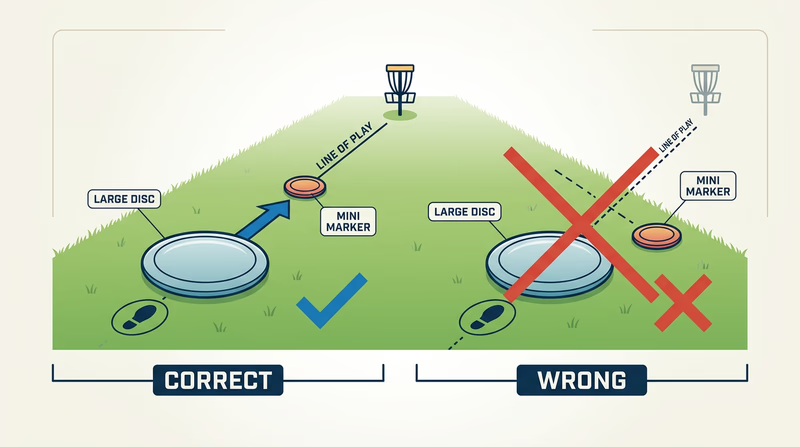
A mini-marking disc is a small but important rules tool. It marks the lie so you know exactly where the next throw must be made. Using it correctly shows respect for the rules and helps avoid confusion during the round.
🎬 Video: Using a Mini Marking Disc (video) — https://youtu.be/drip90Ta9XQ?si=VXT2OTYHY-tC0iII
In most cases, you place the mini marker according to the rules, establish your lie, and then take the next throw from the correct position. Small details matter because foot faults and lie mistakes can affect fairness.
What a Counselor Will Notice
Habits that matter across almost every skill- Balanced body position: You are under control before and after release.
- Clean release: The disc comes out with purpose instead of wobbling wildly.
- Shot awareness: You can explain what each throw is meant to do.
- Respect for the lie: You treat putting and marking as part of the rules, not just extra details.
These skills are meant to prepare you for real play, not just isolated practice. The next page brings them together during a full supervised round where rules, etiquette, and respect all count at once.
Req 2b6 — Playing a Full Disc Golf Round
This requirement is where the disc golf path becomes real. A practice field lets you focus on one skill at a time, but a full round asks you to combine rules, courtesy, shot choices, and self-control over many holes. The round is not just about how well you throw. It is about how responsibly you play.
Requirement 2b6a
Following the rules during a real round means more than knowing that the PDGA has a rulebook. It means taking throws from the correct lie, counting every stroke honestly, handling penalties correctly, and asking questions calmly if something is unclear.
You do not need to memorize every detail of tournament play. You do need to show honesty and rule awareness. If your disc goes out of bounds, if you need to mark your lie, or if there is confusion about a throw, the right response is to slow down and handle it the right way.
Requirement 2b6b
Etiquette during a round means being the kind of player others want to share the course with. Stay quiet when others throw. Keep up with the pace of play. Help watch where discs land. Do not leave trash behind. Be ready when it is your turn.
In disc golf, etiquette also includes awareness of the park around you. Many courses are mixed-use spaces, so courtesy extends beyond your card to everyone nearby.
Requirement 2b6c
This part is one of the clearest signs that disc golf is often played in shared natural spaces. Respect means more than being nice to your friends. It means treating the course as a public place that deserves care.
Respect during the round looks like:
- speaking politely to other players and park users
- waiting for walkers or cyclists to clear the area
- avoiding damage to branches, roots, signs, and baskets
- leaving wildlife alone instead of chasing or disturbing it
- accepting bad shots without angry behavior that harms the course
🎬 Video: Playing a Round of Disc Golf (video) — https://youtu.be/M4bcozlUX9g?si=X_Kwf7_PAcIjPgaq
Round-Day Habits for Disc Golf
What to remember before and during play- Bring water and weather gear: Long rounds in parks can be tiring.
- Keep track of your discs: Watch flights and help others spot theirs too.
- Stay honest with score and lie: Fair play matters as much as shot quality.
- Respect the public space: The park is shared with other people and living things.
This round should pull together what you learned in Req 2b1 about rules and courtesy and in Req 2b5 about technique. The final disc golf page looks beyond playing and asks where the sport can lead as a career.
Req 2b7 — Careers in Disc Golf
Disc golf careers are broader than just becoming a touring professional. The sport needs coaches, event directors, course designers, media workers, retailers, manufacturers, parks partners, and nonprofit leaders. This requirement helps you see disc golf not only as a game you play, but also as a field where people build real jobs.
Three Career Ideas to Explore
Here are three strong examples you could research:
- Professional player or instructor: Competes, teaches, gives clinics, builds a public profile, and often works with sponsors.
- Tournament director or event manager: Organizes leagues and tournaments, handles scheduling, logistics, volunteers, scoring, and communication.
- Course designer or parks/recreation specialist: Helps plan layouts, think about safety and land use, and create courses people can enjoy for years.
Other possibilities include media production, photography, commentary, equipment sales, manufacturing, youth programming, and nonprofit outreach.
What to Research for One Career
When you choose one career, be ready to discuss:
- Education: Does the job need college, certifications, parks training, business knowledge, media skills, or specialized design experience?
- Training: Are there clinics, apprenticeships, event-management roles, or teaching experience that help someone get started?
- Experience: Do people usually begin by volunteering, assisting at events, working in a shop, coaching new players, or helping with course projects?
- Why it interests you: What part of the work sounds satisfying, creative, competitive, or meaningful?
🎬 Video: Disc Golf as a Career (video) — https://youtu.be/y64MQTh98j4?si=XygGG0xzsfpsQurS
🎬 Video: Being a Professional Disc Golfer (video) — https://youtu.be/rLiz9krymJk?si=wgL3oVMWKdQ5JxDe
A Strong Career Discussion Includes
Use these points when preparing for your counselor- What the job looks like day to day
- How someone builds the needed skills
- What kind of education or experience matters most
- Why this work stands out to you personally
Disc golf can keep growing in your life whether you play casually, compete seriously, or help others enjoy the sport. The final page of the guide looks beyond the badge and shows ways to keep learning after you finish the requirements.
Extended Learning
A. Congratulations
You have worked through safety, rules, history, fitness, skills, real play, and career ideas across both traditional golf and disc golf. That is a lot more than just learning how to hit a ball or throw a disc. You have also practiced honesty, patience, judgment, and respect for other people. Those habits are a big part of why golf can stay with you for life.
B. Deep Dive: Course Management
One of the most useful next steps after earning this badge is learning course management. That means choosing the smartest shot for the situation instead of always choosing the most aggressive shot. In traditional golf, course management might mean laying up short of a water hazard instead of trying to carry it. In disc golf, it might mean choosing a safer line through the trees instead of attacking a tiny gap. Good players think about risk and reward before they swing or throw. They notice wind, footing, angle, obstacles, and what kind of miss is acceptable. Course management also includes emotional discipline. After a bad shot, strong players do not usually try an even riskier miracle shot just to erase the mistake immediately. They recover, get back into position, and keep the round moving forward. If you want to improve quickly, start asking yourself before every shot: “What is the smart play here?”
C. Deep Dive: Practice With Purpose
A lot of beginners say they are practicing when they are really just repeating the same shot without a goal. Purposeful practice is different. It focuses on one skill, one target, or one problem at a time. In traditional golf, that might mean hitting ten short putts with the same routine or practicing chips that land in one small area. In disc golf, it might mean throwing controlled backhands at one angle instead of trying for maximum distance every time. Purposeful practice also includes feedback. You should notice what changed when a shot worked better. Did your balance improve? Did your setup feel more athletic? Did your release angle stay cleaner? Short practice sessions with a clear goal are often more valuable than a long session with no plan. If you keep notes, you may start to see patterns in what helps you most.
D. Deep Dive: Golf as Character Training
Golf and disc golf are unusual because players often help police themselves. That means your character is part of the game, not something separate from it. You count strokes honestly. You admit penalties. You protect other people by waiting when the area is not clear. You stay respectful even when you are frustrated. Those habits matter beyond sports. They are connected to integrity, emotional control, and service-minded leadership. The game also teaches how to handle slow progress. Improvement often comes in small steps, not all at once. You may practice for weeks before a new motion starts to feel natural. Learning to stay patient through that process is valuable in school, work, service projects, and other merit badges too. A good next challenge is to notice which golf habits you want to carry into the rest of your life.
E. Real-World Experiences
Visit a driving range, practice green, or short-game area
Spend time watching how different players warm up, practice, and manage mistakes. Notice what disciplined players do before and after each shot.
Play a beginner-friendly disc golf course with a new player
Helping someone else learn is a good test of whether you really understand safety, etiquette, and the basic rules.
Watch a tournament round in person or online
Observe more than the highlight shots. Pay attention to pacing, decision-making, and how players respond under pressure.
Volunteer at a course cleanup or local event
This is a practical way to see how much work goes into maintaining courses and building community around the sport.
Compare two facilities
Visit or study one traditional golf course and one disc golf course. Notice how layout, safety, traffic flow, and etiquette expectations are similar and different.
F. Organizations
United States Golf Association (USGA)
The USGA helps govern traditional golf in the United States and publishes rules, education, and player resources.
United States Golf Association Explore rules, education, and resources connected to traditional golf. Link: United States Golf Association — https://www.usga.org/Professional Disc Golf Association (PDGA)
The PDGA is the main governing body for organized disc golf and offers rules, course information, rankings, and educational tools.
Professional Disc Golf Association Use the PDGA site to explore official disc golf rules, rankings, and player resources. Link: Professional Disc Golf Association — https://www.pdga.com/First Tee
First Tee uses golf as a way to teach young people confidence, goal-setting, and life skills.
First Tee See how golf programs can help young people build both playing skill and character. Link: First Tee — https://firsttee.org/Disc Golf United
Disc Golf United supports events, player development, and broader community engagement in the sport.
Disc Golf United Explore a major community hub for disc golf events, news, and participation. Link: Disc Golf United — https://www.discgolfunited.com/PGA of America
The PGA of America supports golf professionals, instruction, and player development across many ages and skill levels.
PGA of America Learn more about golf instruction, careers, and programs led by PGA professionals. Link: PGA of America — https://www.pga.com/