Req 2a1 — Rules, Terms & Amateur Status
This requirement is about more than memorizing rule numbers. It teaches you how golfers keep the game fair even when no referee is standing nearby. The three parts below fit together: etiquette tells you how to behave, terminology helps you discuss the game clearly, and amateur status explains how competition stays true to the spirit of the sport.
USGA Rules of Golf (website) The official USGA rules site lets you browse the current rules and clarifications used in play. USGA Rules of Golf (Free Course) (website) A beginner-friendly course that explains the rules in smaller lessons with practical examples.Knowing your clubs supports the rules because many golf terms are tied to how and where different clubs are used. As you study, match the words you hear to real situations on a course.
Requirement 2a1a
Golf etiquette is usually grouped into three big ideas: safety, consideration for others, and care of the course. Safety means you never hit until the players ahead are clearly out of range, you stay clear of another player’s swing, and you warn others if a ball is heading toward them. Consideration means keeping noise down, being ready when it is your turn, and not distracting another player. Care of the course means repairing ball marks, replacing divots when required, raking bunkers, and leaving the course better than you found it.
Three Categories of Golf Etiquette (PDF) A short official reference that organizes golf etiquette into the main categories Scouts should know.A good way to explain these categories to your counselor is to connect each one to a real moment in play. For example, waiting until the group ahead is clear is safety, standing still while someone putts is consideration, and fixing a pitch mark on the green is care of the course.
Requirement 2a1b
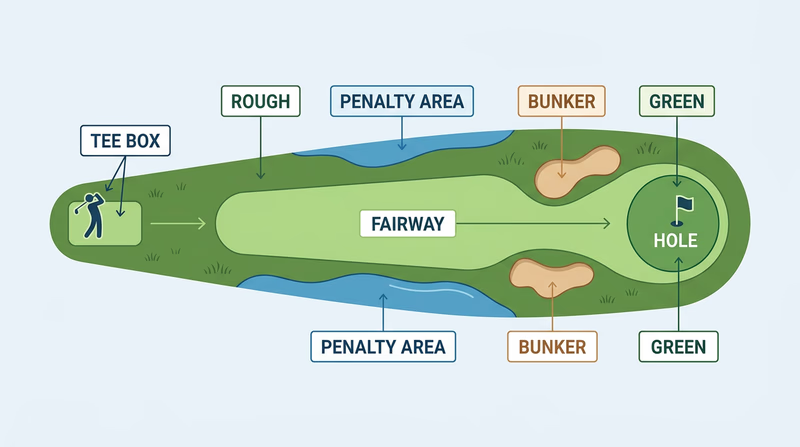
Golf has its own vocabulary, and learning it makes the game far less confusing. Words like par, birdie, bogey, tee box, fairway, rough, hazard, bunker, green, stroke, and penalty area come up constantly. You do not need to sound like a TV announcer. You do need to understand what the terms mean so you can follow directions, talk with your counselor, and know what is happening during play.
Requirement 2a1c
Amateur status is about keeping the game based on skill, competition, and integrity rather than turning every event into a money contest. In simple terms, amateur golfers may compete and win certain prizes under the rules, but there are limits on accepting prize money or acting like a professional player without changing status. You should understand that the rules protect fairness and keep amateur competition separate from professional golf.
If your counselor asks why amateur status matters, a strong answer is that it protects the purpose of amateur competition. Scouts, junior golfers, school teams, and everyday players can compete without the game being driven mainly by cash rewards.
Before moving on, make sure you can explain not just what the rules say, but why they matter. That will help a lot when you get to handicaps, playing a round, and talking with your counselor about how golf stays fair.