Req 2a5 — Traditional Golf Skills
This page covers the core traditional golf shots and fundamentals you need before you play a supervised round. The goal is not perfection. The goal is to understand what each shot is for, how your setup changes, and what good control looks like.
Requirement 2a5a
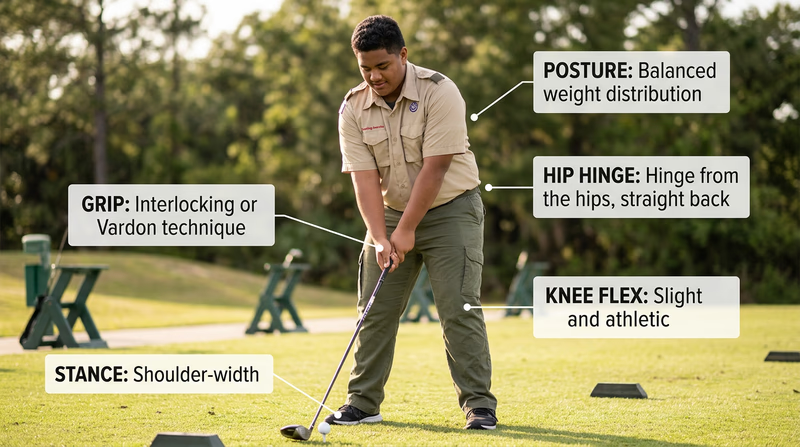
Every golf shot starts with setup. A balanced stance, athletic posture, and secure grip make the rest of the swing much easier. Your feet should usually be about shoulder-width apart, your knees slightly flexed, and your upper body tilted from the hips rather than slumped from the shoulders. A good swing stays in balance and returns the clubhead to the ball consistently.
Requirement 2a5b
The driver is used for distance from the teeing area. Because the ball is teed up, the club can sweep through impact with a longer, more upward motion than many other shots. Accuracy still matters. A huge drive into trees is not as useful as a solid one that stays in play.
Requirement 2a5c
Fairway woods are designed for long shots from the turf or sometimes from the tee. They require a sweeping strike but often reward smooth tempo more than raw force. Many beginners hit them better when they focus on balance and brushing the grass after the ball rather than trying to lift the ball into the air.
Requirement 2a5d
Long irons are harder for many players because they have less loft and demand solid contact. They are useful for lower, longer shots, but they punish poor balance and bad timing. A good explanation to your counselor would include the need for clean contact, body rotation, and staying down through the shot.
Requirement 2a5e
Short irons are used for more controlled approach shots. They have more loft, so they launch the ball higher and are often easier to hit accurately than long irons. Good short-iron play depends on tempo, ball-first contact, and aiming for a safe landing area.
Requirement 2a5f
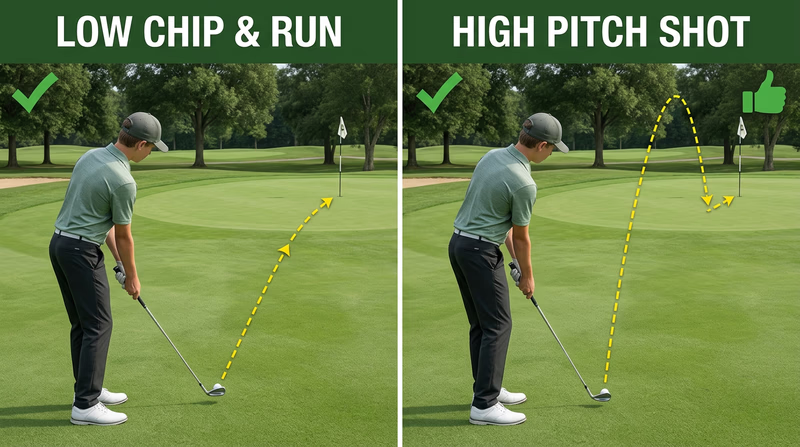
These shots are part of the short game. An approach shot is played toward the green, often from farther away. A chip-and-run stays lower and rolls more after landing. A pitch shot goes higher and lands softer. Learning when to roll the ball and when to fly it is a big part of scoring well.
Requirement 2a5g
Recovery shots are about solving problems, not looking perfect. From a bunker, you usually need the club to move through sand in a way that helps the ball pop out. From heavy rough, the grass can grab the club and reduce control. The smart play is often to get the ball back into a good position instead of trying a miracle shot.
Requirement 2a5h
Putting is about distance control, face control, and calm focus. A sound stroke keeps the putter face stable and the motion smooth. Long putts are mainly about speed so the next putt is manageable. Short putts require commitment and a steady routine.
What Your Counselor Will Likely Notice
These habits matter across all the shots
- Balance: Finish under control instead of falling backward or lunging forward.
- Setup: Use a stance and posture that fit the shot.
- Tempo: Swing smoothly instead of forcing power.
- Purpose: Know what each shot is trying to do.
You now have the shot overview. Next comes the real test: using rules, etiquette, and control during an actual round of golf.