Req 2b3 — Disc Design & Disc Golf Leaders
This requirement connects four parts of disc golf that belong together: the sport’s history, one of its most influential innovators, the changing design of the disc itself, and the achievements of elite players. If you understand all four, you can explain not just how disc golf is played, but how it became the game people know today.
This page covers:
- How disc golf developed over time
- Why Ed Headrick matters so much to the sport
- How discs changed from simple flying toys into specialized equipment
- How to research a top player and describe real accomplishments
Requirement 2b3a
By now you have already seen that disc golf grew from informal throwing games into an organized sport with rules, courses, and tournaments. A good answer here should mention that the sport spread because it was fun, relatively affordable, and easy to introduce in parks and schools. Many players could join without the cost and formality of some other sports.
The word inclusive matters here again. Disc golf can welcome a wide range of ages, skill levels, and backgrounds because the game can scale up or down. A beginner can throw short, safe shots and still enjoy the round. An expert can play the same hole and see more strategy, risk, and shot-shaping choices.
When you explain the history, try to connect the growth of the sport to the growth of access. Courses in public spaces, simpler equipment needs, and a culture that values shared play all helped the game expand.
Requirement 2b3b
Ed Headrick is one of the most important people in disc golf history. He is often called the father of disc golf because he helped turn scattered throwing games into a more standardized sport. One of his biggest contributions was developing and promoting the modern disc golf target, which made it possible for courses in different places to use a recognizable, repeatable goal.
Headrick also helped shape the sport’s early organization and growth. Standard targets, clearer rules, and course-building efforts made it easier for clubs and communities to create permanent courses. That kind of structure helped disc golf move from casual recreation into something that could support leagues, tournaments, and long-term development.
A strong discussion with your counselor might include questions like these:
- What problem did the modern target solve?
- How did standard equipment help course designers?
- Why does a growing sport need rules and organization, not just enthusiasm?
Requirement 2b3c
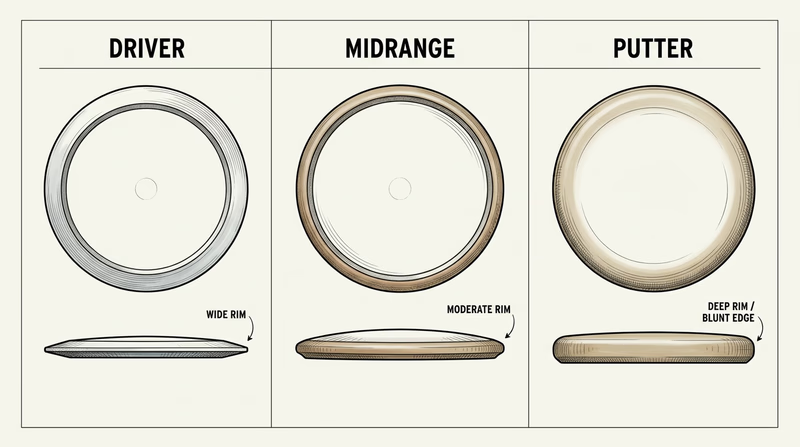
Early flying discs were general-purpose toys. As disc golf developed, players and manufacturers learned that different shapes and rim styles produced different flight patterns. That led to more specialized discs designed for distance, control, approach shots, and putting.
Today, disc golfers usually talk about a few broad categories:
- Drivers: Built for speed and longer throws.
- Midranges: Built for control and versatile fairway shots.
- Putters: Built for touch, accuracy, and short-range consistency.
Disc design also changed through plastic blends, rim widths, and stability differences. Some discs resist turning more strongly. Others glide longer or respond better to slower arm speeds. That does not mean a beginner needs a huge collection. It means the sport learned how to make equipment more specialized as players understood flight better.
How Disc Design Changed
Simple ways to explain the evolution
- Targets became standardized: Players could finish holes the same way on many courses.
- Discs became more specialized: Different molds fit different kinds of throws.
- Materials improved: Plastic types affected grip, durability, and flight feel.
- Players gained more shot options: Equipment began to support more advanced strategy.
Requirement 2b3d
For this part, choose a real player and focus on actual accomplishments you can describe clearly. That might include world titles, major tournament wins, long-term rankings, influence on the sport, or a reputation for a specific skill. You do not need to choose the most famous name. You need to choose someone you can explain well.
Top Disc Golfers in the World (website) Use the PDGA world rankings to find current top players and compare their standing in the sport.A good counselor discussion might include:
- What events has the player won?
- How long have they competed at a high level?
- What style or strengths are they known for?
- Why did you choose that player over someone else?
This page shows how disc golf became a real sport with real equipment, real leaders, and real high-level competition. Next you will turn back to your own body and game by looking at how disc golf supports health and how exercise can improve your throws.