Req 2b5 — Disc Golf Skills
This requirement is the skill-building center of the disc golf path. It asks you to show grips, footwork, several types of throws, two putting stances, putting mechanics, and the proper use of a mini marker. You do not need pro-level power. You do need to show that you understand what each movement is for and how to perform it with control.
As you work through these skills, keep three ideas in mind:
- Smooth is better than violent: Good form beats trying to overpower the disc.
- Balance matters: Nearly every mistake gets worse when your body is out of control.
- Purpose matters: A shot is not just a motion. It is an answer to a course problem.
Requirement 2b5a
A good throwing grip gives you control over both release angle and power. The disc should feel secure in your hand without being squeezed so tightly that your wrist and forearm become rigid. In general, you want the disc tucked into the hand with the fingers positioned to support a clean rip at release.
A counselor will usually notice whether the disc looks loose, unstable, or awkward before you even throw. A good grip should help the disc leave your hand cleanly rather than wobbling out early.
Requirement 2b5b
The X-step is a footwork pattern that helps you build rhythm and transfer energy into the throw. The goal is not to sprint. The goal is to stay balanced while turning your body into position for a smooth release.
A good X-step usually includes controlled timing, a balanced plant foot, and a finish that does not leave you falling sideways. If your runup is too fast, your throw often gets less accurate, not more powerful.
Requirement 2b5c
The backhand is one of the core disc golf throws. Many players learn it first because it can combine distance and control. A strong backhand uses body rotation, weight shift, and a clean release instead of just arm strength.
A good explanation to your counselor would include turning the shoulders, planting in balance, pulling the disc on a controlled line, and following through instead of stopping abruptly.
Requirement 2b5d
A forehand, sometimes called a sidearm, is useful when the shape of the hole or an obstacle calls for a different flight than your backhand. The motion is different, but the same rule applies: control matters more than trying to throw too hard.
Many newer players roll their wrist or throw only with the arm. A cleaner forehand comes from balance, timing, and a smooth snap rather than a wild fling.
Requirement 2b5e
An overhand shot is a specialty throw. Players may use it to get over obstacles or create a flight shape they cannot get from a backhand or forehand. Because it is a less common shot, you should focus on understanding when it is useful and how to throw it safely under control.
Requirement 2b5f
A rolling shot, or roller, uses the ground on purpose. Instead of trying to keep the disc flying as long as possible, the player throws a line that causes the disc to roll forward. On the right terrain, that can be a smart way to cover distance or bend around obstacles.
A roller is a good reminder that disc golf is creative. Different holes reward different solutions.
Requirement 2b5g
An in-line putting stance points your body more directly at the target. It can help with alignment and repetition, especially on straightforward putts where you want a simple, consistent motion.
Requirement 2b5h
A straddle stance spreads the feet more evenly and can be especially helpful when you need balance, room around an obstacle, or a different feel from your regular putt. It gives some players a steadier base in tricky situations.
Requirement 2b5i
A putting grip should feel repeatable and comfortable. You usually want more touch and face control than raw power. The best grip is one that helps you present the disc cleanly on your intended line again and again.
Requirement 2b5j
Putting is about rhythm, commitment, and release angle. A good putting motion stays controlled and finishes toward the target instead of stopping short or jerking off line. The follow-through shows whether you stayed committed to the putt.
Requirement 2b5k
A mini-marking disc is a small but important rules tool. It marks the lie so you know exactly where the next throw must be made. Using it correctly shows respect for the rules and helps avoid confusion during the round.
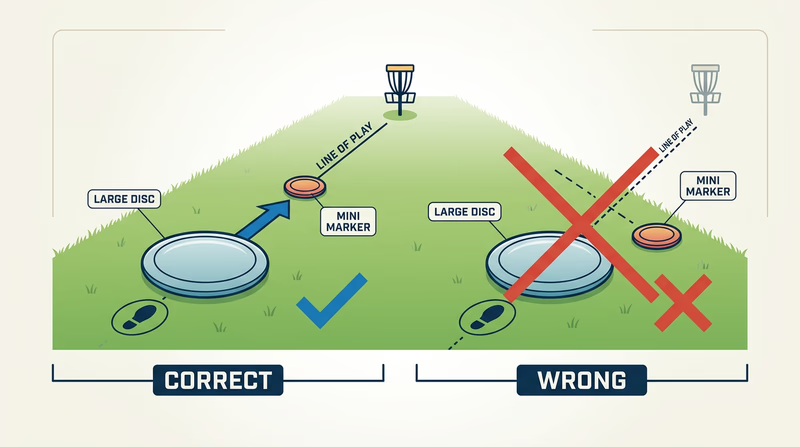
In most cases, you place the mini marker according to the rules, establish your lie, and then take the next throw from the correct position. Small details matter because foot faults and lie mistakes can affect fairness.
What a Counselor Will Notice
Habits that matter across almost every skill
- Balanced body position: You are under control before and after release.
- Clean release: The disc comes out with purpose instead of wobbling wildly.
- Shot awareness: You can explain what each throw is meant to do.
- Respect for the lie: You treat putting and marking as part of the rules, not just extra details.
These skills are meant to prepare you for real play, not just isolated practice. The next page brings them together during a full supervised round where rules, etiquette, and respect all count at once.