 Getting Started
Introduction & Overview
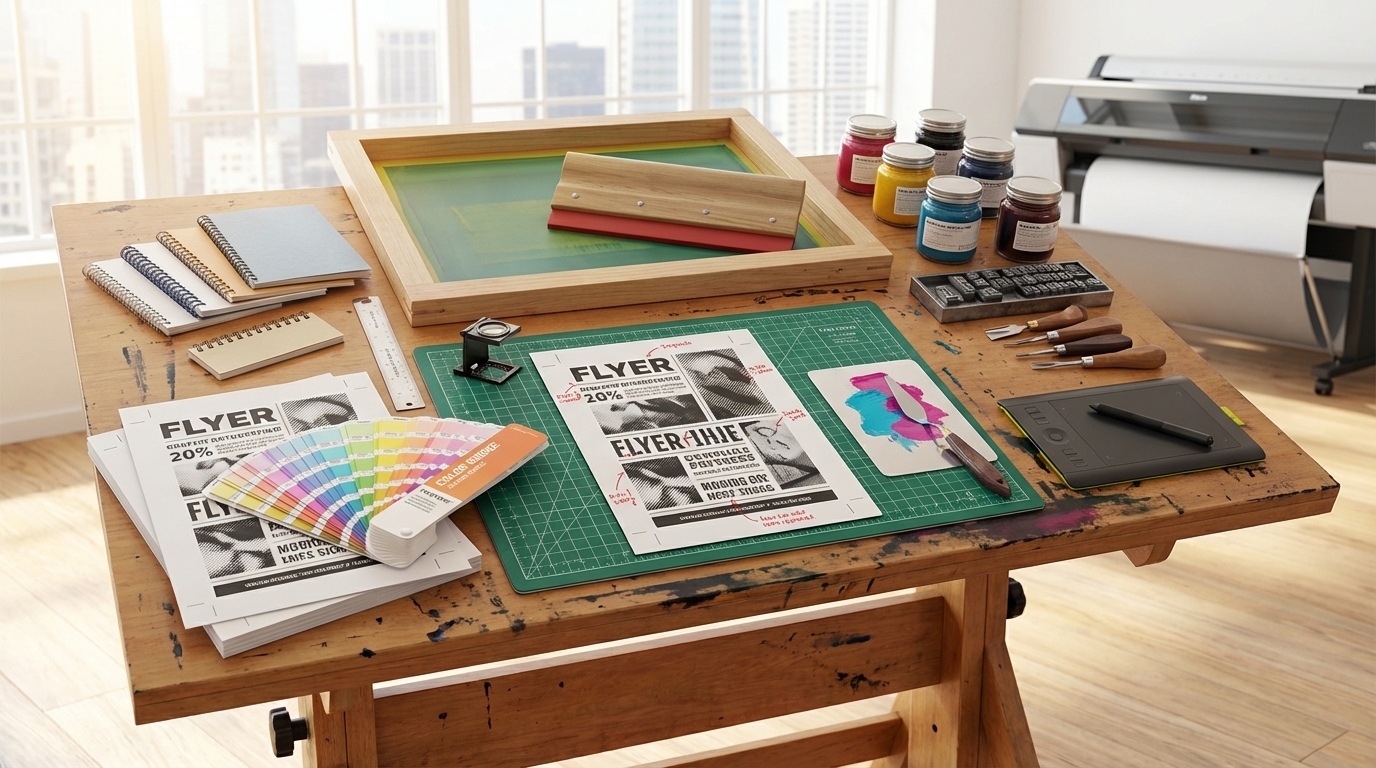
Graphic arts is the world of turning ideas into things people can hold, read, wear, post, mail, and share. Every poster, cereal box, concert shirt, yearbook, sticker sheet, and newspaper page had to be designed, prepared, printed, and finished by somebody who understood both creativity and process. This badge helps you see how art, communication, technology, and hands-on production all work together.
Then and Now
Then
Long before computers, printers built pages by hand. Workers set individual metal letters into frames, rolled ink onto raised surfaces, and pressed paper against them one sheet at a time. Books, newspapers, posters, and announcements took skill, patience, and teamwork. A mistake in one line of type meant stopping, removing the wrong piece, and resetting the page.
As printing improved, new methods made it possible to produce clearer images and larger quantities. Lithography used the way oil and water repel each other. Screen printing pushed ink through mesh openings. Gravure etched images into cylinders for extremely fast, high-volume printing. Each process solved a different problem: speed, detail, cost, or flexibility.
Now
Today, graphic arts includes both traditional print shops and digital production studios. A designer might create a flyer on a laptop, send it to a digital press, proof it on a screen, and have finished copies within minutes. Large commercial jobs still use specialized equipment for offset, flexographic, gravure, and finishing work because those machines remain efficient for certain products.
Graphic arts also reaches beyond paper. The same design thinking shows up in shirts, packaging, decals, signs, labels, menus, and social media graphics. Even in a digital world, printed communication still matters because physical design can grab attention, organize information, and leave a lasting impression.
Get Ready!
This badge lets you think like both an artist and a builder. You will compare real printing methods, make design choices, choose the right production path, and look at how people turn creative ideas into real printed products.
Kinds of Graphic Arts
Editorial and Publishing Design
This part of graphic arts focuses on things people read: newspapers, magazines, books, programs, newsletters, and brochures. The challenge is not only making the page look good, but also helping readers move through it easily. Headlines, columns, captions, photos, white space, and page order all matter.
Promotional and Advertising Design
Posters, flyers, postcards, stickers, banners, and product displays are built to catch attention fast. Promotional design often uses bold color, strong contrast, short text, and one clear message. In this area, graphic arts is all about helping a viewer notice something and remember it.
Apparel and Specialty Printing
Graphic arts also includes printed shirts, tote bags, labels, decals, and other items that are not standard sheets of paper. Screen printing is especially common here because it works well on fabric and other materials. Specialty printing teaches you that the surface being printed changes the whole production plan.
Packaging and Product Graphics
Boxes, cartons, wrappers, labels, and tags all belong to graphic arts. Packaging has to do several jobs at once: protect the product, carry information, meet legal requirements, and still look appealing on a shelf. That mix of design and practical limits makes packaging one of the most interesting branches of the field.
Next Steps
You are ready to start with the big picture: the main printing processes and how to tell them apart. Once you can recognize how different products are made, the rest of the badge starts to make much more sense.