Req 4a — Offset Lithography Run
Offset lithography is the kind of process that rewards careful setup. Once the plate is right and the press is adjusted, it can produce clean, consistent copies over and over. That is why offset printing is so important in commercial paper printing. For this requirement, your job is to understand the workflow well enough to help make a real run happen.
What Happens in Offset Printing
In offset lithography, the image is placed on a plate. Ink sticks to the image areas, while water protects the non-image areas. The image then transfers first to a rubber blanket and only then to the paper. That extra step is why the process is called “offset.”
This method is excellent for brochures, newsletters, flyers, and other paper products that need strong detail and repeatable quality. It is not the simplest process to set up, but it is one of the best for showing how professional print production works.
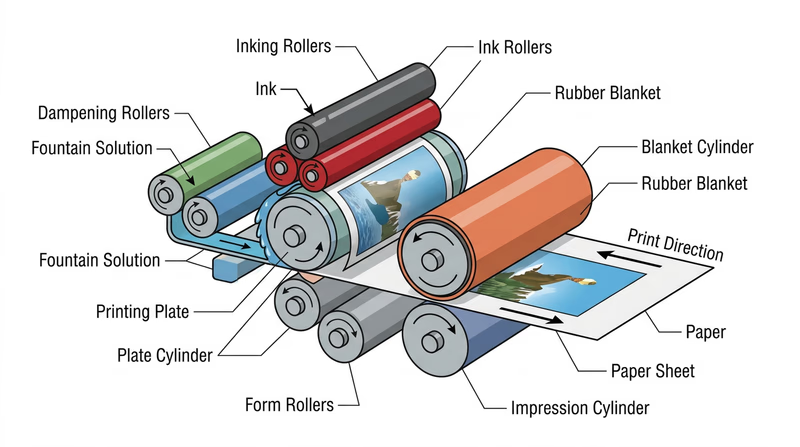
Your Main Tasks
Offset Run Checklist
Focus on the order of the work, not just the final pile of copies
- Prepare the layout: Make sure your design size, margins, images, and text are ready for print.
- Create the plate: Use the approved process your counselor provides.
- Mount and align: Help position the plate and check that the image lands where it should.
- Run test sheets: Examine early copies for registration, coverage, and clarity.
- Print the full run: Once everything looks right, complete at least 50 copies.
What to Watch During Setup
Offset printing depends on precision. If the plate is mounted slightly wrong, the whole job can shift. If the ink-water balance is off, the image can look weak or the page can scum up with unwanted marks. You do not need to master every machine setting for this badge, but you should notice how much accuracy matters before the first good sheet appears.
When talking with your counselor, ask questions like these:
- How is the plate made in this shop?
- What tells you the press is correctly adjusted?
- What defects show up when the settings are wrong?
- Why is offset more practical for some jobs than digital printing?
This video helps you visualize the plate, blanket, and paper path before you stand next to the equipment.
Signs of a Good Run
A successful offset job usually shows:
- even ink coverage
- sharp text and edges
- consistent placement from copy to copy
- paper feeding smoothly without jams
- final copies that match the approved proof
If one copy looks great but the next ten drift or smear, the run is not truly under control. Offset printing teaches that production quality means consistency, not just one lucky sheet.
This option connects directly back to Req 3 — Design Choices and Production Planning. The cleaner and more print-ready your design is, the smoother the plate and press stage usually goes.
If you decide another method fits your project better, the next page shows the screen printing path.