Req 4b — Screen Printing Run
Screen printing feels different from press-based paper printing because you can see the image form right through the stencil. One pull of ink, one pass across the screen, and the design appears on the surface below. That hands-on quality is one reason this method is popular for shirts, posters, signs, and other bold graphic pieces.
How Screen Printing Works
A mesh screen is stretched tight in a frame. Parts of the mesh are blocked by a stencil, and the open parts let ink pass through. When you pull ink across the screen with a squeegee, the image transfers only through those open areas.
This process works best with strong shapes, limited colors, and designs that do not depend on tiny photographic detail. If your Req 3 — Design Choices and Production Planning project uses bold lettering or large graphic areas, screen printing may be a very smart choice.
The Main Steps
Screen Printing Steps
Build a clean stencil and repeat your process carefully
- Finalize the artwork: Simplify shapes and make sure the design suits the surface.
- Create the stencil: Use a hand-cut or photographic method approved by your counselor.
- Attach and mask the screen: Block any areas where stray ink could leak.
- Register the material: Keep each shirt, page, or surface in the same position.
- Print the run: Apply ink consistently and produce at least 20 copies.
Why Masking and Registration Matter
Two common problems in screen printing are ink leaking into the wrong areas and prints landing in slightly different spots. Masking fixes the first problem by covering mesh openings you do not want to print through. Registration helps fix the second by keeping the material lined up the same way every time.
If the first print looks good but the next ones drift up or to the side, your registration needs work. If edges look fuzzy or random smudges appear, you may need better masking, cleaner screen prep, or steadier pressure.
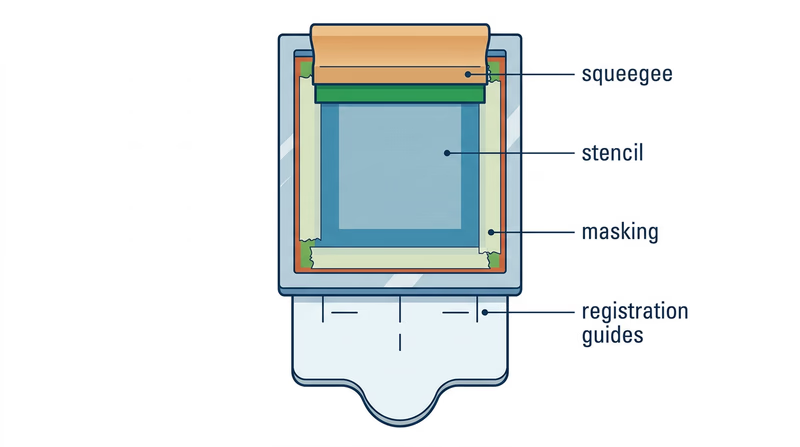
Watch how the screen is prepared and how the squeegee pressure affects the result.
Making the Run Look Consistent
Screen printing is partly about art and partly about rhythm. The more consistent your motion, pressure, and setup, the more uniform your copies will look. Pay attention to:
- how much ink is on the screen
- the angle and pressure of the squeegee
- whether the screen is seated evenly
- whether each sheet or item is positioned the same way
- drying time between steps, if required
What You Should Be Ready to Explain
Your counselor will want more than proof that you made 20 copies. Be prepared to explain why your design fit screen printing, how the stencil controlled the image, and what steps mattered most for consistency.
Screen printing is a great choice when you want bold graphics, strong color, and a physical connection to the printing process. If you want a more computer-driven workflow, the next option shows how digital printing handles short-run production.