Req 5 — Postpress and Binding
This requirement covers two parts of the job that happen after ink reaches the page: finishing operations and binding. Printing is only part of graphic arts. A stack of printed sheets is not finished until it is cut, shaped, organized, and sometimes fastened together in a way that fits the purpose of the project.
Requirement 5a: Finishing Operations
A project can be printed perfectly and still fail if the finishing is sloppy. Imagine a notepad with pages glued unevenly, a booklet cut crooked, or a form with holes punched in the wrong place. Finishing operations turn raw printed sheets into useful final products.
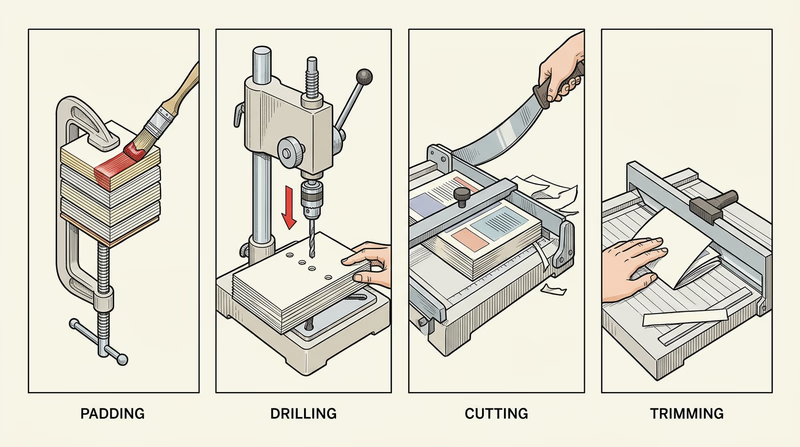
Padding
Padding means gluing sheets together along one edge so they form a tear-off pad. Memo pads and notepads are common examples. The glue has to hold the sheets firmly while still allowing clean removal.
Drilling
Drilling creates round holes through stacks of paper. Those holes may be used for storage in binders, wire binding, or organizing paperwork. Accuracy matters because misplaced holes can make the product look unprofessional or unusable.
Cutting
Cutting usually means slicing a large printed sheet into smaller pieces. A single press sheet may contain multiple copies of a flyer or card, so cutting separates them into finished units.
Trimming
Trimming is the final cleanup cut that removes excess paper and brings the printed piece to its exact finished size. It helps sharpen the final appearance and can remove bleed areas that extend beyond the trim line.
Requirement 5b: Binding Types
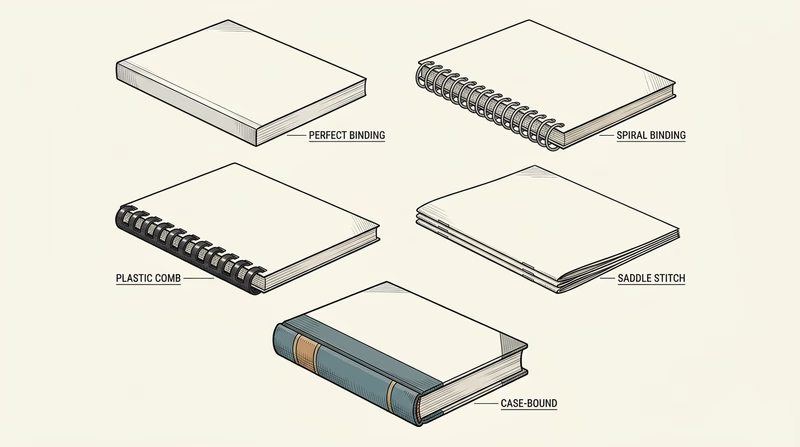
Binding is how multiple pages are held together. The right method depends on page count, cost, durability, and how the finished piece will be used.
| Binding type | What it is | Common uses | What to notice |
|---|---|---|---|
| Perfect binding | Pages are glued into a wraparound spine | Paperback books, thick manuals | Flat spine with printed title area |
| Spiral binding | A continuous coil passes through holes | Workbooks, notebooks, manuals | Opens wide and folds back easily |
| Plastic comb | A plastic spine with curved teeth holds punched pages | Reports, school projects, manuals | Easy to add or remove pages |
| Saddle stitch | Folded sheets are stapled along the fold | Booklets, programs, small catalogs | Best for thinner documents |
| Case binding | Pages are sewn or glued into a hard cover | Hardcover books | Strong, durable, and more expensive |
Collecting examples can be fun because these binding styles are all around you. A school agenda may use spiral binding. A church or awards program may be saddle stitched. A paperback novel shows perfect binding. A hardback reference book uses case binding.
This video gives you a practical visual tour of several binding styles so you can identify them more confidently.
Book Binding Options: What Type of Book Binding Should I Use? (website) This guide compares common binding methods and explains why different projects need different finishing choices.How Finishing and Binding Work Together
Finishing and binding are linked. A booklet may need trimming before it is saddle stitched. A notebook may need drilling before it gets a spiral. A paperback needs accurate trimming so the glued spine lines up correctly. When you explain this requirement, try to connect the steps instead of treating each one like an isolated fact.
This requirement helps you see that print production is not finished when the press stops. The next requirement shifts from making printed products to exploring real places and programs in the graphic arts world.