Req 6b — Commercial Printing Visit
A commercial print job often starts with a customer problem: “We need event programs by Friday,” or “We need product labels that hold up in a freezer,” or “We need an employee handbook that looks professional and opens flat.” This option helps you see how graphic arts professionals turn those requests into finished products through planning, production, finishing, and delivery.
What “Beginning to End” Usually Means
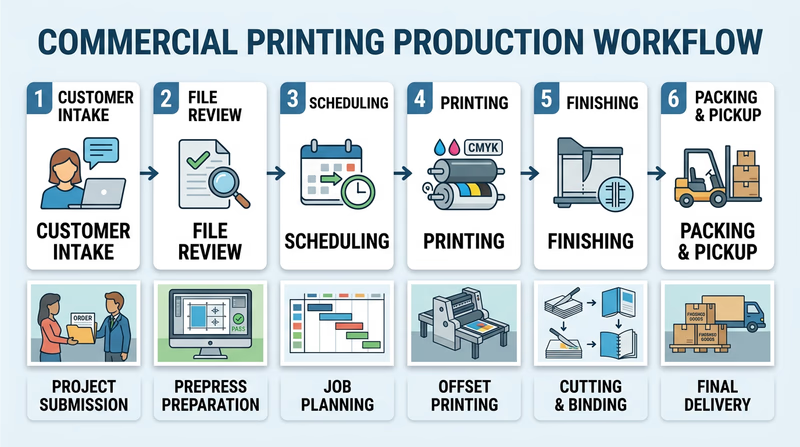
A print facility may handle many different jobs, but most follow a similar path:
- the customer explains the need
- staff review the file, quantity, paper, size, and finishing details
- the job is scheduled and prepared for production
- the piece is printed using the chosen process
- finishing steps such as cutting, folding, drilling, or binding are completed
- the order is packed, delivered, or picked up
That complete path makes this option one of the best ways to understand real-world workflow.
This video is helpful for noticing how finishing and binding become part of the overall production chain.
Even if your visit does not use flexography, this video broadens your understanding of how specialized print shops choose processes for different materials and products.
What to Notice During the Visit
Some jobs will move quickly, while others pause for proofing or finishing. Pay attention to how the staff make decisions.
- What kind of product is being made?
- Why was that printing process chosen?
- How do workers check quality before the full run?
- What postpress steps turn printed sheets into a useful final item?
- Which parts of the job require the most skill or caution?
Strong Visit Notes
These details make your later discussion much more specific
- The product: What was being made and who needed it?
- The process: Which printing method did the shop use, and why?
- The bottleneck: What step seemed to take the most time or care?
- The quality check: How did the team confirm the job looked right?
- The finish: What happened after printing to complete the order?
Why This Option Is So Useful
A commercial or in-plant facility shows that graphic arts is not only creative. It is also a service business. Real customers have deadlines, budgets, brand rules, and practical needs. A print shop has to balance all of that while still making a product that looks good and works correctly.
This option also connects strongly to Req 5 — Postpress and Binding, because many facilities spend just as much effort on trimming, folding, punching, and binding as they do on printing.
Describing Your Highlights
Your best highlights will probably include one surprise, one workflow insight, and one detail about the people doing the work. Maybe you were surprised by how much proofing happened before the final run. Maybe you learned that the hardest part was finishing, not printing. Maybe you noticed how often workers solved small problems before the customer ever saw them.
Those are the kinds of things that show you understood the visit as a process, not just a tour.
If you want to learn how people prepare for careers in this field, the next page explores school graphic arts programs.