Req 6c — School Program Visit
One of the best ways to picture your future in graphic arts is to visit a place where people are learning it on purpose. A school program can show you how skills are taught step by step, from basic design and computer tools to printing, production, packaging, photography, and portfolio building.
What to Look For in a School Program
Some schools focus more on graphic design. Others include printing technology, commercial art, digital media, illustration, photography, or production workflows. The important thing is to understand how the program is structured.
As you visit, look for answers to these questions:
- What beginner classes do students start with?
- What more advanced classes come later?
- Are there prerequisite courses, portfolio requirements, or grade-level limits?
- Do students use real equipment, software, or production workflows?
- Does the program connect to college study, certifications, or industry jobs?
This video gives you one example of how a school can present creative study, studio culture, and skill development.
Top 50 Graphic Design Schools and Colleges in the U.S (website) This list can help you compare the kinds of schools and programs that train students for graphic design and related careers.Courses and Prerequisites
A prerequisite is something you must complete before taking a more advanced class. Schools use prerequisites so students build skills in the right order. For example, a beginner design class may come before advanced typography. Basic drawing or digital imaging may come before portfolio studio work.
If the program you visit has no formal prerequisites, ask what background or skills instructors still recommend. Sometimes a course is technically open to anyone, but students succeed more easily if they already know layout basics, software shortcuts, or design vocabulary.
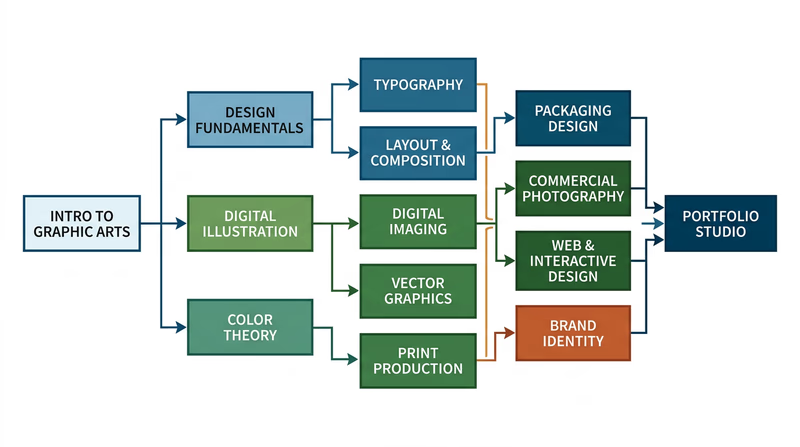
Questions for the Instructor
These help you learn how the program is built
- Which course should a beginner take first?
- What skills do students need before advanced classes?
- What software or equipment do students use most often?
- What kinds of projects do students complete?
- What jobs or further education does the program prepare students for?
What Might Stand Out
Your highlights might include the range of tools students use, the kinds of projects hanging on the wall, or the way the program blends creativity with technical production. You might discover that some students focus on branding and layout while others lean toward printing, packaging, photography, or motion graphics.
That is a useful lesson all by itself: graphic arts is not one narrow job. It is a wide field with many skill paths.
How This Helps With the Badge
This option connects strongly to Req 7 — Careers in Graphic Arts. By seeing how people train, you start to understand what kind of preparation different careers require. That makes it easier to choose one career path to research later.
If an in-person program visit is not available, the next page shows how to research the field by studying professional organizations and companies online.