 Getting Started
Introduction & Overview
A worried family member, a crowded waiting room, a paramedic radioing ahead from an ambulance, a lab tech checking a sample, and a therapist helping someone walk again all belong to the same huge team. Health care is not one job. It is a network of skilled people who keep patients safe, solve problems, explain confusing information, and help people recover.
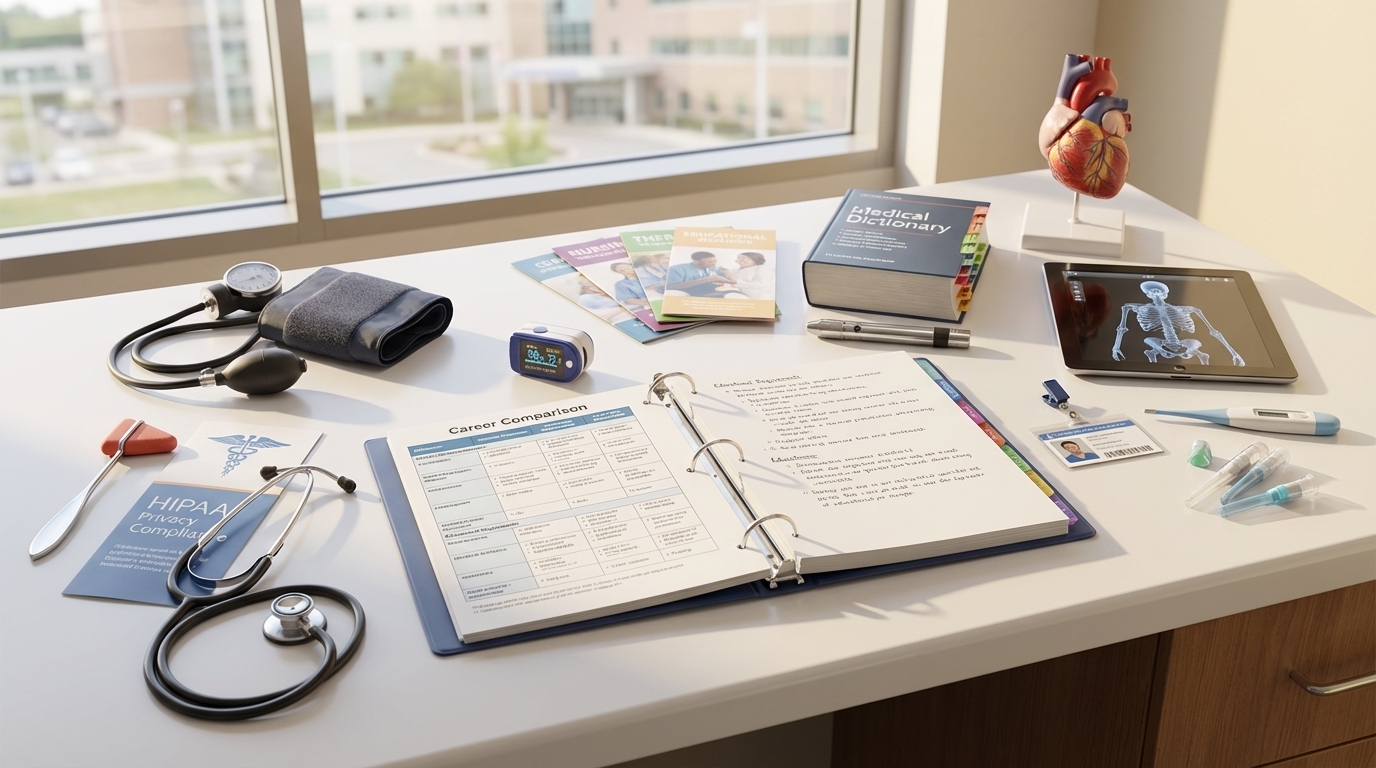
This merit badge gives you a tour of that team. You will compare careers, visit a real workplace, think about medical ethics, learn why privacy matters, and serve your community. By the end, you should have a much clearer picture of where you might fit in the world of health care.
Then and Now
Then
For most of human history, medical care was local, simple, and limited. A village healer, midwife, barber-surgeon, or family doctor might be the only option. Tools were basic. Infection control was poor. Many treatments that seem obvious today — washing hands before surgery, using X-rays to see broken bones, giving insulin for diabetes, or replacing a damaged joint — did not exist yet.
As science improved, health care became more specialized. Doctors began focusing on areas like bones, eyes, or mental health. Nurses took on more formal training. Laboratories, pharmacies, hospitals, and medical schools became more organized. A patient with one illness might now be cared for by a whole team instead of just one person.
- Big change: medicine shifted from a mostly individual craft to a science-based team effort
- Why it mattered: better knowledge, better tools, and better training led to safer care and longer lives
Now
Today, health care combines science, technology, communication, and human compassion. A patient may see a nurse practitioner for a checkup, get blood drawn by a phlebotomist, have scans performed by an imaging technologist, receive medicine from a pharmacist, and work with a physical therapist during recovery. Electronic records help teams share information quickly, while strict privacy laws help protect that information.
Modern health care also moves far beyond hospitals. Care happens in clinics, schools, ambulances, rehabilitation centers, nursing homes, pharmacies, public health departments, sports facilities, and community events like vaccine clinics or blood drives. Some professionals work directly with patients every day. Others help by building devices, analyzing lab results, managing records, or improving systems behind the scenes.
- Big change: health care now depends on many specialized careers working together
- Why it matters today: patients need safe, accurate, respectful care from the first phone call to full recovery
Get Ready!
You do not need to know your future career right now. You just need curiosity, a willingness to ask good questions, and respect for the people who care for others every day. This badge is your chance to look behind the exam-room door and see how many paths exist.
Kinds of Health Care Professions
Health care careers can be grouped in a few big categories. These categories overlap, but they make it easier to understand what different professionals actually do.
Diagnosing and Leading Care
These professionals figure out what is wrong, decide on treatment plans, and guide the overall care of a patient. Physicians, nurse practitioners, physician assistants, podiatrists, psychologists, optometrists, and audiologists all fit here, even though they focus on different systems of the body or mind.
They need strong observation skills, careful judgment, and the ability to explain complicated ideas in plain language. A good diagnosis is not just a smart guess. It comes from listening closely, asking the right questions, gathering evidence, and choosing the next best step.
Bedside and Emergency Care
These professionals spend a lot of time directly with patients. Registered nurses, licensed practical nurses, nursing assistants, nurse midwives, nurse anesthetists, EMTs, and paramedics all help keep people safe when care must happen quickly or continuously.
They often notice changes before anyone else because they are close to the patient. They also bring calm to stressful moments. In many settings, they are the people a patient sees most often.
Rehabilitation and Daily Living Support
Some health care jobs focus on helping people rebuild strength, independence, communication, and confidence after an injury, illness, or disability. Physical therapists, occupational therapists, respiratory therapists, speech-language pathologists, dietitians, and orthotists/prosthetists are all part of this world.
Their work can be dramatic, like helping someone learn to walk with a prosthetic leg, or quiet and steady, like teaching exercises that slowly improve breathing or swallowing. Success is often measured in everyday wins: climbing stairs, buttoning a shirt, speaking more clearly, or returning to sports.
Testing, Imaging, and Technology
A huge part of health care happens behind the scenes. Medical technologists, phlebotomists, sonographers, radiology technologists, histotechnologists, cytopathologists, biomedical engineers, and medical records specialists help gather and manage the information that other clinicians need.
These jobs demand accuracy. One mislabeled blood sample, blurry image, or incomplete record can affect patient care. If you enjoy science, machines, computers, or solving technical problems, this side of health care may be especially interesting.
Public Health and Community Service
Not every health care job treats one patient at a time. Some professionals work to improve the health of entire communities through education, prevention, screenings, vaccination drives, and volunteer events.
This matters because good health care starts before a person becomes seriously sick. Teaching people how to stay healthy, spotting problems early, and helping communities get access to care are all part of the mission.
Now that you have a map of the field, you can start comparing real jobs and the training each one requires.