Req 1 — Diagnosing, Hearing, and Whole-Person Care
Select three of the professions from Group 1 listed below which interest you, then complete the following:
Group 1:
- Allopathic physician (MD)—all specialties
- Osteopathic physician (DO)—all specialties
- Podiatrist (DPM)
- Chiropractor (DC)
- Nurse Practitioner (NP)
- Psychologist (PhD or PsyD)
- Optometrist (OD)
- Audiologist (AudD)
This first career group is about diagnosing problems, guiding treatment, and helping patients understand what is happening to their bodies and minds. Some of these professionals work from the top down, looking at the whole person. Others focus deeply on one body system, such as the feet, eyes, or hearing. As you read, start narrowing the list to three careers that genuinely interest you.
For this page, focus on two things:
- what each professional actually does during a normal day
- how long the education and licensing path usually takes
Requirement 1a: Roles in Health Care
An ear infection, blurred vision, anxiety, foot pain, or a yearly physical can all send a patient to a different kind of professional. The role of each person depends on what problem needs to be solved and what kind of training that professional has.
Broad-Care Clinicians
Allopathic physicians (MDs) and osteopathic physicians (DOs) are fully licensed physicians. They diagnose illnesses, order tests, prescribe treatments, and may perform procedures or surgery depending on their specialty. Family doctors, pediatricians, cardiologists, and surgeons can all hold either degree.
The main difference is educational tradition. DO programs add extra training in whole-person care and the musculoskeletal system, but in daily practice MDs and DOs both work throughout modern medicine. For a Scout, the key point is simple: both are physicians who can lead patient care.
Nurse practitioners (NPs) are advanced practice registered nurses who can evaluate patients, diagnose common conditions, order tests, prescribe medicines in most states, and often serve as primary care providers. They usually combine strong nursing experience with advanced graduate education.
Specialists Focused on a Specific Area
Podiatrists (DPMs) focus on the feet, ankles, and lower legs. They treat injuries, deformities, diabetic foot problems, sports injuries, and long-term pain. If a person has trouble walking, a podiatrist may help prevent a small problem from becoming a major one.
Optometrists (ODs) examine eyes and vision. They test how clearly you see, prescribe glasses or contacts, look for signs of eye disease, and sometimes spot larger health problems such as diabetes or high blood pressure during an eye exam.
Audiologists (AudD) study hearing and balance. They test hearing, help fit hearing aids or other devices, and work with patients who have dizziness, ringing in the ears, or hearing loss. Their work can make school, conversation, and daily life much easier for patients.
Professionals Who Focus on Mind, Spine, or Function
Psychologists (PhD or PsyD) evaluate thoughts, emotions, and behavior. They may provide therapy, perform assessments, and help patients manage conditions such as anxiety, depression, trauma, or learning differences. They do not usually prescribe medicine unless they work in a special state or federal system with additional authority.
Chiropractors (DCs) focus on the spine, joints, muscles, and nervous system, especially how body structure may affect movement and pain. They often work with patients who have back pain, neck pain, posture issues, or certain sports injuries.
Choosing Your Three Careers
Pick jobs that show real differences
- Include variety: Choose three roles that are not too similar. For example, a psychologist, an audiologist, and a podiatrist will give you a broader comparison than three kinds of physicians.
- Think about patient contact: Do you prefer careers with long conversations, quick diagnostic visits, hands-on treatment, or technical testing?
- Notice the setting: Some jobs are common in clinics, some in hospitals, and some in private practice offices.
- Ask what problem they solve: Every career exists because patients need a specific kind of help.
Requirement 1b: Education and Licensing
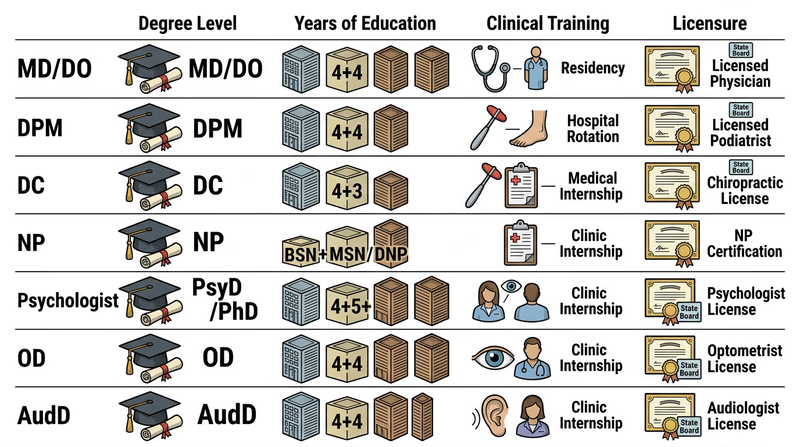
Many Scouts are surprised by how different the training paths can be. Two jobs might both involve direct patient care, but one may require a doctoral degree while another requires a master’s degree plus national certification. The point of this requirement is not to memorize every exam name. It is to understand the level of education, supervised training, and licensing each career requires.
A Simple Way to Compare Training Paths
Use these four questions for each career you choose:
- What degree is required?
- How many years of school does that usually mean after high school?
- Is supervised clinical training required?
- What license, board exam, or certification allows that person to practice?
Typical Patterns in Group 1
- MD / DO: bachelor’s degree, four years of medical school, then residency training in a specialty, plus national board exams and a state medical license
- DPM: bachelor’s degree, podiatric medical school, residency, board exams, and state licensure
- DC: undergraduate prerequisites plus chiropractic doctoral training, clinical experience, board exams, and state licensure
- NP: registered nurse preparation, then graduate-level advanced practice education, national certification, and state advanced practice licensure
- Psychologist: doctoral training in psychology, supervised clinical hours or internship, licensing exam, and state licensure
- OD: undergraduate preparation plus four years of optometry school, national board exams, and state licensure
- AudD: doctoral training in audiology, supervised clinical experience, exam or certification steps depending on state, and state licensure
Why Licensing Matters
A license is the public’s safety check. It shows that a professional met minimum standards and is legally allowed to practice. Continuing education matters too. Health care changes fast, so professionals usually must keep learning to renew a license or certification.
A Strong Counselor Discussion
A good discussion compares careers, not just lists facts. You might say that an NP and a physician can both diagnose and treat patients, but their educational paths differ. Or you might compare an optometrist and an audiologist as two doctoral-level specialists who focus on different senses.
That kind of comparison shows that you understand how the health care team is built.
U.S. Bureau of Labor Statistics — Healthcare Occupations Career summaries showing what many health care professionals do, where they work, and the typical education needed. AAMC — Careers in Medicine Profiles of physician specialties that can help you understand how broad the physician career path really is. American Academy of Audiology — What Is an Audiologist? An overview of what audiologists do and how they help patients with hearing and balance.In Req 2, you will compare another set of careers where direct bedside care, medicines, and emergency response are central to the job.