Req 2 — Bedside Care and Fast Decisions
Select three of the professions from Group 2 listed below which interest you, then complete the following:
Group 2:
- Physician Assistant (PA)
- Registered Nurse (RN)
- Certified Nurse Midwife (CNM)
- Certified Nurse Assistant (CNA)
- Licensed Practical Nurse (LPN/LVN)
- Nurse Anesthetist (CRNA)
- Pharmacist (PharmD)
- Pharmacy Technician
- Emergency Medical Technician (EMT)/Paramedic
This group is about care that happens up close and in real time. These professionals give medicines, watch for changes, comfort patients, support births, respond to emergencies, and keep treatment moving safely. If Group 1 was about diagnosis and specialty expertise, Group 2 shows how much health care depends on people who are present, practical, and ready to act.
To make sense of this list, think about three themes:
- continuous patient care
- medicine and treatment support
- rapid response in urgent situations
Requirement 2a: Roles in Health Care
A hospital room at 2 a.m., an ambulance at a car crash, a pharmacy counter, and a delivery room all depend on different people doing the right job at the right time. Group 2 careers often involve close patient contact, strong teamwork, and fast decision-making.
Nursing Roles
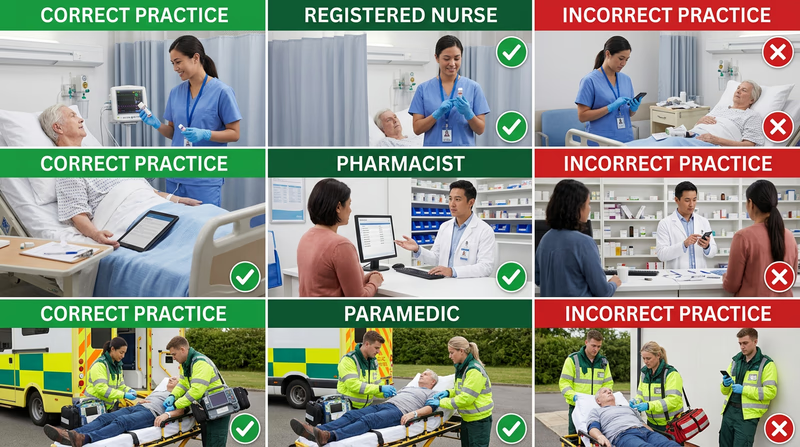
Registered nurses (RNs) assess patients, give medications, monitor symptoms, educate families, and coordinate care. They work almost everywhere: hospitals, clinics, schools, public health agencies, camps, and home health settings. They are often the professionals who notice first when a patient is improving or getting worse.
Licensed practical nurses (LPNs/LVNs) provide basic nursing care under the direction of RNs or physicians. They may check vital signs, help with daily care, collect information, and give certain medicines depending on the setting and local rules.
Certified nursing assistants (CNAs) help patients with daily activities such as bathing, dressing, eating, and moving safely. They spend a lot of time near patients, which means they play an important role in comfort, dignity, and observing changes.
Certified nurse midwives (CNMs) care for patients during pregnancy, labor, birth, and reproductive health visits. They combine medical knowledge with coaching and support during one of the biggest moments in a family’s life.
Nurse anesthetists (CRNAs) help patients stay safe and pain-free during surgery or procedures by planning and giving anesthesia and closely monitoring breathing, heart rate, and other vital signs.
Medical and Medication Support
Physician assistants (PAs), now often called physician associates in some places, examine patients, diagnose illness, order tests, prescribe medicines, and help create treatment plans. They work in collaboration with physicians but often handle many patient visits on their own.
Pharmacists (PharmD) are experts in medicines. They check for safe dosages, watch for drug interactions, counsel patients on how to take medications, and sometimes give vaccines. Their job is not just handing over a bottle. It is making sure the medicine helps more than it harms.
Pharmacy technicians support pharmacists by preparing prescriptions, managing inventory, and helping the pharmacy run smoothly. Accuracy is critical because a mistake in medicine strength, labeling, or patient information can be dangerous.
Emergency Response
EMTs and paramedics care for patients before they reach a hospital. They assess the scene, protect the airway, control bleeding, support breathing, monitor vital signs, and transport patients safely. Paramedics usually have broader training and can perform more advanced procedures than EMTs.
Questions to Ask About Group 2 Careers
These questions can help you compare your three choices
- How much patient contact is there? A CNA may be with patients for much of the day, while a pharmacist may split time between patient counseling and medication review.
- How fast are decisions made? EMTs and paramedics may decide in seconds. Some pharmacy and clinic roles allow more time to verify details.
- What kind of teamwork is required? Nearly all of these jobs depend on close coordination with others.
- What kind of stress is common? Some roles involve emergencies, some involve shift work, and some demand intense attention to detail.
Requirement 2b: Education and Licensing
Group 2 is a great reminder that “health care job” does not mean one standard training path. Some careers begin with a certificate program. Others require doctoral education. Some professionals must renew national certifications and complete continuing education every few years.
Common Training Patterns
- PA: bachelor’s degree, graduate PA program, national certifying exam, and state licensure
- RN: nursing degree, clinical training, national licensing exam, and state licensure
- CNM: registered nurse preparation, advanced graduate nursing education, national certification, and state advanced practice licensure
- CNA: short training program plus state competency evaluation or certification steps
- LPN/LVN: practical nursing program plus national licensing exam and state licensure
- CRNA: registered nurse preparation, critical care experience, doctoral-level nurse anesthesia program, national certification, and state advanced practice licensure
- PharmD: undergraduate prerequisites plus pharmacy school, licensing exams, and state pharmacist licensure
- Pharmacy technician: training program or on-the-job training depending on state and employer, plus certification or registration requirements in many places
- EMT / Paramedic: approved training program, cognitive and practical testing, state licensure or certification, and continuing education
Why Clinical Experience Matters
Health care cannot be learned from textbooks alone. These professions require hands-on supervised practice. A nursing student learns how to assess a real patient. An EMT trainee practices lifting, airway care, and patient transport. A pharmacy student completes rotations in real settings. That supervised experience helps turn information into judgment.
A Useful Comparison Strategy
When you prepare for your counselor discussion, compare careers by how quickly a person can enter the field and how much independence the job allows. A CNA or EMT can often begin much sooner than a CRNA or pharmacist. That does not make one career better than another. It simply shows how different roles fit different training levels and responsibilities.
American Nurses Association — What Is Nursing? A clear overview of the role nurses play in patient care and the many settings where they work. MedlinePlus — Medicines: Using Them Safely Reliable patient-friendly information about medications, side effects, and safe medicine use. EMS.gov Information about emergency medical services, including how EMTs and paramedics fit into emergency care systems.In Req 3, you will shift from urgent and bedside care to careers that help patients recover skills, adapt, and regain independence over time.