Req 4 — Testing, Imaging, and Behind-the-Scenes Care
Select three of the professions from Group 4 listed below which interest you, then complete the following:
Group 4:
- Biomedical Engineer (BME)
- Medical Technologist
- Phlebotomist
- Radiology Technologist
- Sonographer
- Medical Records Specialist
- Cytopathologist
- Histotechnologist
Some of the most important people in health care are not the ones a patient remembers by name. They are the people who draw the blood sample, prepare tissue slides, run the lab test, capture the image, protect the medical record, or design the machine that everyone else depends on. Group 4 shows how modern medicine relies on precision, data, and technology.
These careers are a great fit for Scouts who like science, computers, machines, organization, or solving technical puzzles.
Requirement 4a: Roles in Health Care
A doctor may suspect pneumonia, a tumor, anemia, or internal bleeding. But to move from suspicion to evidence, the care team often needs help from specialists in testing, imaging, and records.
Lab and Sample Specialists
Medical technologists perform and interpret many of the laboratory procedures that help detect disease. They analyze blood, urine, and other specimens to look for infection, chemical imbalances, blood disorders, and more.
Phlebotomists collect blood samples safely, label them correctly, and help keep the testing process moving. Their work may look simple from the outside, but it requires skill, calm communication, and careful identification.
Histotechnologists prepare tissue samples so they can be examined under a microscope. They cut thin sections, stain them, and make sure the specimen is ready for accurate analysis.
Cytopathologists are physicians or highly specialized experts who study cells to help diagnose disease, including certain cancers and infections.
Imaging and Visualization
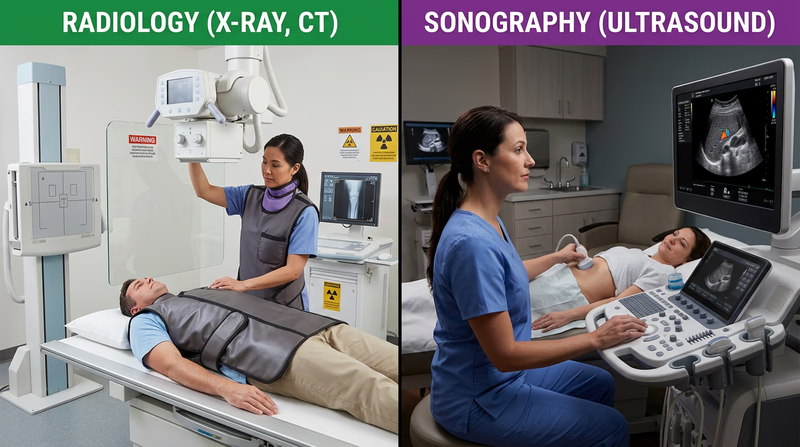
Radiology technologists produce images such as X-rays that help clinicians see bones, lungs, and other internal structures. They must position patients carefully and follow safety procedures around radiation.
Sonographers use ultrasound equipment to create images using sound waves instead of radiation. They may help visualize organs, blood flow, or a developing baby during pregnancy.
Information and Device Support
Medical records specialists manage health information so that records are accurate, organized, secure, and available to the right people when needed. Good records help prevent errors and support continuity of care.
Biomedical engineers (BMEs) design, improve, and sometimes maintain medical devices, systems, and technologies. That can include imaging equipment, prosthetics, monitors, surgical tools, and software that supports patient care.
How Group 4 Supports the Care Team
Think of these roles as evidence builders
- They gather information: blood tests, tissue slides, imaging studies, and records all help answer medical questions.
- They improve accuracy: treatment decisions are stronger when the data is reliable.
- They work behind the scenes: patients may not interact with them for long, but their impact can be huge.
- They demand precision: a mislabeled tube or incorrect image can affect the next step in care.
Requirement 4b: Education and Licensing
This group includes one of the widest training ranges in the badge. Some careers start with technical programs or associate degrees. Others require physician-level or engineering-level education.
Typical Training Patterns
- BME: bachelor’s degree in biomedical engineering or related engineering field, with some roles requiring graduate study
- Medical technologist: college-level laboratory science education, clinical training, and often certification
- Phlebotomist: training program plus certification or employer/state requirements depending on location
- Radiology technologist: imaging program, clinical training, certification exam, and licensure in many states
- Sonographer: accredited diagnostic medical sonography program, clinical training, and certification in common practice
- Medical records specialist: certificate, associate, or bachelor’s preparation depending on role, plus coding or health information certifications for some positions
- Cytopathologist: physician education pathway plus advanced pathology training and board certification
- Histotechnologist: laboratory science education plus specialized histology training and certification
Why Accuracy Shapes Training
Even when the training path is shorter, the standards are still high. A phlebotomist may spend less time in school than a biomedical engineer, but both must master procedures that affect patient safety. The difference is not whether the work matters. The difference is the kind of knowledge needed for the role.
A Smart Way to Compare Careers Here
For each career you choose, ask whether the job is mainly about:
- collecting information
- analyzing information
- protecting information
- building the tools used to collect or analyze information
That question helps you explain the role clearly to your counselor.
Society of Diagnostic Medical Sonography — What Is a Sonographer? A career overview explaining what sonographers do and how ultrasound helps diagnose medical problems. American Society for Clinical Laboratory Science — Medical Laboratory Professionals Information about laboratory careers and how lab professionals support diagnosis and treatment. MedlinePlus — Medical Tests Patient-friendly explanations of many common lab tests and why clinicians order them.In Req 5, you will bring career exploration into the real world by planning a workplace visit and learning how to ask better questions.