Req 7 — Confidentiality and HIPAA
A patient will not always tell the truth if they do not feel safe. If someone thinks their medical information will be shared carelessly, they may hide symptoms, skip questions, or avoid getting help at all. That is why confidentiality is not just a courtesy in health care. It is part of good care.
What Confidentiality Means
Confidentiality means health care professionals protect private patient information and share it only with the people who truly need it for treatment, payment, health care operations, or other legally allowed reasons. It helps build trust between patients and the people caring for them.
Confidential information can include:
- a diagnosis or test result
- medicines a person takes
- mental health history
- family medical history
- insurance information
- details from a visit, even the fact that a visit happened
If patients trust their information will be respected, they are more likely to be honest. That honesty helps the care team make better decisions.
What HIPAA Is
HIPAA stands for the Health Insurance Portability and Accountability Act. It is a U.S. law passed in 1996. For this requirement, the most important part is that HIPAA helps protect certain health information and sets rules for how covered health care organizations and related businesses handle it.
HIPAA does not mean health information can never be shared. It means there are rules. Information can usually be shared for legitimate care purposes, but not gossip, curiosity, or convenience.
What HIPAA Looks Like in Real Life
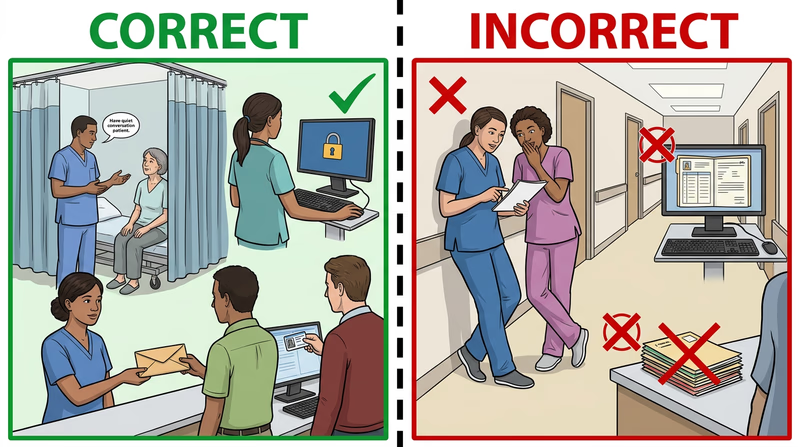
- A nurse should not discuss a patient’s condition where unrelated people can easily overhear.
- A receptionist should verify who is asking for information before sharing it.
- A worker should log out of a computer instead of leaving a medical record open.
- A clinician should only look at records needed for their job.
Those habits are part of privacy, even when nobody says the word HIPAA out loud.
Confidentiality Is Bigger Than a Law
HIPAA matters, but the idea of confidentiality is even broader. Good health care professionals respect privacy because it is the ethical thing to do, not only because they could get in trouble for breaking the rules.
This connects directly to Req 6. The Physician’s Oath is about trust and ethics. Confidentiality is one of the clearest ways that trust shows up in daily practice.
A Simple Way to Explain HIPAA
Use this structure with your counselor
- What it is: a U.S. law that protects certain health information
- Why it matters: patients need privacy to trust their providers
- What it does: limits who can access or share protected information
- What it does not mean: it does not stop appropriate sharing among professionals involved in care
Everyday Examples You Can Use
A strong counselor discussion often includes examples. Here are a few:
- If a provider tells a friend about a patient’s diagnosis just because it is interesting, that breaks confidentiality.
- If a doctor sends test results to another specialist involved in the same patient’s care, that is usually allowed because it supports treatment.
- If a worker opens a family member’s chart out of curiosity, that can violate privacy rules even if they never say anything out loud.
These examples show that privacy is about both sharing and access.
U.S. Department of Health & Human Services — Health Information Privacy The federal government's main HIPAA privacy information hub, with consumer-friendly explanations and guidance. MedlinePlus — Personal Health Records Helpful background on health records, privacy, and how patients manage their own medical information.Next, you will examine how new discoveries and medical breakthroughs can change the way patients are diagnosed, treated, and cared for.