Req 8 — Recent Medical Breakthroughs
A medical breakthrough is exciting only if it helps real patients. New ideas appear in headlines all the time, but the most important question is not “Is this cool?” It is “How could this change what happens to a patient in a clinic, ambulance, hospital, or recovery program?”
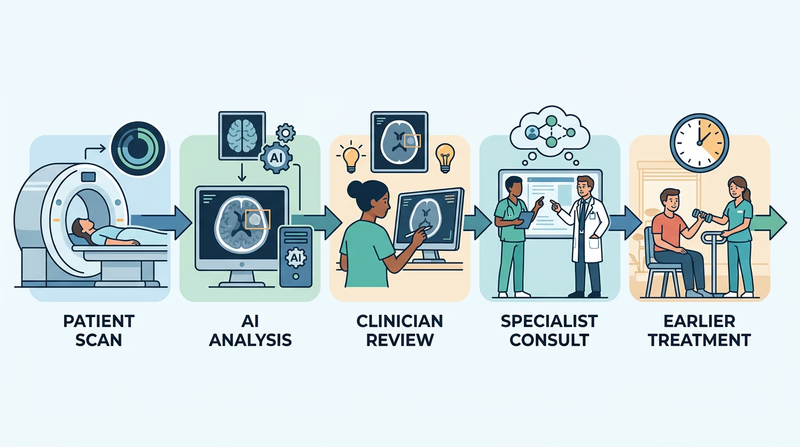
One strong recent example is the growing use of artificial intelligence tools to help doctors analyze medical images and other health data. These tools do not replace health care professionals, but they may help teams spot patterns faster, catch problems earlier, and choose treatments more accurately.
Example Breakthrough: AI-Supported Diagnosis
Imagine a child with a rare brain tumor or a patient with an X-ray, CT scan, or pathology slide that is difficult to interpret. An AI system can be trained on large numbers of past cases and then help identify patterns that might be hard for a human to notice quickly. The clinician still makes the final decision, but the tool can act like a powerful second set of eyes.
Researchers are studying AI tools for many parts of health care, including:
- analyzing scans and images
- matching patients to treatments
- predicting which patients may need faster attention
- helping organize clinical information so teams can act sooner
How This Could Affect Patient Care
Faster Answers
If a tool helps identify a serious condition sooner, treatment can begin earlier. In health care, time matters. A faster diagnosis may mean less suffering, fewer complications, or a better chance of recovery.
More Accurate Decisions
AI systems may help reduce missed details, especially in data-heavy settings. That does not mean they are perfect. It means they may support the human expert by highlighting findings worth a second look.
Better Access to Expertise
Not every clinic or hospital has a rare-disease specialist on site. If well-designed tools help local teams recognize unusual cases, patients may get referred more quickly to the right experts.
Important Limits and Concerns
A medical advancement can help patients and still raise hard questions.
Technology Is Not the Same as Judgment
A doctor, nurse, or technologist still has to decide whether a suggestion makes sense for a real person. Good patient care includes context, communication, and ethics. A computer cannot replace informed consent, empathy, or professional responsibility.
Bias and Fairness Matter
If an AI tool is trained mostly on one type of patient population, it may work less well for others. That can create unfair care. New tools have to be tested carefully.
Privacy Matters Too
New technology often depends on large amounts of patient data. That connects directly to Req 7. Innovation must protect confidentiality and use health information responsibly.
How to Evaluate a Medical Breakthrough
Use these questions with any news story you choose
- What problem is it trying to solve?
- How could it help patients directly?
- What risks or limits still exist?
- Who needs training to use it safely?
- How might privacy, fairness, or cost affect its success?
Other Good Topics You Could Choose Instead
You do not have to use AI for your counselor discussion. Other recent topics could include:
- gene editing and personalized medicine
- new vaccines or cancer therapies
- wearable devices that monitor patients remotely
- blood tests that help detect disease earlier
- improved prosthetics or robotic surgery systems
The best topic is one you can explain clearly. Choose something recent enough to feel current, but specific enough that you can describe how it changes patient care.
National Institutes of Health — Research News Current medical research news from NIH that can help you find a recent advancement to discuss with your counselor. U.S. Food and Drug Administration — Medical Devices Information about how new medical devices and technologies are reviewed and used in patient care.Your last requirement takes you into service. Instead of only studying health care, you will step into your community and help at a real health-related event or facility.