Req 2b — Leave No Trace
When you step onto a trail, you are more than just a visitor; you are a steward of the land. The Leave No Trace Seven Principles provide a framework of outdoor ethics that helps us minimize our impact so the trails we love remain healthy for those who follow us. Think of Leave No Trace (LNT) as the “Golden Rule” of the outdoors—a mindset of respect for nature, wildlife, and other people.
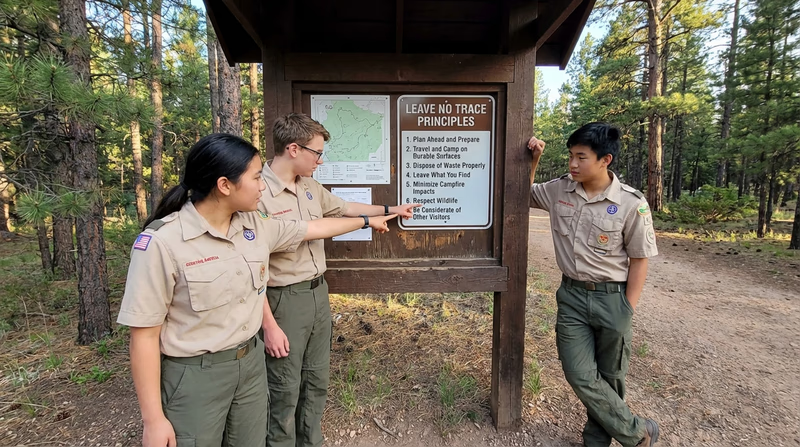
1. Plan Ahead and Prepare
Good stewardship starts before you tie your boots. When we don’t plan, we are more likely to make mistakes that hurt the environment or put ourselves in danger. Poor planning often leads to “survival mode” where you might cut corners on ethics just to stay safe.
When you plan, research your destination for specific regulations. Prepare for weather to avoid building emergency fires or seeking shelter in sensitive areas. Traveling in small groups is also key; large groups are louder and cause more physical damage to the trail.
Why it matters for hiking: Planning prevents emergencies that lead to ecological damage. If you get lost, search teams may have to trample sensitive vegetation to find you.
Scout Example: You check the weather and see rain in the forecast. You pack proper gear so you don’t have to scramble off-trail to find shelter, protecting delicate plants near the path.
2. Travel on Durable Surfaces
The goal is to keep the “wild” in wilderness. When we walk on plants, we crush them. Durable surfaces include established trails, rock, gravel, and dry grass. The most important rule is to stay on the trail. Even if the path is muddy, walk through the middle. Walking around puddles creates “social trails” that widen the path and cause erosion.
Why it matters for hiking: By staying on the “sacrificial” surface of the trail, we keep the surrounding forest or meadow untouched.
Scout Example: You come across a fallen log across the path. Instead of walking around it and trampling the wildflowers, you step over it or stay as close to the trail as possible.
3. Dispose of Waste Properly
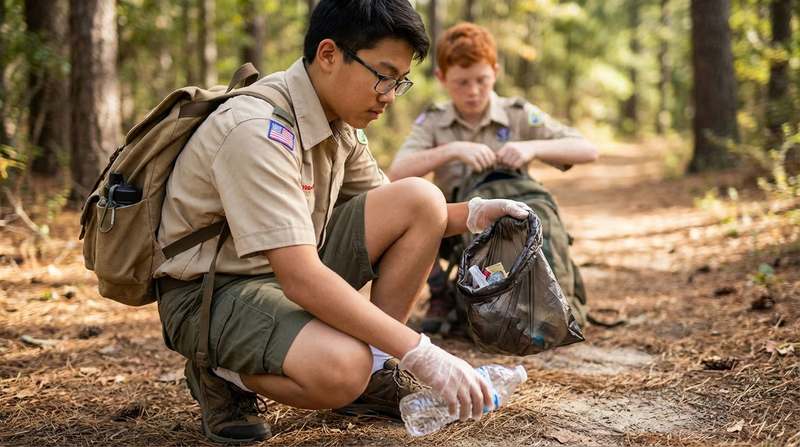
“Pack it in, pack it out” applies to everything—from granola bar wrappers to orange peels. Even organic waste like apple cores takes a long time to break down and can be harmful to animals. Human waste should be buried in a “cathole” 6 to 8 inches deep, at least 200 feet from water, trails, and campsites.
Why it matters for hiking: Trash is dangerous to animals and pollutes the water we drink. Picking up others’ trash is the hallmark of a great Scout.
Scout Example: You notice a plastic wrapper someone else left behind at a scenic overlook. You pick it up and pack it out, leaving the area cleaner than you found it.
4. Leave What You Find
Nature is full of treasures like beautiful stones or ancient artifacts. If every visitor took one rock, there would eventually be nothing left for others to see. This also means avoiding the urge to carve your initials into trees or build decorative rock stacks (cairns), which take away from the “wild” feeling.
Why it matters for hiking: Leaving things as they are allows the ecosystem to function naturally. Rocks provide homes for insects, and leaves provide nutrients for the soil.
Scout Example: You find an interesting arrowhead. Instead of taking it, you take a photo, note the location on your map, and share it with a park ranger later.
5. Minimize Campfire Impacts
Many hikers choose to camp as part of a multi-day trek. Fires can cause lasting damage to the ground and consume wood that animals need for shelter. Whenever possible, use a lightweight camp stove for cooking instead of building a fire. Stoves are faster, cleaner, and work even when wood is wet.
Why it matters for hiking: Wildfires are often started by poorly managed campfires. A single spark can destroy thousands of acres of hiking trails.
Scout Example: After a long hike, your patrol uses a backpacking stove for dinner. You have a hot meal in minutes and leave zero impact on the ground.
6. Respect Wildlife
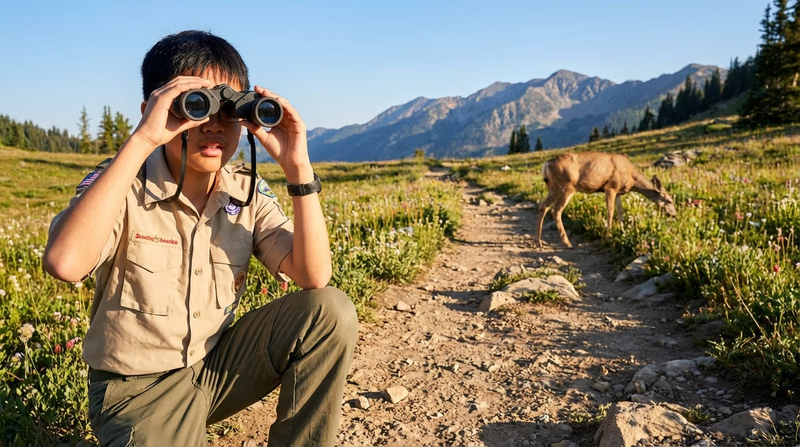
We are the guests in the homes of animals. Respecting wildlife means giving them plenty of space. If an animal changes its behavior because of you—if it stops eating or moves away—you are too close. Never feed wild animals; it teaches them to depend on humans, which often leads to them becoming aggressive or sick.
Why it matters for hiking: Encounters with large animals like bears or moose can be dangerous. Keeping your distance keeps both you and the animal safe.
Scout Example: You see a marmot near the trail. Instead of tossing it a snack, you use binoculars to observe its natural behavior from a safe distance.
7. Be Considerate of Other Visitors
Most people hike to enjoy the peace of nature. Excessive noise and loud music ruin the experience for others. Yielding is another vital part of trail etiquette: generally, hikers going uphill have the right of way. Also, yield to horses by stepping off the trail to the downhill side and talking quietly to the rider.
Why it matters for hiking: The trail is a shared resource. Being polite ensures everyone has a better time and maintains Scouting’s good reputation.
Scout Example: You are hiking downhill and see a group laboring up toward you. You step off onto a durable rock and wait for them to pass, giving a friendly “hello” as they climb.
Learn More
To master the Leave No Trace principles, check out this video and the resources below.