Horsemanship Merit Badge — Complete Digital Resource Guide
https://merit-badge.university/merit-badges/horsemanship/guide/
Introduction & Overview
A thousand-pound horse can feel your mood through your hands, your seat, and the speed of your breathing. Horsemanship is the art of working with that power respectfully, safely, and clearly. This badge teaches you how to care for a horse, understand its body and behavior, and become the kind of rider and handler a horse can trust.
Then and Now
Then — Horses Built Daily Life
For most of human history, horses were not hobbies. They were transportation, farm equipment, military partners, and work animals all in one. People depended on them to plow fields, carry messages, pull wagons, herd livestock, and travel long distances. Good horsemanship mattered because a family’s food, money, and safety might depend on a healthy, reliable horse.
In the early days of Scouting, horses were still common in farming communities and on ranches. A Scout who knew how to approach, lead, saddle, and care for a horse had a practical skill that many adults respected.
- Purpose: Help people travel, work, and survive
- Skills that mattered: Safe handling, feeding, grooming, hoof care, and riding control
Now — Horses as Partners, Athletes, and Teachers
Today, many people meet horses through riding lessons, ranch programs, therapy programs, competitive sports, and trail riding. Horses still work on some ranches and farms, but they are also partners in recreation, education, and healing. Modern horsemanship combines old-fashioned stable skills with better veterinary care, better safety practices, and a deeper understanding of horse behavior.
Learning horsemanship now is about more than sitting in a saddle. It means noticing what a horse is telling you, caring for tack and hooves, spotting health problems early, and riding with patience instead of force.
- Purpose: Build trust, skill, responsibility, and confidence
- Skills that matter: Observation, calm handling, balance, empathy, and steady practice
Get Ready!
You do not need to be a lifelong rider to earn this badge. You do need to be alert, willing to listen, and ready to practice the basics until they feel smooth and safe. Horses notice inconsistency fast, so this badge rewards patience and good habits.
Kinds of Horsemanship
Horsemanship shows up in several different settings. Each one asks for the same foundation of safety and respect, but the goals can feel very different.
English Riding
English riding usually uses a lighter saddle and often shows up in jumping, dressage, and hunt-seat classes. Riders focus on balance, contact, posture, and precise communication with the horse. Even if you do not ride English, you may see its influence in arena lessons and equestrian sports.
Western Riding
Western riding grew out of ranch work. Tack is often heavier and built for long hours in the saddle. Western riders may work cattle, ride trails, compete in events like reining, or practice smooth control at a walk, jog, and lope.
Trail and Pleasure Riding
Many riders enjoy horses simply by exploring trails or riding for relaxation. Trail riding teaches awareness of footing, weather, other animals, and how a horse behaves outside the arena. It also makes horse care feel very real because you notice quickly when tack, hydration, or hoof condition is not right.
Ranch and Working Horsemanship
On ranches and farms, horses may still gather cattle, check fences, or cover rough ground where vehicles are less useful. Working horses need training, stamina, and calm minds. Riders need practical judgment because the horse is part of a job, not just a lesson.
Therapeutic and Adaptive Riding
Some programs use horses to support confidence, balance, coordination, and emotional growth. These programs show how powerful the horse-human connection can be. They also remind you that horsemanship includes patience, accessibility, and teamwork among riders, instructors, and volunteers.
You are ready to begin with the most important part of the badge: safety. Before you can ride well, you need to know how to handle horses and barns without putting yourself, other people, or the horse at risk.
Req 1 — Horse and Barn Safety
This requirement covers two safety areas that every rider learns first: how to handle a horse without getting stepped on, kicked, pinned, or dragged, and how to reduce fire danger in a barn where animals may panic and escape routes can disappear fast.
- Requirement 1a: Safe handling and daily care around a horse
- Requirement 1b: Fire prevention and emergency thinking in and around a barn
A horse does not have to be mean to hurt someone. One startled step sideways, one swing of the hindquarters, or one rushed movement in a tight aisle can cause an injury in seconds. Good horsemanship starts with noticing space, pressure, sound, and the horse’s body language before trouble begins.
Requirement 1a
A horse can weigh 900 to 1,200 pounds, yet it reacts like a prey animal. That means it may jump away first and understand later. Your job is to make your movements predictable so the horse does not feel trapped or surprised.
Approach Like the Horse Can See You
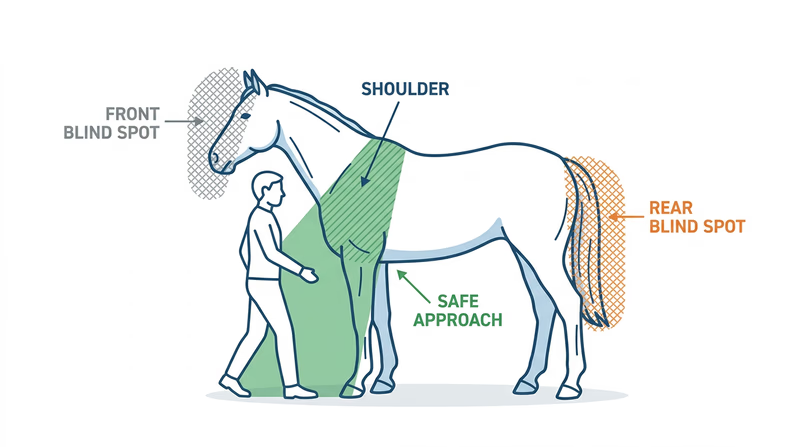
Most horses are safest when you approach at the shoulder, speaking calmly so they know where you are. Avoid walking straight up from behind or darting under the neck. A horse has blind spots directly in front of its forehead and directly behind its tail, so sudden movement there can trigger a fast defensive reaction.
Dress and Work for Safety
Wear closed-toe boots with a hard sole and a heel so your foot is less likely to slide through a stirrup. Tie back long hair, avoid loose strings that can catch on tack, and keep tools, brushes, and lead ropes picked up instead of scattered across the aisle.
Handle With Calm, Clear Pressure
Lead the horse from the left side unless your instructor teaches otherwise. Stay near the shoulder, not dragged behind and not directly in front. Keep one hand on the lead rope and one hand free if needed. When grooming or working around the hindquarters, keep a hand on the horse as you move so it knows where you are.
Watch the Horse’s Signals
A horse usually gives clues before it reacts. Pinned ears, a swishing tail, a tense neck, stomping, rolling eyes, raising the head, or shifting weight quickly can all mean discomfort, fear, or irritation. If you notice those signs, slow down, give the horse room, and ask an experienced adult for help if you are unsure what changed.
🎬 Video: Safety Precautions When Handling Horses (video) — https://youtu.be/B5KeqtLZoUA?si=FD2BQR4jCnU4E6OS
Build Safe Barn Habits
Barn safety is not only about the horse in front of you. It is also about how the whole space works. Close gates behind you. Latch stall doors. Do not run, shout, or roughhouse around horses. Check that cross-ties, halters, and snaps are in good condition. Keep feed rooms closed so horses cannot get into grain, which can make them dangerously sick.
Daily Handling Habits
Simple habits that prevent many horse injuries- Announce yourself: Speak before you touch or enter a stall.
- Give space: Stay out of kicking range when possible and never crowd a horse into a corner.
- Use safe gear: Wear boots, use a properly fitted halter, and check snaps and lead ropes.
- Stay organized: Keep aisles clear of buckets, tack, and loose equipment.
- Stay calm: Quick, angry, or noisy handling often makes the horse more reactive.
Requirement 1b
A barn fire is especially dangerous because hay, bedding, dust, wood, and old wiring can help flames spread fast. Horses may panic in smoke and become hard to catch or lead. Fire safety in a barn is mostly about prevention, because once a fire gets going, evacuation becomes difficult very quickly.
Reduce the Chance of Fire Starting
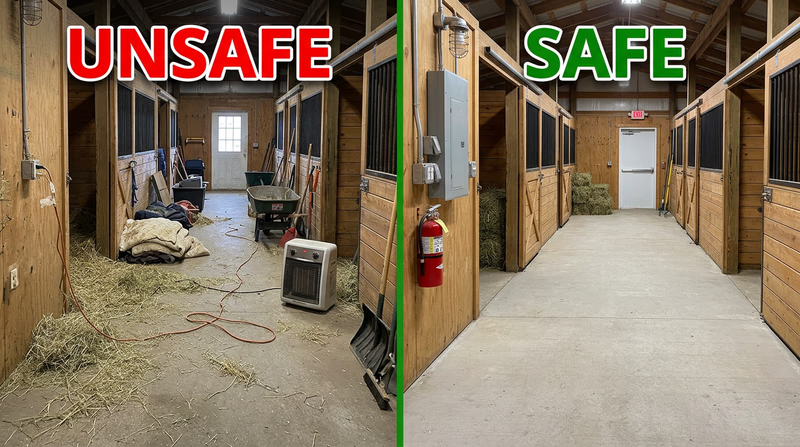
Good barn fire safety begins long before an emergency. Store hay so it stays dry and well ventilated. Wet hay can heat up as it cures and, in the worst cases, ignite. Keep electrical wiring updated and protected from chewing animals, moisture, and dust. Use light fixtures designed for barns, not exposed household bulbs where they can break.
Control Heat and Spark Sources
Do not smoke in or near the barn. Be careful with heaters, especially portable ones. Keep vehicles, tractors, and fuel away from loose hay and bedding. Sweep up dust and cobwebs, because fine dry material burns more easily than many people realize.
🎬 Video: Barn Fire Safety (video) — https://youtu.be/w-05f23oJVA
Plan for Fast Evacuation
Every barn should have clear exits, accessible halters and lead ropes, and a plan for where horses go if they must be moved outside. Fire extinguishers should be visible and checked regularly. People who work in the barn should know who calls 911, who opens gates, and where animals are taken.
Think Beyond the Barn Walls
Fire safety around horses also includes trailers, turnout areas, and access roads. Emergency vehicles need room to get in. Gates should open easily. Brush and dry weeds near buildings should be kept cut back, especially in hot, dry weather.
What Good Fire Prevention Looks Like
A safe horse facility usually has clean aisles, controlled storage, labeled extinguishers, working smoke or heat alarms where appropriate, and adults who take small hazards seriously. A frayed extension cord or a stack of damp hay bales may not look dramatic, but those details matter.
In the next requirement, you will learn the parts of a horse’s body. That matters for more than vocabulary. When you can name body parts accurately, you can give clearer instructions, notice injuries sooner, and understand how a horse moves.
Req 2 — Parts of the Horse
When a rider says a horse is sore in the withers, short-strided in the shoulder, or sensitive along the flank, those words matter. Horse anatomy is practical language. It helps you groom correctly, place tack properly, notice injuries, and understand how the horse’s body produces balance and motion.
You do not need to memorize every possible body part in one sitting. Focus on learning the major regions first, then connect each part to what it does.
🎬 Video: Parts of a Horse (video) — https://youtu.be/y369q1jh8HQ
Start With the Big Regions
Most horse body parts fit into a few broad areas: the head, neck, front end, barrel or middle, hind end, and legs. If you can picture those regions clearly, the smaller parts make more sense.
Head and Face
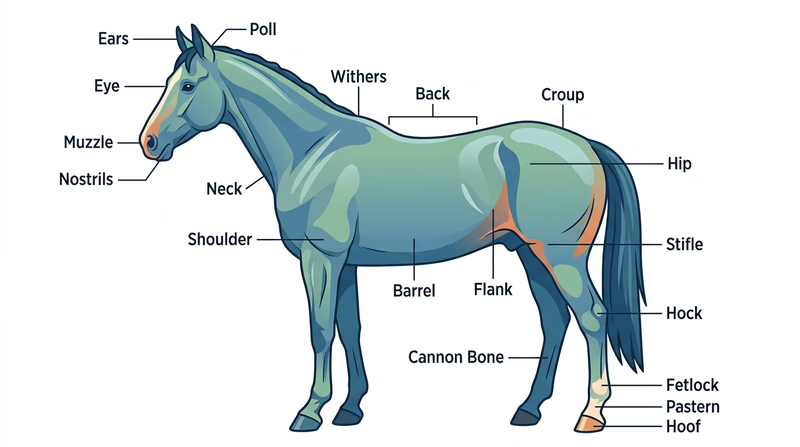
The ears help the horse hear and also show attention and mood. The eyes are set wide on the head, giving the horse broad side vision. The nostrils bring in air during work and can widen when the horse is excited or exercising. The muzzle is the soft area around the nose and lips that helps the horse explore food and objects.
Neck and Topline
The poll is the area just behind the ears at the top of the head. It matters in flexion and comfort when handling a halter or bridle. The crest is the top curve of the neck. The withers are the bony ridge at the base of the neck where saddle fit becomes very important.
Shoulder, Back, and Barrel
The shoulder helps control the reach and smoothness of the stride. The back carries the rider and saddle. The barrel is the main ribcage area where the lungs and digestive organs sit. The girth area behind the elbows is where a saddle is secured.
Hindquarters
The croup is the top of the hindquarters. The hip and stifle help power the horse forward. The flank is the area between the barrel and the hind leg. The tailhead sits at the top of the tail and can tell you a lot about tension or relaxation.
Lower Legs and Feet
The knee and hock are major joints in the front and hind legs. The cannon bone is the long lower leg bone between major joints. The fetlock works like a spring when the horse moves. The pastern helps absorb shock, and the hoof protects the structures inside the foot and supports the horse’s weight.
Fifteen Useful Parts to Learn First
A strong starter list for counselor discussion- Muzzle: Used for sensing, eating, and drinking.
- Nostrils: Bring in air, especially during exercise.
- Poll: Important in head position and comfort in the bridle or halter.
- Neck: Helps with balance and movement.
- Withers: Key landmark for saddle fit.
- Shoulder: Affects length and freedom of stride.
- Back: Carries the rider and tack.
- Barrel: Houses major organs and expands with breathing.
- Flank: Area to watch for breathing effort and sensitivity.
- Hip: Major part of the hindquarter power system.
- Stifle: Large hind-leg joint important for propulsion.
- Hock: Powerful joint that helps the horse push off the ground.
- Cannon bone: Supports the lower leg.
- Fetlock: Flexible joint that absorbs impact.
- Hoof: Supports the horse and protects the foot.
Connect Structure to Function
Requirement 2 is not only about pointing to parts on a diagram. It asks you to discuss what each part does. That means thinking in action.
A horse reaches forward from the shoulder. It carries weight through the back. It pushes from the hindquarters. It balances with the neck and head. It stays sound only if the lower legs and hooves can absorb the repeated shock of moving a large body.
If a rider understands these functions, grooming and tack placement improve right away. For example, knowing where the withers are helps you understand why a saddle pinching there is a problem. Knowing the poll helps you handle the bridle more gently. Knowing the fetlock and pastern helps you notice swelling or cuts in places that take a lot of strain.
How to Study Efficiently
Try learning the horse from front to back and top to bottom. Touch or point to the part, say the name out loud, then explain one simple function. Repeating that pattern is better than staring at a diagram and hoping it sticks.
You can also sketch a horse shape in a notebook and label it from memory. Then compare your attempt to the official sheet. That shows you quickly which parts you know and which ones you still mix up.
University of Minnesota Extension — Horse Anatomy Basics Overview information that helps connect anatomy with daily horse care and observation. Link: University of Minnesota Extension — Horse Anatomy Basics — https://extension.umn.edu/horse-care-and-management/basic-horse-careIn the next requirement, you will compare breeds. Knowing anatomy first makes that easier because many breed features are really differences in body shape, movement, and build.
Req 3 — Breeds and Special Traits
If you watch a powerful ranch horse turn hard after a calf, then watch a tall elegant dressage horse float across an arena, you can see immediately that not all horses are built for the same job. Breeds developed over time because people selected horses for certain traits like speed, calmness, endurance, pulling power, or smooth movement.
This requirement does not ask you to memorize every breed in the world. It asks you to know four well enough to explain what each one is especially known for.
What Makes a Breed Distinct
A horse breed is a group of horses with a shared ancestry and a recognizable set of traits. Those traits may include body type, average size, coat colors, movement, temperament, and the kinds of work or riding the breed often does well.
When you discuss breeds with your counselor, try to connect each breed to three things:
- How it looks
- How it tends to move or behave
- What jobs or sports it is known for
That makes your explanation much stronger than simply naming the breed.
Four Common Examples
Here are four widely known breeds that help you see the range of horse types.
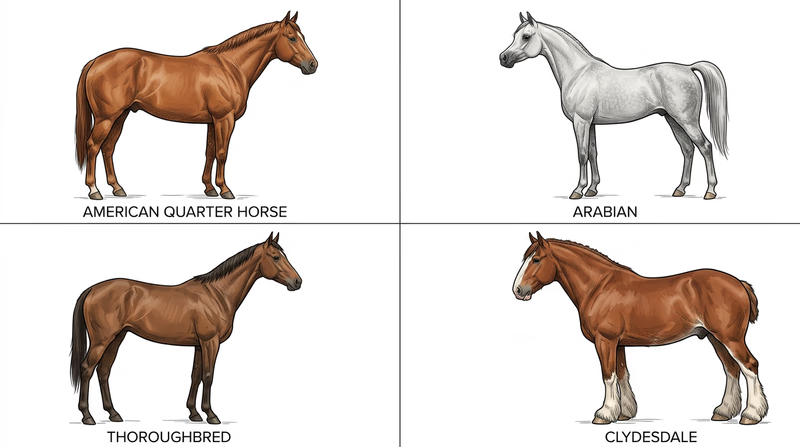
American Quarter Horse
The American Quarter Horse is famous for speed over short distances, strong hindquarters, and practical ranch ability. It is one of the most common breeds in the United States. Many Quarter Horses are calm, athletic, and versatile, which is why you see them in Western riding, ranch work, trail riding, and many beginner lesson programs.
Special features: quick acceleration, muscular build, useful “cow sense,” and a practical temperament.
Arabian
Arabians are one of the oldest horse breeds in the world. They are known for endurance, an expressive head shape, high tail carriage, and strong connection to humans. Because they developed in harsh desert environments, they are often admired for stamina and toughness.
Special features: endurance, refined head shape, alert expression, and historical importance.
Thoroughbred
Thoroughbreds are best known for racing, long legs, and athletic movement. They are often energetic and responsive, which makes them popular beyond the racetrack too. Many become sport horses in jumping, eventing, and other English disciplines after racing careers end.
Special features: speed, height, athleticism, and success in competition.
Clydesdale
Clydesdales are large draft horses with great pulling strength, big feet, and often feathering around the lower legs. They were bred for heavy work like hauling loads. Even though many people know them today from parades or ads, they represent an important working-horse tradition.
Special features: great size, strength, calm draft-horse presence, and ability to pull heavy loads.
🎬 Video: Ten Popular Horse Breeds (video) — https://youtu.be/FiBBNX8WszQ
Other Breeds You Might Choose
Depending on what horses you know locally, you might also discuss breeds such as the Morgan, Paint Horse, Appaloosa, Tennessee Walking Horse, Belgian, Friesian, or Pony of the Americas. What matters is not choosing the fanciest breed. What matters is being able to explain what makes it special.
How to Describe a Breed
A simple pattern for counselor discussion- Body type: Is the breed compact, tall, refined, heavy, or especially muscular?
- Movement: Is it known for speed, smooth gaits, powerful pulling, or endurance?
- Temperament: Is it often described as calm, sensitive, bold, willing, or energetic?
- Typical jobs: Ranch work, racing, trail riding, jumping, driving, or pleasure riding?
- Signature trait: What would make someone recognize this breed quickly?
Avoid Easy Mistakes
Color and breed are not the same thing. For example, a horse being bay, black, chestnut, or gray tells you about coat color, not breed. Also, not every horse of a breed acts exactly the same. Breed gives you patterns and tendencies, but training, handling, and individual personality still matter.
American Quarter Horse Association — About the Breed Breed information and examples of the jobs and sports Quarter Horses are known for. Link: American Quarter Horse Association — About the Breed — https://www.aqha.com/Understanding breeds helps you appreciate why different horses are fed, trained, and used in different ways. Next, you will shift from breed traits to health problems, starting with one of the most urgent horse emergencies: colic.
Req 4 — Colic and Common Health Problems
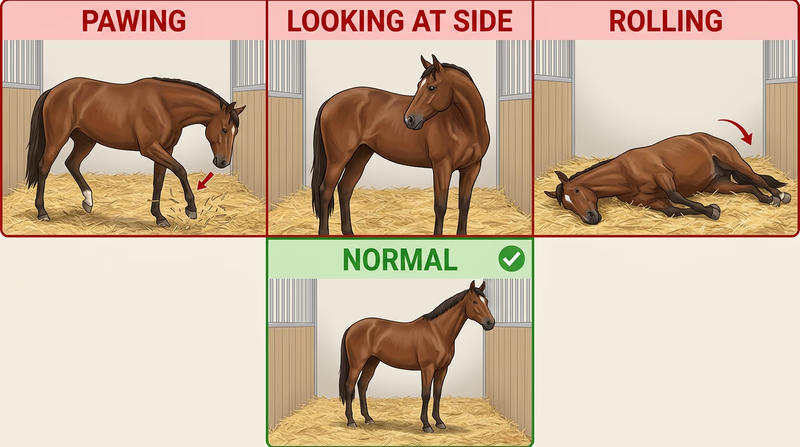
A horse with colic may not look dramatic at first. It may paw, look at its side, or act restless. But colic can become life-threatening fast, which is why horse people take even mild signs seriously. This requirement is really about learning to notice when a horse’s normal behavior has changed and knowing that early action matters.
Colic: A Serious Warning Sign
Colic is a general word for abdominal pain. It is not one single disease. Many different digestive problems can cause it, from gas and feed changes to twists or blockages in the intestines. Because a horse’s digestive system is long and complicated, small problems can become emergencies quickly.
Common Signs of Colic
A horse with colic may:
- Paw at the ground repeatedly
- Look or bite at its side
- Kick at its belly
- Lie down and get up often
- Roll more than usual or try to roll violently
- Refuse feed or water
- Stretch out as if trying to urinate
- Sweat, breathe harder, or seem anxious
- Show less manure than normal
Not every horse shows the same signs. Some become dramatic, while others get quiet and dull. What matters is noticing behavior that is unusual for that horse.
Four Other Health Problems to Know
1. Laminitis
Laminitis is a painful inflammation inside the hoof. It affects the tissues that help hold the coffin bone in place. Horses with laminitis may stand rocked back on their heels, move stiffly, resist turning, or seem unwilling to walk. It is a major emergency because the foot structures can be damaged.
2. Thrush
Thrush is an infection in the frog area of the hoof, often linked to damp, dirty conditions. You may notice a bad smell, black discharge, or tenderness when cleaning the hoof. It reminds you why daily hoof picking and clean footing matter.
3. Respiratory Infection
A horse with a respiratory problem may cough, have nasal discharge, act tired, or run a fever. Horses in barns share airspace, so illness can spread. Good ventilation, clean water, and separating sick horses are important management steps.
4. Skin Problems and Rain Rot
Skin problems can come from moisture, mud, fungus, insects, or poor grooming. Rain rot often causes scabby patches along the back and rump after wet weather. While not as dramatic as colic, it shows how daily care affects comfort and health.
🎬 Video: Health Problems in Horses (video) — https://youtu.be/_ZeUDXMmSXE?si=mw4HfkBBedTRvh5a
Build a Habit of Observation
Healthy horses usually have bright eyes, normal manure, steady appetite, comfortable movement, and interest in their surroundings. The sooner you learn what normal looks like, the faster you will notice when something seems off.
What to Notice Each Day
Small observations can catch problems early- Appetite: Is the horse eating and drinking normally?
- Attitude: Does it seem alert, calm, and interested in its surroundings?
- Movement: Is it walking evenly and willingly?
- Manure and urine: Are elimination habits normal?
- Legs and feet: Any swelling, heat, smell, or tenderness?
- Skin and coat: Any sores, scabs, bald patches, or insect irritation?
Horse health problems often show up in how a horse stands and moves. That leads directly into the next requirement, where you will learn about conformation and the difference between a horse that moves lame and one that is generally unsound.
Req 5 — Conformation, Lameness, and Unsoundness
Two horses can both be healthy, kind, and willing, yet move very differently because of how they are built. That overall build is called conformation. Riders pay attention to it because structure affects balance, athletic ability, comfort under saddle, and how much strain ends up on joints, tendons, and feet.
What Conformation Means
Conformation is the way a horse’s body is put together. It includes proportions, angles, muscling, topline, leg alignment, and how well the parts of the horse work together. Good conformation does not mean a horse is perfect. It means the horse is built in a way that supports the kind of work it is asked to do.
A horse with balanced conformation may move more efficiently and stay comfortable longer. A horse with poor angles or uneven structure may still be useful and kind, but it may need more careful management.
Why Conformation Matters
Conformation affects:
- Movement: Long, sloping shoulders often support freer stride.
- Balance: A horse built downhill may carry weight differently than one built more level.
- Soundness over time: Crooked legs or poor hoof-pastern angles may increase strain.
- Suitability for a job: A ranch horse, jumper, trail horse, and draft horse are not all built the same way.
What People Notice in Conformation
Common features discussed when evaluating a horse- Topline balance: How neck, back, and hindquarters fit together.
- Shoulder angle: Affects stride and reach.
- Back length: Can affect strength and saddle fit.
- Leg alignment: Whether the limbs track straight and support the body evenly.
- Hoof and pastern angle: Important for shock absorption and long-term comfort.
Lameness vs. Unsoundness
These two words are related, but they do not mean exactly the same thing.
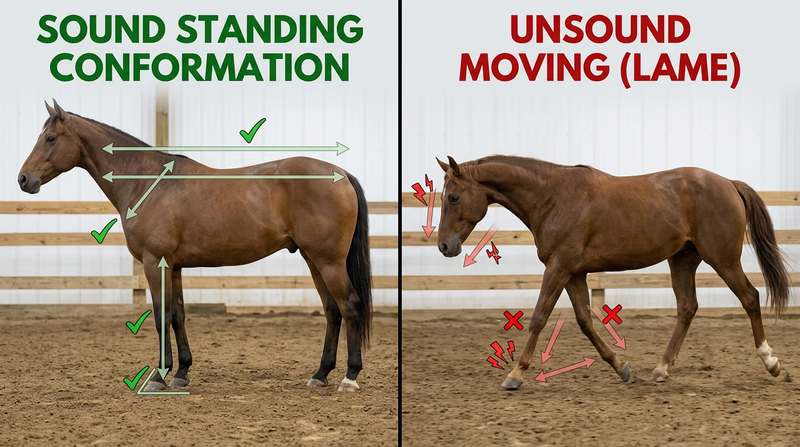
Lameness
Lameness means there is a problem with movement, usually caused by pain, injury, or mechanical difficulty. A lame horse may bob its head, shorten a stride, drag a toe, refuse a turn, or place less weight on one leg. Lameness is often something you notice while the horse is walking or trotting.
Unsoundness
Unsoundness is a broader term. It means a horse has a physical condition that affects usefulness or fitness for work. A horse might be unsound because of a chronic leg problem, poor eyesight, breathing trouble, or another lasting condition. Not every unsoundness is obvious in every step, but it still affects the horse’s ability to do its job properly.
So a lame horse is showing a movement problem right now. An unsound horse has a broader condition that makes it less fit for work, whether or not the issue is dramatic in that moment.
🎬 Video: Lameness vs. Unsoundness (video) — https://www.youtube.com/shorts/Ica4d4jK2eo
How Riders Notice Lameness
You are not expected to diagnose the cause like a veterinarian. You are expected to notice warning signs.
Look for:
- Uneven rhythm when the horse walks or trots
- Head bobbing, especially at the trot
- Shorter stride on one side
- Refusal to turn or move forward freely
- Swelling, heat, or tenderness in a leg or hoof
- A horse that suddenly acts unwilling under saddle
Use the Right Mindset
Conformation is not about criticizing a horse. It is about understanding strengths and limits. A horse can be a wonderful partner without being built like a champion show horse. Good horsemanship means matching the horse’s body, training, and health to a reasonable job.
University of Kentucky — Evaluating Horse Conformation A practical overview of how horse build affects balance, movement, and long-term usefulness. Link: University of Kentucky — Evaluating Horse Conformation — https://afs.ca.uky.edu/horse/horse-selection-evaluating-conformationFeet support every part of a horse’s movement, so it makes sense that the next requirement focuses on hoof care and why some horses wear shoes.
Req 6 — Hoof Care and Horseshoes
Horse people say, “No hoof, no horse,” because the feet support every ride, every turn, and every step in the barn aisle. A horse may look strong and healthy everywhere else, but if the hooves are sore, cracked, infected, or overgrown, the whole animal can become uncomfortable or unusable.
Why Hoof Care Matters
The hoof is not just a hard shell. Inside it are living tissues, bones, nerves, blood supply, and structures that help absorb shock. Good hoof care keeps the foot balanced, clean, and able to support the horse’s weight correctly.
Daily hoof care helps you:
- Remove stones, mud, and manure
- Notice bad smells or black discharge from thrush
- Spot cracks, missing nails, or loose shoes
- Catch soreness before it turns into lameness
Regular trimming by a farrier also matters. Hooves keep growing, so they need routine care to keep the foot balanced and the horse moving correctly.
🎬 Video: How to Clean Horse Hooves (video) — https://youtu.be/whbZsicSv-k
Why Some Horses Wear Shoes
Not every horse needs shoes, but some do. Shoes are used when the horse needs extra protection, traction, support, or help correcting how the foot bears weight.
Protection
A horse working on rocky ground, pavement, or other hard surfaces may wear shoes to reduce excessive hoof wear.
Traction
Some horses need better grip for work or sport. A horse slipping in turns or on certain footing may benefit from shoes designed to improve traction.
Support or Correction
Farriers and veterinarians may use special shoes to support a hoof problem, help with conformation issues, or manage certain injuries. That is one reason hoof care links closely with overall health.
Barefoot vs. Shod
Some horses stay barefoot and do very well, especially if their work, footing, and hoof quality all support that choice. Others clearly need shoes for comfort and safety. There is no one answer for every horse. The right choice depends on workload, environment, hoof strength, and professional advice.
Signs a Hoof Needs Attention
What riders and handlers notice during daily care- Packed debris: Stones, mud, or manure trapped in the hoof.
- Bad odor or black material: Possible thrush.
- Cracks or chips: May need trimming or closer attention.
- Heat or tenderness: Could signal inflammation or injury.
- Loose or missing shoe: Needs prompt adult attention.
- Uneven wear: May suggest balance problems or heavy use on rough footing.
Good Hoof Care Is a Team Effort
Daily care usually falls to riders, handlers, and barn staff. Trimming and shoeing belong to a trained farrier. Health problems that go deeper may need a veterinarian too. Good horsemanship means noticing small issues early and involving the right person instead of guessing.
American Association of Equine Practitioners — Hoof Care Veterinary guidance on routine hoof care, farrier work, and common problems that affect soundness. Link: American Association of Equine Practitioners — Hoof Care — https://aaep.org/horsehealth/hoof-careThe next requirement puts daily care into practice. Once you understand why hooves matter, grooming and after-ride care start to feel like skilled observation instead of just chores.
Req 7 — Grooming and After-Ride Care
Good grooming is not just about making a horse look nice. It is a full-body safety check. When you curry, brush, pick hooves, and cool down a horse after riding, you are checking skin, legs, tack areas, feet, and attitude all at once.
Why Grooming Matters
Grooming removes dirt, dried sweat, and loose hair. It improves comfort under tack, helps prevent skin problems, and gives you a chance to spot cuts, swelling, sore areas, or heat before a small problem grows.
A clean horse is also easier to tack correctly. Dirt under a saddle pad or girth can rub and create painful sores.
🎬 Video: Caring for a Horse (video) — https://youtu.be/fdGhd2phEHs
🎬 Video: How to Groom a Horse (video) — https://youtu.be/9Leym8QeBM8
A Basic Grooming Order
Many barns teach a routine like this:
- Secure the horse safely with a halter and lead or cross-ties.
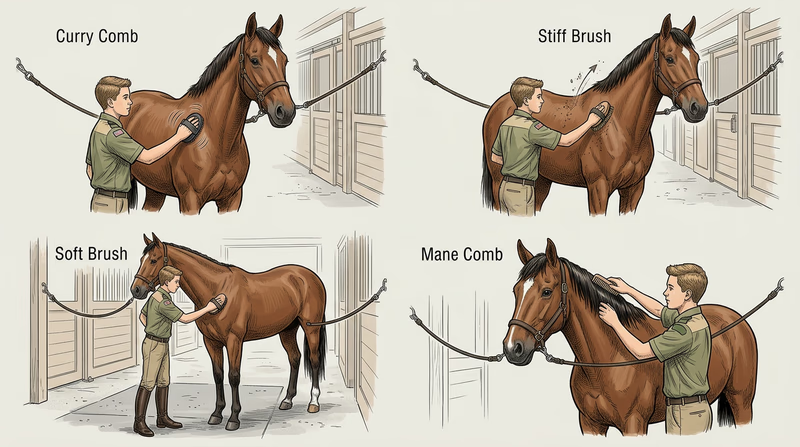
- Use a curry comb in circular motions on fleshy areas to loosen dirt and hair.
- Use a stiff brush to flick away the dirt the curry loosened.
- Use a soft brush on sensitive areas like the face and lower legs.
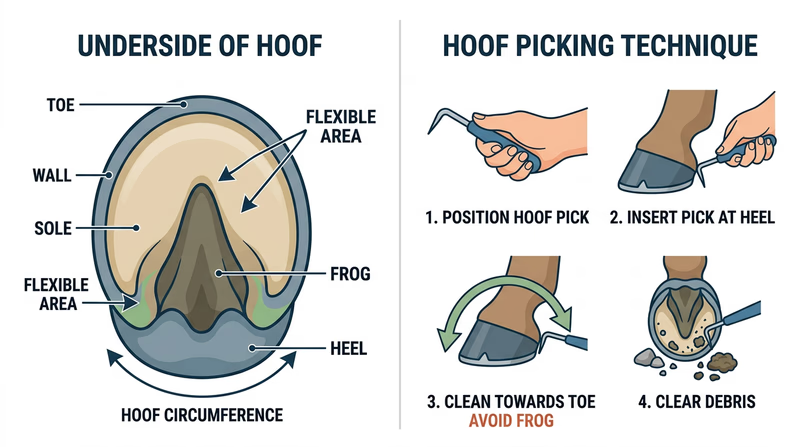
- Pick the hooves carefully, removing debris from heel to toe while avoiding the frog.
- Comb the mane and tail gently, often starting at the ends to avoid pulling.
Always follow your stable’s specific routine if it differs.
What to Look For While Grooming
Grooming doubles as a health check- Heat or swelling: Especially in legs and around joints.
- Cuts or scrapes: Small wounds matter under tack.
- Tender spots: The horse may flinch when you brush a sore area.
- Loose shoes or hoof smell: Important clues during hoof care.
- Sweat marks or rubs: Show where tack may not fit well.
Picking Hooves Safely
Hoof picking is part skill and part positioning. Stand close to the horse, facing toward the tail when working on front feet and slightly backward near hind feet, depending on what your instructor teaches. Run your hand down the leg, ask for the foot, and support it without twisting the leg awkwardly.
Use the hoof pick from heel toward toe so you do not jab sensitive structures. Clear mud, stones, bedding, and manure. Notice smell, cracks, bruising, or anything packed tightly into the sole.
Caring for the Horse After a Ride
After riding, the horse still needs your attention. This is when you help it cool down, recover, and stay comfortable.
Cool Down First
Do not hop off after hard work and put the horse away immediately. Walk the horse to let breathing and heart rate settle. On a warm day, that cooldown matters even more.
Check for Sweat and Tack Rubs
Remove tack carefully and look at the saddle, girth, and bridle contact areas. Dry, ruffled, or rubbed spots can tell you something about fit or friction.
Offer Proper Care Based on Weather and Workload
Some horses may need sponging, scraping off water, blanketing, hoof picking again, or extra walking depending on conditions. A horse that has worked hard may need more cooling time than one that only walked lightly.
University of Minnesota Extension — Horse Grooming Basics Basic horse-care guidance that reinforces grooming, observation, and routine stable habits. Link: University of Minnesota Extension — Horse Grooming Basics — https://extension.umn.edu/horse-care-and-management/basic-horse-careDaily care also includes feeding correctly. In the next requirement, you will learn why the right amount and type of feed depend on the horse’s size, workload, and breed.
Req 8 — Feeding a Horse
A horse that spends its day giving quiet beginner lessons does not eat the same way as a racehorse, a draft horse pulling heavy loads, or an easy-keeping pony that gains weight quickly. Feeding is not guesswork. It depends on the horse’s size, age, workload, body condition, health, and how efficiently that breed or individual uses calories.
Start With Forage
Most horses should get the largest part of their diet from forage, usually hay or pasture. Forage supports digestion and gives horses the long, steady chewing time their digestive system is built for. Grain or concentrate may be added for horses that need extra calories or balanced nutrients, but forage stays the foundation.
Water Comes First Too
Fresh, clean water is essential. A horse that cannot drink enough is at higher risk for dehydration, poor performance, and digestive trouble.
🎬 Video: What Do Horses Eat? (video) — https://youtu.be/AcgfzGhaoes
How People Decide What to Feed
Feeding plans usually consider:
- Body weight or size
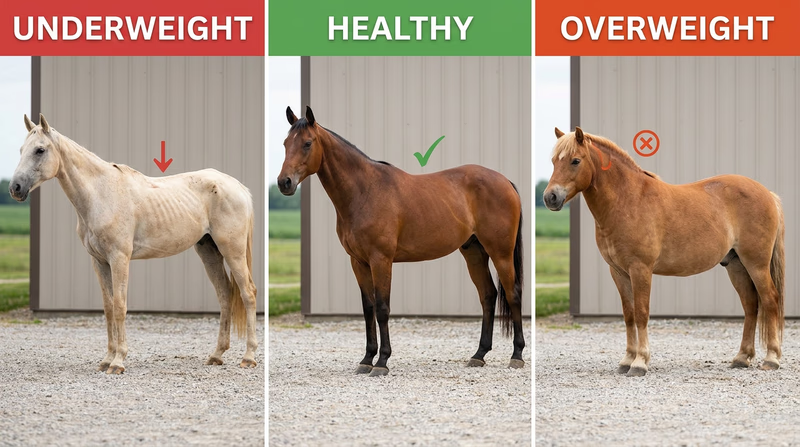
- Body condition — too thin, too heavy, or in good weight
- Age — growing, adult, or senior
- Workload — light, moderate, or heavy work
- Breed tendencies — some horses keep weight easily, others burn calories fast
- Health needs — dental issues, ulcers, metabolic disease, allergies, or past colic
A hard-working horse may need more energy than hay alone can provide. A pony or easy keeper may need controlled portions to avoid obesity or laminitis risk.
Why Activity Level Changes Feeding
A lightly used trail horse or lesson horse may do well on quality hay, pasture, and maybe a simple ration balancer if advised. A horse in frequent training burns more energy and may need more total feed, added concentrate, or special support for recovery.
The more intense the work, the more carefully feeding is managed. That does not always mean “more grain.” It means matching the ration to the work without upsetting digestion.
Questions That Shape a Feeding Plan
Ask these before deciding what or how much to feed- How much does the horse weigh or what is its body size?
- How hard is the horse working each week?
- Is the horse holding a healthy body condition?
- What kind of hay or pasture is available?
- Does the horse have health issues that affect feeding?
- Has a veterinarian or experienced barn manager recommended a specific plan?
Why Breed Can Matter
Different breeds often have different feeding tendencies. A hot, athletic Thoroughbred may need help maintaining weight. A stocky pony may gain weight on very little. Draft breeds, Arabians, Quarter Horses, and gaited breeds can all have different body types and energy needs, but individual variation still matters a lot.
Breed gives you clues. The horse in front of you gives you the real answer.
Feeding Habits That Protect Health
Good feeding is about routine as much as ingredients. Sudden changes in feed can upset the digestive system. Moldy hay, dirty water, or overfeeding grain can all create serious problems.
Common Healthy Habits
- Feed on a regular schedule
- Make changes gradually
- Keep feed rooms secured
- Watch how much each horse actually eats
- Notice manure, appetite, and weight changes
The next requirement moves from the horse’s body to the rider’s equipment. Once the horse is fed and cared for properly, you need to understand the tack that connects rider and horse.
Req 9 — Saddles, Bridles, and Mounting
This requirement brings together three closely related skills: knowing your tack, putting it on correctly, and getting on and off the horse safely. Tack that is dirty, poorly fitted, or used carelessly can make the horse uncomfortable and the rider unsafe.
- Requirement 9a: Name saddle and bridle parts and explain care
- Requirement 9b: Saddle and bridle the horse properly
- Requirement 9c: Mount and dismount safely
Requirement 9a
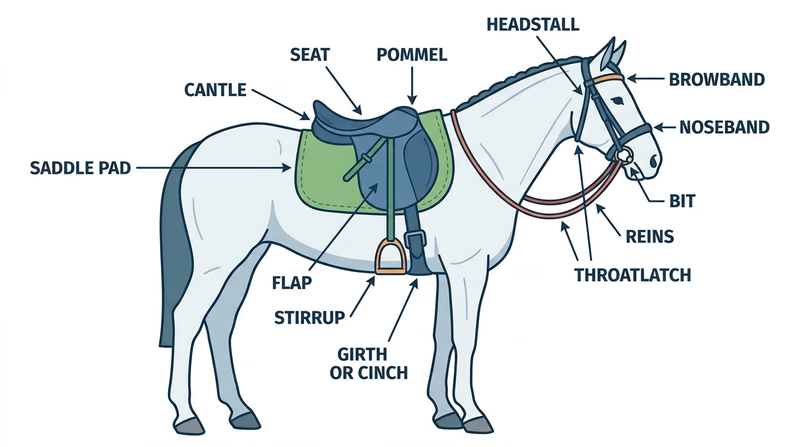
Learning tack names helps you follow instructions and notice when something is wrong. Common saddle parts include the seat, pommel, cantle, stirrup, stirrup leather or fender, girth or cinch, billet, saddle flap, and saddle pad. Common bridle parts include the headstall, browband, cheekpieces, throatlatch, reins, bit, and noseband if present.
Tack care matters because leather dries, cracks, and weakens if ignored. Sweat and dirt also wear down stitching and hardware over time.
🎬 Video: Parts of a Saddle (video) — https://www.youtube.com/watch?v=CXkV6LxGJF8
Basic Tack Care
Clean tack after use according to stable routine. Wipe off sweat, dirt, and dust. Condition leather when needed so it stays supple instead of brittle. Check buckles, billets, stirrup leathers, reins, and stitching for wear. Store tack neatly in a dry place where it keeps its shape.
Ten Useful Tack Parts
A practical starter list for this requirement- Seat: Where the rider sits.
- Pommel: Front rise of the saddle.
- Cantle: Back rise of the saddle.
- Stirrup: Supports the rider’s foot.
- Girth or cinch: Secures the saddle.
- Saddle pad: Cushions and helps protect the horse’s back.
- Headstall: Main leather that holds the bridle together.
- Bit: The part that fits in the horse’s mouth.
- Reins: The rider’s connection for steering and communication.
- Throatlatch: Helps keep the bridle from slipping off.
Requirement 9b
Correct saddling and bridling should look quiet and organized, not rushed. Brush the horse first so dirt does not get trapped under tack. Place the pad and saddle in the right position, then adjust slightly backward into place instead of scraping hair the wrong way. Tighten the girth or cinch gradually.
When bridling, keep control of the horse calmly, protect the ears, and guide the bit gently into the mouth. Never bang the teeth with the bit or force the head around roughly.
🎬 Video: How to Saddle a Horse (video) — https://youtu.be/MZHl9zBHD10
🎬 Video: How to Bridle a Horse (video) — https://youtu.be/sI7A5aTFUnE
Requirement 9c
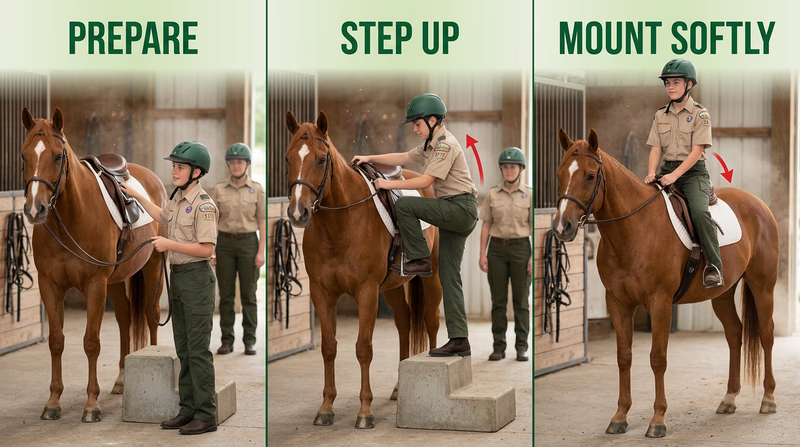
Mounting should be smooth and balanced so you do not jab the horse in the side, yank the saddle, or surprise the horse with uneven pressure. Many riders use a mounting block because it is easier on both horse and rider.
For a basic left-side mount, gather the reins, place the left foot in the stirrup, rise with control, swing the right leg over without kicking the horse, and settle quietly into the saddle. For dismounting, halt squarely, remove both feet from the stirrups, swing the right leg back over, and lower yourself down under control.
🎬 Video: Using a Mounting Block and Adjusting Tack (video) — https://youtu.be/a40XR220wd8?si=yAKM4J6yhQAYZufm
🎬 Video: Mounting and Dismounting a Horse (video) — https://youtu.be/p3T7tUwyNBg?si=Rnuup5QA8iw_DLlU
🎬 Video: How to Mount a Horse (video) — https://youtu.be/CafSxVC-1I8
🎬 Video: How to Ride a Horse (video) — https://youtu.be/NC9Tr2hXfFk?si=-mIGi5Woskl7jBPn
The Big Idea of This Requirement
Clean tack, careful bridling, and balanced mounting all show the same thing: respect for the horse. A horse learns quickly whether the rider is organized or sloppy. Clear routines make the horse more comfortable and make you safer.
Horse Illustrated — Basic Tack Cleaning A rider-friendly overview of routine tack cleaning and inspection habits. Link: Horse Illustrated — Basic Tack Cleaning — https://www.horseillustrated.com/horse-care-tack-cleaningIn the next requirement, you will work from the ground again by approaching, leading, and tying a horse safely. Those skills matter every single time you handle a horse, even when you are not riding.
Req 10 — Approach, Lead, and Tie
A horse’s first few seconds with you matter. If you approach carelessly in a stall, rush it through a gate, or tie it where it can panic and get trapped, you create risk before the ride even starts. Good ground handling should look calm, ordinary, and safe.
Approaching the Horse
Approach where the horse can see or hear you. Speak calmly before touching it, especially in a stall or when coming from outside the horse’s line of vision. Move toward the shoulder instead of directly at the hindquarters.
From a Stall
Open the door carefully and keep it under control. Do not trap yourself between the horse and the wall. Let the horse know you are there, halter it quietly, and turn it so you can leave the stall without crowding.
From a Corral or Field
Use calm body language. Do not chase the horse unless an experienced adult specifically directs a different method. In a group setting, move carefully so other horses do not crowd around you at the gate.
Leading Safely
Lead from the horse’s left side unless your stable uses another standard. Walk near the shoulder with a little space between you and the horse. You want the horse to follow your movement, not drag behind you or push past you.
Keep the lead rope in your hands in loose folds, never wrapped. Turn the horse away from you when changing direction in tight spaces. Pause before gates, doorways, and corners so the horse does not rush.
🎬 Video: How to Lead a Horse (video) — https://youtu.be/AsP38UPNHvI
Good Leading Habits
The details that keep horse and handler organized- Stay at the shoulder: Do not walk directly in front of the horse.
- Carry extra rope safely: Fold it, never wrap it.
- Look where you are going: Plan turns and openings before you reach them.
- Set the pace: The horse should match you, not crowd you.
- Use calm corrections: Sudden jerks usually create more tension.
Tying the Horse Securely
A tied horse should be attached to a safe, solid object at an appropriate height, usually around wither height or a little higher depending on local instruction. The rope should be short enough to prevent tangling but long enough for comfort.
Most barns teach a quick-release knot so the horse can be freed fast in an emergency. Cross-ties may also be used in some aisles, but only when the horse is trained and the setup is safe.
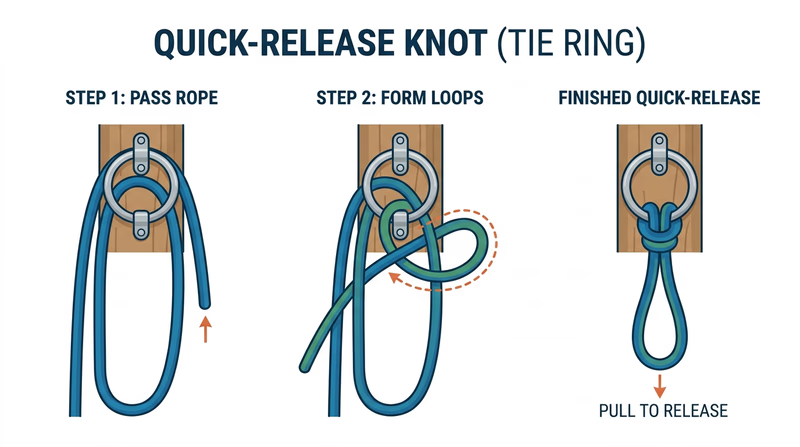
What Makes a Good Tie Spot
- Solid post, ring, or wall tie point
- Clear footing with no clutter underfoot
- Enough room around the horse, but not enough rope for it to step over
- An area supervised by adults when possible
Ground handling sets up everything that happens next. In the next requirement, you will take those calm basics into the saddle and practice walking, trotting, halting, backing, and dismounting in harmony with the horse.
Req 11 — Walk, Trot, Halt, and Dismount
This requirement covers seven riding skills that show whether you can stay balanced, communicate clearly, and keep the horse moving with steadiness instead of confusion.
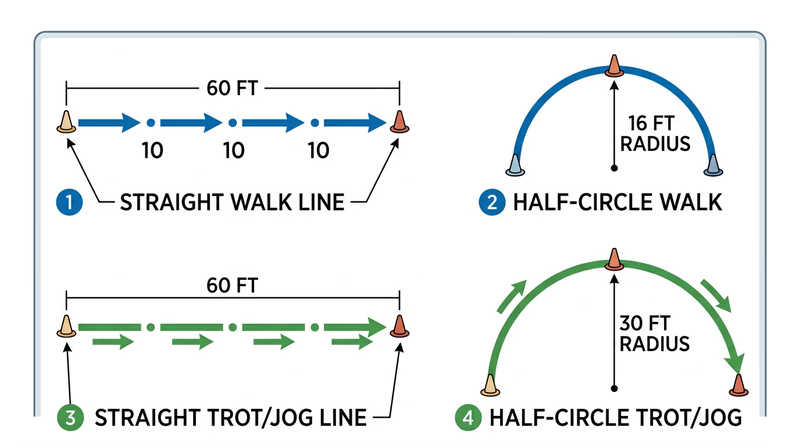
- 11a: Walk straight for 60 feet
- 11b: Walk a half-circle within 16 feet radius
- 11c: Trot or jog straight for 60 feet
- 11d: Trot or jog a half-circle within 30 feet radius
- 11e: Halt straight
- 11f: Back up straight four paces
- 11g: Halt and dismount
The goal is not flashy riding. The goal is quiet control. A rider in harmony with the horse looks balanced, calm, and predictable.
🎬 Video: How to Steer Your Horse (video) — https://youtu.be/uZ_5lxUyCdw
🎬 Video: How to Ride a Horse (video) — https://youtu.be/fV7kuUrjutY
🎬 Video: Riding Despite Physical Challenges (video) — https://youtu.be/oFy6FqQ_PXM?si=Qk7V2jJdKykcp9il
Requirement 11a
Straightness starts with your own body. Look ahead, keep even rein contact, sit centered, and use both legs evenly so the horse does not drift. The walk should feel relaxed, not rushed.
Requirement 11b
A circle asks the horse to bend through the body. Your inside leg helps keep energy and shape, while the outside aids help prevent the shoulder from drifting out. Think “curve,” not “sharp turn.”
Requirement 11c
At the trot or jog, straightness becomes harder because the gait has more energy. Keep your eyes up, hands quiet, and legs supportive. Try not to balance on the reins.
🎬 Video: How to Trot a Horse (video) — https://youtu.be/-3CMZSbQRgg
Requirement 11d
This movement combines bend and impulsion. You need enough forward energy to keep the trot, but enough organization that the horse does not fall in or drift out through the shoulder.
🎬 Video: Tips for Trotting (video) — https://youtu.be/KCSkmYEQxEg?si=ET5yK-3VM_Pjzae3
Requirement 11e
A good halt should feel balanced, not abrupt. Close your aids, steady your body, and ask the horse to stop without throwing its head or stepping crooked.
🎬 Video: How to Stop Your Horse (video) — https://youtu.be/GJ0Y_ZaCSmo
Requirement 11f
Backing should be calm and deliberate. The horse should step back in balance instead of raising its head or twisting. Straight backing shows the horse understands your aids and is staying attentive.
🎬 Video: How to Back Up a Horse (video) — https://youtu.be/aolJGYfOZI0
Requirement 11g
Finish as carefully as you started. Bring the horse to a quiet halt, prepare yourself, and dismount with control so the horse stays calm and balanced.
🎬 Video: Mount and Dismount a Horse (video) — https://youtu.be/vBdXfiNXu7I?si=Cb12AYTlH2J_lbtg
How to Ride in Harmony
The phrase “at ease, and in harmony with the horse” is the heart of the requirement. Harmony means your body is not fighting the horse. You are not bouncing hard, yanking on the reins, or giving mixed signals. Your seat, hands, legs, and eyes all support the same message.
What Harmony Looks Like
Signs that horse and rider are working together- Balanced position: You stay centered instead of leaning or gripping wildly.
- Quiet hands: The reins guide instead of pulling constantly.
- Steady rhythm: The horse keeps an even pace.
- Soft transitions: Starts, turns, stops, and backing look organized.
- Calm attitude: Neither horse nor rider looks rushed or upset.
The riding part of the badge ends here, but horsemanship can keep growing in many directions. In the next requirement, you will choose between exploring horse-related careers or using horsemanship as part of a healthy lifestyle or hobby.
Req 12 — Choose Your Path
You must choose exactly one option for this requirement. One path helps you investigate a horse-related career. The other helps you think about horsemanship as a hobby, sport, or healthy part of your life outside merit badge work.
Your Options
- Req 12a — Careers Working With Horses: Research a horse-related profession, learn what training and education it requires, and discuss whether that kind of work fits your interests.
- Req 12b — Horsemanship as a Hobby or Lifestyle: Explore how riding, horse care, or equestrian organizations could become part of your long-term recreation, fitness, or personal goals.
How to Choose
Choosing Between 12a and 12b
Pick the path that matches what you most want to learn- If you like career research: Choose 12a. You will practice interviewing, researching education costs, and thinking about real jobs.
- If you want a personal next step: Choose 12b. You will think about lessons, clubs, riding goals, and how horsemanship could fit your life.
- Time and logistics: 12a may require finding a professional to interview or a workplace to visit. 12b may be easier if you already ride or have access to a local stable or club.
- What you will gain: 12a builds career awareness and research skills. 12b helps you set realistic short-term and long-term goals for health, recreation, or continued horse involvement.
| Option | Best for Scouts who want to… | Main challenge | Main payoff |
|---|---|---|---|
| 12a | Explore jobs like veterinary medicine, training, farriery, or barn management | Finding accurate career information and possibly a professional interview | Better understanding of education, costs, salary, and daily job reality |
| 12b | Keep horses in their life through riding, volunteering, clubs, or fitness | Turning a broad interest into a realistic plan | Clear personal goals and a practical path for staying involved |
The first option starts with careers, and it is a good choice if you want to see what working with horses looks like beyond lessons and trail rides.
Req 12a — Careers Working With Horses
If you have ever watched someone calm a nervous horse, fix a shoe, diagnose an injury, teach a lesson, or manage a whole stable smoothly, you have already seen horse careers in action. This requirement asks you to look past the romantic image and learn what the job really takes.
Start With One Specific Career
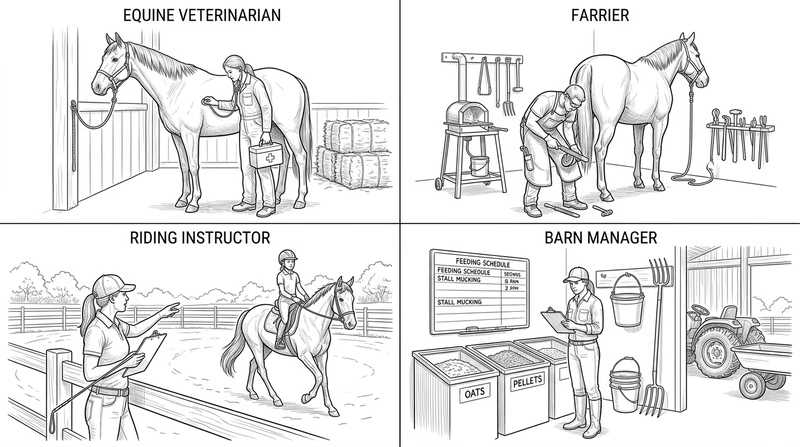
Horse careers cover a wide range of work. You might research an equine veterinarian, farrier, trainer, riding instructor, stable manager, equine massage therapist, breeder, mounted law enforcement officer, or horse-assisted therapy professional.
Choosing one career makes your research more useful. Then you can ask practical questions instead of collecting random facts.
🎬 Video: Careers Working With Horses (video) — https://youtu.be/00UQQttaXUs?si=wkiU7zrCaLhmzHis
🎬 Video: Explore a Career as a Horse Doctor (video) — https://youtu.be/BCnueH9iemg?si=e9ZwFO8jJ6T7ue5C
What to Research
Your counselor wants more than a job title. They want to hear that you understand the path into the profession.
Career Research Questions
Build your discussion around these topics- Training and education: Do you need a degree, certification, apprenticeship, or license?
- Costs: What do tuition, tools, travel, or certification fees look like?
- Job prospects: Is this field growing, competitive, seasonal, or location-dependent?
- Salary: What is the typical pay range, and what affects earnings?
- Job duties: What does a normal day actually involve?
- Advancement: How could someone grow in the field over time?
Ask What the Work Really Feels Like
A job around horses may sound exciting, but every career includes early mornings, physical effort, weather, paperwork, or difficult decisions. A veterinarian may spend years in school and still work emergency hours. A farrier needs physical strength and precise technical skill. A trainer may spend much of the day teaching people, not just riding horses.
That is not bad news. It is useful news. Real career research helps you decide whether the daily reality still sounds interesting to you.
Ways to Gather Information
You can combine several methods:
- Read information from professional organizations or colleges
- Interview someone who does the job
- Visit a clinic, stable, lesson barn, or farrier shop with permission
- Compare several salary or training sources to see the full picture
When you talk with your counselor, do not stop at facts. Explain what parts of the job attract you and what parts might be challenging. That personal reflection is what turns research into real career exploration.
Req 12b — Horsemanship as a Hobby or Lifestyle
Not every Scout who loves horses wants a horse career. Some want riding lessons, trail miles, volunteer work, or a healthy activity that builds confidence and responsibility for years. This option helps you think about how horsemanship could fit into your real life after the badge is done.
Horsemanship Can Be a Long-Term Lifestyle
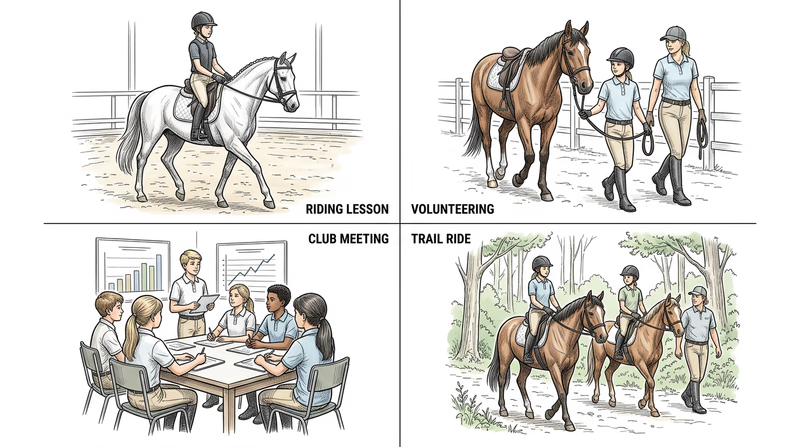
Horse involvement can support physical fitness, patience, emotional control, and outdoor time. It can also become a social activity through clubs, riding programs, camps, and volunteer opportunities.
The key idea is sustainability. You are not just asking, “Would this be fun?” You are asking, “What would it take for me to keep doing this in a realistic way?”
🎬 Video: United States Pony Club (video) — https://youtu.be/L6TQRrzyK8c
🎬 Video: Competitive Hobbyhorse Riding (video) — https://youtu.be/3Y0t0spC5Hg
What to Research
Even hobbies need planning. Riding can involve lesson costs, travel, equipment, and time.
Questions for Your Hobby Plan
Use these to build realistic short-term and long-term goals- Training needed: Do you need beginner lessons, clinics, volunteer training, or horse camp?
- Expenses: What will lessons, boots, helmets, camp fees, or club memberships cost?
- Organizations: What local barns, 4-H clubs, pony clubs, or riding programs support this interest?
- Short-term goals: What could you do in the next few months?
- Long-term goals: What would you like your horse involvement to look like in a few years?
Examples of Horse-Related Lifestyles
You could:
- Take regular riding lessons
- Join a youth horse organization
- Volunteer at a therapeutic riding center or rescue if age rules allow
- Focus on trail riding and outdoor recreation
- Build fitness through riding and stable chores
- Learn show skills, mounted games, or other equestrian sports
Each path teaches slightly different things, but all of them use the same foundation you built in this badge: safety, observation, calm handling, and care.
Setting Good Goals
A short-term goal should be specific enough to act on now. A long-term goal should stretch you without becoming fantasy.
Short-term examples:
- Find two local lesson barns and compare beginner programs.
- Save for riding boots and a helmet.
- Attend one clinic, stable tour, or youth riding event.
Long-term examples:
- Ride independently at walk and trot with confidence.
- Volunteer regularly at a horse organization.
- Join a youth equestrian club and complete several levels of instruction.
When you discuss this option with your counselor, explain not only what interests you but also how you would make it happen. A realistic plan shows maturity and makes the hobby much more likely to last.
Extended Learning
A. Congratulations
You have done more than learn riding vocabulary. You have practiced the mindset that good horse people rely on every day: stay calm, pay attention, care for the animal before yourself, and keep learning from every ride and every mistake. If this badge made you want more time around horses, that is a great sign. Horsemanship is one of those subjects where the basics stay important even as your skill level grows.
B. Deep Dive: Reading Horse Behavior Earlier
One of the biggest differences between beginners and experienced horse people is timing. Experienced handlers often notice tension before the horse actually spooks, crowds, or resists. They see the ears lock onto something, feel the back tighten, notice the breathing change, or catch a small hesitation in the feet. That early warning gives them time to soften their own body, create space, and guide the horse instead of reacting late.
You can practice this skill even from the ground. Watch horses in turnout or during feeding time. Notice which ones are bold, which are cautious, and which react strongly to movement or sound. Pay attention to the ears, tail, nostrils, eyes, and how the horse shifts weight. Body language is a conversation long before anyone takes the lead rope.
This matters for safety, but it also matters for trust. Horses learn whether people listen. A rider who constantly ignores warning signs often ends up in a battle. A rider who notices and responds early usually keeps the horse calmer.
The more horses you watch, the more you understand that behavior is not random. Horses react to pressure, discomfort, confusion, habit, environment, and memory. That is one reason horsemanship stays interesting for so long.
C. Deep Dive: Arena Riding vs. Trail Riding
Many Scouts first meet horses in a lesson arena, which is a smart place to start. Arenas are controlled, predictable, and easier for instructors to manage. But riding outside adds a completely different layer of skill. On the trail, you may deal with hills, mud, rocks, bridges, water crossings, bicycles, wildlife, and weather changes.
A horse that feels easy in the arena may become more alert outside because the environment keeps changing. That does not mean the horse is bad. It means the rider must expand their awareness. You need to think about footing, spacing between horses, visibility, and what might surprise the horse around the next bend.
Trail riding also highlights how daily care choices matter. Hoof condition, tack fit, hydration, and feeding all become more important when you are farther from the barn. A minor tack rub in the arena becomes a bigger problem over several miles. A horse that is out of shape tires much faster on uneven ground than on a flat circle.
If you continue in horsemanship, learning both environments is valuable. Arenas build precision. Trails build judgment.
D. Deep Dive: The Team Around the Horse
No one takes care of a horse alone for very long. Even owners rely on a network of people: instructors, trainers, veterinarians, farriers, barn managers, hay suppliers, and sometimes saddle fitters, dentists, or bodywork specialists. Good horse care is a team effort.
This matters because beginners sometimes think horsemanship is only about the rider and the horse. In reality, the best horse people know when to ask for help. If a horse feels sore, the answer may come from a veterinarian. If the feet are unbalanced, the farrier matters. If the horse is confused in training, an instructor may see the pattern faster than the rider does.
This team approach is one of the reasons horse care teaches maturity. You learn to notice problems, report them clearly, and respect the expertise of others. That is a useful life skill far beyond the barn.
It also means you can stay involved with horses in many ways. You do not have to own a horse to be part of the team. Volunteers, working students, stable assistants, and youth program members all contribute to the health and success of horses.
E. Real-World Experiences
- Visit a local lesson barn: Watch how lessons are organized, how horses are tacked up, and how instructors match horses to riders.
- Attend a horse show or gymkhana: Observe the difference between warm-up riding, competition riding, and stable management.
- Volunteer at a therapeutic riding center: Many programs need help with grooming, leading, or barn chores when age rules allow.
- Tour a farrier or veterinary clinic event: Watching professionals work makes hoof care and horse health much more real.
- Take a guided trail ride in a new environment: Notice how outdoor riding changes the rider’s responsibilities.