Req 2 — Parts of the Horse
When a rider says a horse is sore in the withers, short-strided in the shoulder, or sensitive along the flank, those words matter. Horse anatomy is practical language. It helps you groom correctly, place tack properly, notice injuries, and understand how the horse’s body produces balance and motion.
You do not need to memorize every possible body part in one sitting. Focus on learning the major regions first, then connect each part to what it does.
Start With the Big Regions
Most horse body parts fit into a few broad areas: the head, neck, front end, barrel or middle, hind end, and legs. If you can picture those regions clearly, the smaller parts make more sense.
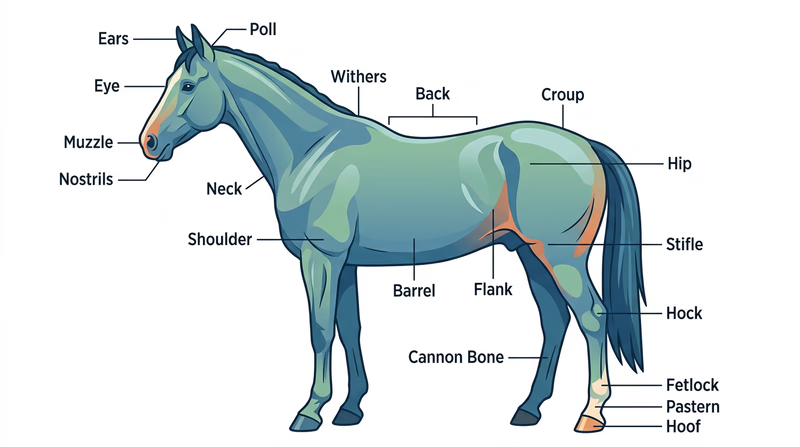
Head and Face
The ears help the horse hear and also show attention and mood. The eyes are set wide on the head, giving the horse broad side vision. The nostrils bring in air during work and can widen when the horse is excited or exercising. The muzzle is the soft area around the nose and lips that helps the horse explore food and objects.
Neck and Topline
The poll is the area just behind the ears at the top of the head. It matters in flexion and comfort when handling a halter or bridle. The crest is the top curve of the neck. The withers are the bony ridge at the base of the neck where saddle fit becomes very important.
Shoulder, Back, and Barrel
The shoulder helps control the reach and smoothness of the stride. The back carries the rider and saddle. The barrel is the main ribcage area where the lungs and digestive organs sit. The girth area behind the elbows is where a saddle is secured.
Hindquarters
The croup is the top of the hindquarters. The hip and stifle help power the horse forward. The flank is the area between the barrel and the hind leg. The tailhead sits at the top of the tail and can tell you a lot about tension or relaxation.
Lower Legs and Feet
The knee and hock are major joints in the front and hind legs. The cannon bone is the long lower leg bone between major joints. The fetlock works like a spring when the horse moves. The pastern helps absorb shock, and the hoof protects the structures inside the foot and supports the horse’s weight.
Fifteen Useful Parts to Learn First
A strong starter list for counselor discussion
- Muzzle: Used for sensing, eating, and drinking.
- Nostrils: Bring in air, especially during exercise.
- Poll: Important in head position and comfort in the bridle or halter.
- Neck: Helps with balance and movement.
- Withers: Key landmark for saddle fit.
- Shoulder: Affects length and freedom of stride.
- Back: Carries the rider and tack.
- Barrel: Houses major organs and expands with breathing.
- Flank: Area to watch for breathing effort and sensitivity.
- Hip: Major part of the hindquarter power system.
- Stifle: Large hind-leg joint important for propulsion.
- Hock: Powerful joint that helps the horse push off the ground.
- Cannon bone: Supports the lower leg.
- Fetlock: Flexible joint that absorbs impact.
- Hoof: Supports the horse and protects the foot.
Connect Structure to Function
Requirement 2 is not only about pointing to parts on a diagram. It asks you to discuss what each part does. That means thinking in action.
A horse reaches forward from the shoulder. It carries weight through the back. It pushes from the hindquarters. It balances with the neck and head. It stays sound only if the lower legs and hooves can absorb the repeated shock of moving a large body.
If a rider understands these functions, grooming and tack placement improve right away. For example, knowing where the withers are helps you understand why a saddle pinching there is a problem. Knowing the poll helps you handle the bridle more gently. Knowing the fetlock and pastern helps you notice swelling or cuts in places that take a lot of strain.
How to Study Efficiently
Try learning the horse from front to back and top to bottom. Touch or point to the part, say the name out loud, then explain one simple function. Repeating that pattern is better than staring at a diagram and hoping it sticks.
You can also sketch a horse shape in a notebook and label it from memory. Then compare your attempt to the official sheet. That shows you quickly which parts you know and which ones you still mix up.
University of Minnesota Extension — Horse Anatomy Basics Overview information that helps connect anatomy with daily horse care and observation.In the next requirement, you will compare breeds. Knowing anatomy first makes that easier because many breed features are really differences in body shape, movement, and build.