Req 5 — Conformation, Lameness, and Unsoundness
Two horses can both be healthy, kind, and willing, yet move very differently because of how they are built. That overall build is called conformation. Riders pay attention to it because structure affects balance, athletic ability, comfort under saddle, and how much strain ends up on joints, tendons, and feet.
What Conformation Means
Conformation is the way a horse’s body is put together. It includes proportions, angles, muscling, topline, leg alignment, and how well the parts of the horse work together. Good conformation does not mean a horse is perfect. It means the horse is built in a way that supports the kind of work it is asked to do.
A horse with balanced conformation may move more efficiently and stay comfortable longer. A horse with poor angles or uneven structure may still be useful and kind, but it may need more careful management.
Why Conformation Matters
Conformation affects:
- Movement: Long, sloping shoulders often support freer stride.
- Balance: A horse built downhill may carry weight differently than one built more level.
- Soundness over time: Crooked legs or poor hoof-pastern angles may increase strain.
- Suitability for a job: A ranch horse, jumper, trail horse, and draft horse are not all built the same way.
What People Notice in Conformation
Common features discussed when evaluating a horse
- Topline balance: How neck, back, and hindquarters fit together.
- Shoulder angle: Affects stride and reach.
- Back length: Can affect strength and saddle fit.
- Leg alignment: Whether the limbs track straight and support the body evenly.
- Hoof and pastern angle: Important for shock absorption and long-term comfort.
Lameness vs. Unsoundness
These two words are related, but they do not mean exactly the same thing.
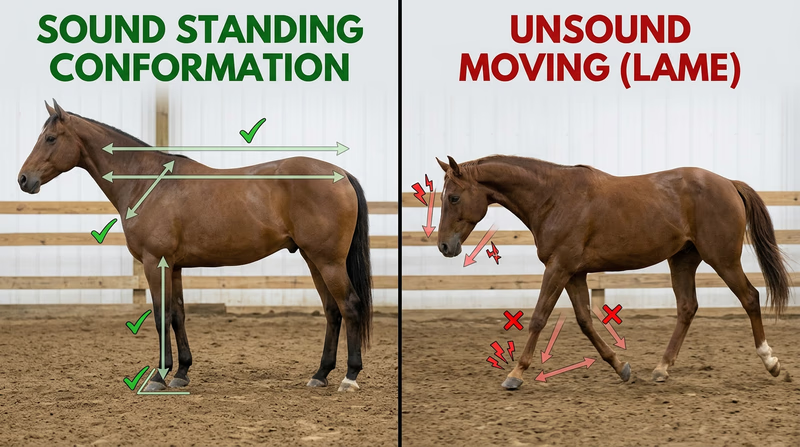
Lameness
Lameness means there is a problem with movement, usually caused by pain, injury, or mechanical difficulty. A lame horse may bob its head, shorten a stride, drag a toe, refuse a turn, or place less weight on one leg. Lameness is often something you notice while the horse is walking or trotting.
Unsoundness
Unsoundness is a broader term. It means a horse has a physical condition that affects usefulness or fitness for work. A horse might be unsound because of a chronic leg problem, poor eyesight, breathing trouble, or another lasting condition. Not every unsoundness is obvious in every step, but it still affects the horse’s ability to do its job properly.
So a lame horse is showing a movement problem right now. An unsound horse has a broader condition that makes it less fit for work, whether or not the issue is dramatic in that moment.
How Riders Notice Lameness
You are not expected to diagnose the cause like a veterinarian. You are expected to notice warning signs.
Look for:
- Uneven rhythm when the horse walks or trots
- Head bobbing, especially at the trot
- Shorter stride on one side
- Refusal to turn or move forward freely
- Swelling, heat, or tenderness in a leg or hoof
- A horse that suddenly acts unwilling under saddle
Use the Right Mindset
Conformation is not about criticizing a horse. It is about understanding strengths and limits. A horse can be a wonderful partner without being built like a champion show horse. Good horsemanship means matching the horse’s body, training, and health to a reasonable job.
University of Kentucky — Evaluating Horse Conformation A practical overview of how horse build affects balance, movement, and long-term usefulness.Feet support every part of a horse’s movement, so it makes sense that the next requirement focuses on hoof care and why some horses wear shoes.