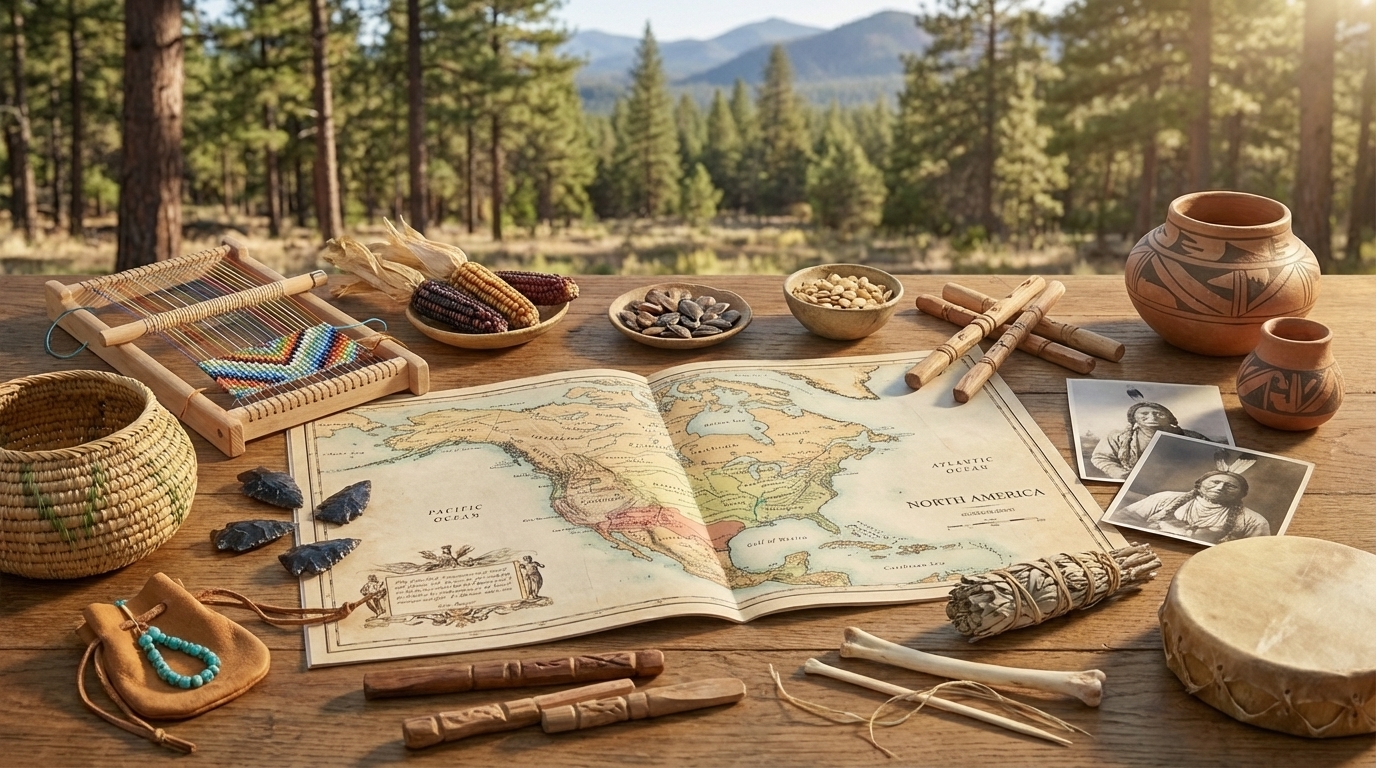
Indian Lore Merit Badge — Complete Digital Resource Guide
https://merit-badge.university/merit-badges/indian-lore/guide/
Introduction & Overview
Indian Lore is really about people, place, memory, and respect. This badge asks you to learn how many Native nations developed different ways of living across North America, and how those traditions still shape communities today. If you do it well, you will come away with something more useful than a list of facts: you will learn how to ask better questions, listen carefully, and notice the connection between land and culture.
Then and Now
Then
Long before the United States existed, Native nations across North America had well-developed governments, trade networks, farming systems, spiritual traditions, and languages. People adapted to deserts, forests, plains, mountains, rivers, coastlines, and Arctic lands in different ways. A pueblo in the Southwest, a plank house on the Northwest Coast, an earth lodge on the Plains, and a wigwam in the Northeast all reflect careful knowledge of climate, materials, food, and community life.
Early European visitors often misunderstood what they saw. They sometimes treated Native peoples as if they were all the same, even though hundreds of distinct nations lived on the continent. Studying Indian Lore helps correct that mistake. It teaches you to look for what makes each nation unique rather than forcing everyone into one story.
Now
Native nations are still here, and they are not frozen in the past. Tribal governments make decisions, artists create new work, language teachers rebuild fluency, and families pass on ceremonies, stories, and community responsibilities. Some people live on reservations, some in villages, some in cities, and many move between several communities while staying connected to their nation.
That is why this badge works best when you hold two ideas at the same time: traditions matter, and Native communities are living communities. You are not just studying history. You are learning about people whose cultures continue to grow, adapt, and lead today.
Get Ready!
Bring curiosity and humility to this badge. You do not need to become an expert on every nation. You do need to slow down, use good sources, and treat each community as specific, living, and deserving of respect.
Kinds of Indian Lore
Indian Lore covers several connected ways of learning about Native nations. You will use all of them in this guide.
Cultural Regions
One way to begin is by looking at cultural areas such as the Arctic, Northwest Coast, Plateau, Great Basin, California, Southwest, Plains, Northeast, and Southeast. These regions are useful starting points because they help you notice how climate, geography, and available materials shaped homes, clothing, transportation, and foodways. They are only a starting point, though. Real nations do not all fit neatly into one box.
Language and Place Names
Languages carry history, humor, worldview, and memory. Place names can tell you what a river, mountain, or settlement once meant to the people who lived there. When you study Native words, you are not just memorizing vocabulary. You are seeing how language connects people to land.
Leadership and Community Life
This badge also asks you to notice how Native nations organize themselves. Government, clan relationships, family responsibilities, religious beliefs, and customs all shape community life. Different nations answer those questions differently, which is one reason broad stereotypes fall apart fast.
Museums and Living Events
Some of the best learning happens when you see objects, art, dance, music, and community life in context. A museum can help you study materials and craftsmanship closely. A contemporary gathering shows you that Native traditions are still active and meaningful right now.
Now you are ready to start with the broad picture before focusing on one nation in depth.
Req 1 — Cultural Areas
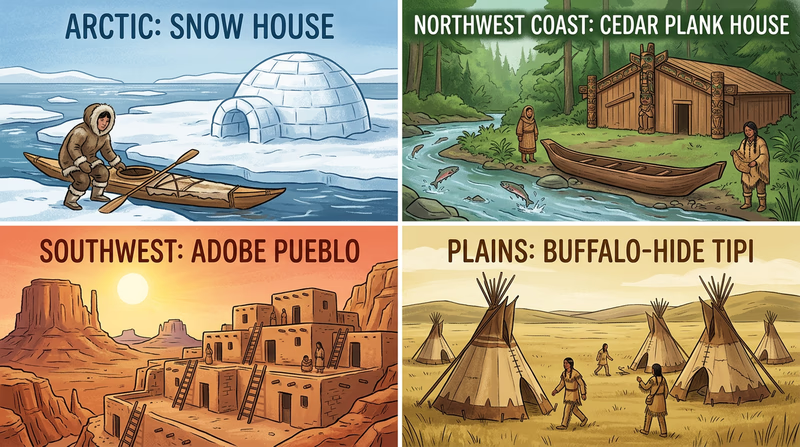
A kayak built for Arctic waters, a buffalo-hide tipi on the Plains, and a multistory pueblo in the Southwest did not appear by accident. Each one reflects a different environment, different materials, and different ways communities met daily needs. That is the heart of cultural areas: they help you compare how Native nations adapted to different places without pretending every nation was identical.
A good way to handle this requirement is to learn the broad regions first, then attach memorable details to each one. Focus on climate, housing, food, transportation, arts, and community life. If you can explain how place shaped culture, you are doing the requirement well.
What to notice in each cultural area
Use the same lens for each region so your comparison stays organized- Land and climate: Is it coastal, forested, dry, mountainous, grassy, or Arctic?
- Homes and materials: What did people build with what was available nearby?
- Foodways: What was farmed, hunted, fished, gathered, or traded?
- Transportation: How did people move across water, snow, desert, or open plains?
- Arts and identity: What designs, materials, and ceremonial traditions stand out?
Commonly Taught Cultural Areas
Different books divide the map a little differently, but these are the regions Scouts most often learn:
Arctic
The Arctic includes far northern lands with long winters, sea ice, and short growing seasons. Communities relied heavily on marine mammals, fish, caribou, and careful seasonal travel. Clothing, shelter, and tools had to work in extreme cold, so skill with animal skin, bone, ivory, and snow was essential.
Subarctic
The Subarctic stretches across cold northern forests. Travel often depended on canoes in warmer months and snowshoes in winter. Many groups followed seasonal hunting, fishing, and gathering cycles through dense woodlands and lakes.
Northwest Coast
This rainy coastal region is known for cedar forests, salmon-rich rivers, and ocean travel. Large plank houses, carved poles, canoes, and rich artistic traditions all reflect abundant wood and access to the sea. Wealth and ceremony often played major roles in community life here.
Plateau
The Plateau lies inland between mountain ranges in the Northwest. River fishing, especially for salmon, was extremely important, along with seasonal gathering and trade. People adapted to a landscape of river valleys, dry uplands, and mountain corridors.
Great Basin
The Great Basin is a dry region of deserts, mountains, and inland valleys. Water sources shaped movement and settlement. Communities often lived in smaller groups and relied on deep knowledge of seeds, roots, small game, and seasonal resources.
California
California Native cultures developed in a region with major ecological variety: coastlines, oak woodlands, valleys, and mountains. Acorns were a major food in many communities, and basketry became one of the most refined art forms anywhere in North America.
Southwest
The Southwest includes deserts, mesas, and river valleys. Farming, irrigation, adobe or stone pueblos, and strong community planning are major themes. In some places, weaving, pottery, and multistory dwellings reflect long-settled agricultural life in a dry environment.
Plains
The Plains are known for grasslands, large bison herds, and long-distance travel. After horses spread through the region, mobility changed dramatically for many nations. Tipis, buffalo-hide technologies, and strong riding traditions are often associated with the Plains, though the region includes many different nations with different histories.
Northeast
The Northeast includes forests, lakes, and river systems. Wigwams and longhouses, farming, fishing, and woodland hunting all shaped life there. Confederacies and alliances are an important part of the region’s history, especially in discussions of diplomacy and governance.
Southeast
The Southeast has warm climates, rich river valleys, and a long farming tradition. Town life, ceremonial centers, mound building in earlier periods, and complex political systems are key themes. River travel and agriculture were especially important.
How to Explain What Makes a Region Unique
Do more than name the region. Build a short comparison sentence. For example: “The Northwest Coast was unique because cedar forests and ocean resources supported large plank houses, canoe travel, and major salmon fishing traditions.” That structure works for every area.
You can also compare regions directly:
- The Arctic and Southwest both required careful adaptation, but one focused on extreme cold and marine hunting while the other depended on desert farming and water management.
- The Plains and Northeast both developed strong community traditions, but the open grasslands of the Plains encouraged different travel and housing patterns than the forests of the Northeast.
- The Northwest Coast and Great Basin show how access to abundant water can produce very different lifeways than life in dry interior basins.
🎬 Video: Adapting to the Environment - How Geography Shaped Native American Cultures — Miacademy & MiaPrep Learning Channel — https://www.youtube.com/watch?v=AMjKWONNmgA
Be Careful with Generalizations
Cultural areas are a map tool, not the whole truth. Nations within the same region can still differ in language, government, religion, trade, and daily life. Borders also shifted over time. If your counselor asks follow-up questions, it is completely fine to say, “This region is a broad category, but each nation within it has its own history.”
Native Land Digital Explore Indigenous territories, languages, and treaties connected to specific places. Use it as a starting point, then follow up with tribal or museum sources. Link: Native Land Digital — https://native-land.ca/Now that you understand the broad map, the next step is to research one nation closely enough to see how a real community’s story goes far beyond a regional label.
Req 2 — Researching a Nation
Trying to cover this requirement by memorizing random facts is a fast way to get overwhelmed. A much better approach is to choose one nation, build a research frame, and gather details category by category. When you do that, the pieces start connecting: homes match climate, food matches geography, clothing matches materials, and government reflects community values.
Pick a Nation You Can Research Well
A smart choice is a nation that gives you access to strong sources. You might choose a nation connected to where you live, one represented in a museum you can visit, or one with a tribal website or cultural center that explains its history in its own voice.
Good starting questions include:
- Is this nation tied to my state or region?
- Can I find information from the nation itself, a museum, or the Library of Congress?
- Can I explain both traditional life and life today?
- Can I learn enough to avoid treating the nation like a stereotype?
Build Your Research Outline
This requirement already gives you the outline. Turn each category into a heading in your notes. That way you can see what you still need.
Research categories to cover
Make one short section in your notes for each topic- Dwellings and way of life: What kinds of homes did people build, and what was daily life like?
- Government and beliefs: How was leadership organized? What spiritual or religious traditions shaped community life?
- Family, clans, and language: How did kinship work, and what language or language family is involved?
- Clothing, arts, and foodways: What materials, styles, and food practices were important?
- Travel, games, and warfare: How did people move, play, defend themselves, or fight in different times?
- Today: Where do members of the nation live now, and how does the community continue its traditions?
Look for Connections, Not Just Lists
The strongest research reports explain why details fit together. If a nation lived near major rivers, then water travel, fishing, trade, and settlement patterns may all connect. If a nation lived in an arid region, then housing, storage, irrigation, and food preservation may all show careful planning around scarce water.
For example, if you research a farming nation in the Southeast, you might notice how rich soil supported corn, beans, and squash, which supported larger settled communities, which shaped government and ceremony. If you research a northern forest nation, birchbark canoes, seasonal hunting routes, and woodland housing might form the main pattern instead.
Tribal Government and Sovereignty
Many Scouts are surprised to learn that tribal governments are not clubs or hobby groups. Federally recognized tribes are sovereign governments with authority over their own citizens, territory, laws, and programs within the limits of U.S. law and treaties. That does not mean every nation uses the same government structure. Some have elected councils, some preserve traditional leadership roles, and many combine older traditions with modern institutions.
That is one reason this requirement matters. It teaches you to ask, “How does this nation govern itself?” instead of assuming all Native communities work the same way.
Language, Clan, and Family Life
Language and kinship often reveal a community’s worldview. Some nations organize family relationships through clans, which can shape responsibilities, marriage rules, leadership expectations, and identity. In other nations, extended family networks or village ties may matter more than clan structure. If you find a reference to clans, do not stop at the name. Ask what the clan system actually does inside community life.
Language deserves the same care. Rather than treating a language as just a vocabulary list, ask how it is being taught, preserved, or revitalized today. Many nations run language classes, immersion programs, and youth projects because language carries stories, values, and identity that do not fully translate into English.
A Simple Way to Present It to Your Counselor
Try a structure like this:
- Who you chose and where they live or lived.
- How geography shaped homes, food, clothing, and movement.
- How government, beliefs, family, and language shaped community life.
- What arts, games, or warfare customs reveal about skill and values.
- Where and how the nation lives today.
That structure turns a long list into a clear story.
Library of Congress — Indigenous Peoples of North America A research starting point with primary sources, maps, and teaching materials that can help you gather strong background information. Link: Library of Congress — Indigenous Peoples of North America — https://www.loc.gov/classroom-materials/indigenous-peoples-of-north-america/ National Congress of American Indians — Tribal Nations and the United States A helpful overview of tribal sovereignty and why Native nations have distinct governments, histories, and identities. Link: National Congress of American Indians — Tribal Nations and the United States — https://archive.ncai.org/about-tribesIn the next requirement, you will zoom in even further by studying how language, place names, and leadership preserve memory and identity.
Req 3 — Language, Place, and Leaders
This requirement pulls together three ways Native identity stays visible in everyday life: words, place names, and people. You will learn a few real terms from a Native language, uncover Native meanings hidden in modern maps, and study leaders whose choices changed history or continue shaping it today.
- Requirement 3a helps you connect language to culture and memory.
- Requirement 3b shows how Native history is built into the geography of the United States.
- Requirement 3c asks you to notice leadership across both past and present.
Requirement 3a: Language Terms
A language is more than a code for replacing English words. It carries sound patterns, relationships, humor, values, and ways of describing the world. That is why this part of the badge works best when you learn terms from one specific language instead of collecting random words from many nations.
Start by choosing a language connected to the nation you researched in Req 2. Then look for terms that are actually useful in daily or community life: greetings, kinship words, numbers, names for natural features, animals, or polite expressions. Learn how to pronounce them if you can. Your counselor will probably care more about respectful learning than perfect accent.
How to learn your 10 terms
Build understanding, not just a memorized list- Stay with one language so your list reflects a real speech community.
- Write the word, meaning, and pronunciation help if a source provides it.
- Ask what the word is used for: greeting, family role, place, animal, ceremony, or everyday life.
- Use tribal or museum sources first whenever possible.
Be careful not to grab decorative words from social media or quote sacred terms you do not understand. The point is respectful learning, not showing off. Many languages are also in active revitalization efforts, so even learning ten simple terms can help you appreciate why language preservation matters.
Requirement 3b: Place Names
Maps are full of Native words, even when people no longer notice them. State names, rivers, counties, and towns often come from Native languages. Some describe a physical feature such as a great river, red earth, or crooked water. Others come from nation names, village names, or words filtered through French, Spanish, or English spellings.
A strong way to do this part is to start local. Look at your own state map and ask which names come from Native languages. Then expand outward if needed. Try to learn not just the claimed meaning, but also which language the name comes from and whether the spelling changed over time.
Native Land Digital Use the map to identify nations and languages connected to a location, then follow up with local tribal or historical sources for place-name meanings. Link: Native Land Digital — https://native-land.ca/Requirement 3c: Leaders
Leadership does not look only one way. Some Native leaders are remembered for diplomacy, resistance, or military leadership. Others are known for protecting language, defending treaty rights, leading tribal governments, creating art, or speaking for their communities in public life.
When choosing your five people, build a balanced list. You might include one or two historical leaders and several modern figures. Make sure you can explain why each person matters. “Famous” is not enough. Your description should connect the person to action: negotiated peace, defended land, preserved language, shaped law, led a nation, or inspired others through art or education.
A good answer might sound like this: “Wilma Mankiller of the Cherokee Nation was notable because she became the first woman elected Principal Chief of her nation and led major improvements in health, housing, and community development.” That is specific, clear, and tied to a nation.
Library of Congress — Indigenous Peoples of North America A useful place to look for primary sources and biographies when you research Native leaders and historical context. Link: Library of Congress — Indigenous Peoples of North America — https://www.loc.gov/classroom-materials/indigenous-peoples-of-north-america/Words, place names, and leaders all remind you that Native presence is not hidden or finished. Next you will look at how Native peoples shaped the lives of others and how cultural exchange changed North America.
Req 4 — Influence and Exchange
This requirement asks you to think in two directions at once. First, it asks how European settlers depended on Native knowledge to survive and adapt. Second, it asks you to notice how Native ideas, materials, foods, and activities spread far beyond the communities where they began.
- Requirement 4a is about dependence and survival.
- Requirement 4b is about adoption and influence.
- Requirement 4c is about learning through action by teaching a traditional game.
Requirement 4a: Settlers and Survival
Imagine arriving in a place where you do not know the seasons, edible plants, river routes, local climate, or farming cycle. That was the situation many European settlers faced. Native peoples already knew how to travel the land, when to plant, which foods could be preserved, how to build for local weather, and how to move through forests, rivers, wetlands, and plains.
Without Native help, many settler communities would have struggled even more with hunger, disease, exposure, and navigation. Native communities shared knowledge about corn cultivation, maple sugaring, local fishing grounds, medicinal plants, snowshoes, canoes, and survival strategies suited to specific regions. That does not erase conflict or injustice. It does show that early colonial survival often depended on Native expertise.
Requirement 4b: Things Others Adopted
This part is easier if you think in categories instead of hunting for one long list. You might describe foods, technologies, place-based skills, games, political ideas, or artistic influences.
Examples of categories include:
- Foods and crops: corn, beans, squash, maple products, wild rice, chocolate, and more.
- Transportation and outdoor tools: canoes, kayaks, snowshoes, moccasin-style footwear adapted to terrain.
- Government ideas: some scholars discuss the influence of Haudenosaunee governance on colonial political thought.
- Recreation and sports: forms of lacrosse and other stickball traditions.
- Design and craft knowledge: basketry methods, beadwork influence, regional clothing adaptations.
For your eight examples, try to explain both the thing itself and why it was adopted. Corn spread because it was productive and adaptable. Canoes spread because they worked brilliantly on waterways. Lacrosse spread because it was exciting, skill-based, and community-centered.
Make your eight examples stronger
Go beyond naming the object- Name the item or idea clearly.
- Connect it to a nation or region if you can.
- Explain what problem it solved or why people valued it.
- Describe how it changed when adopted by others.
Requirement 4c: Teach a Traditional Game
This is the most active part of the badge. Your goal is not just to run any game with a Native-sounding name. Your goal is to learn enough about one traditional game to explain where it came from, how it is played, and how to teach it respectfully.
Many traditional Native games build agility, teamwork, memory, balance, or strategy. Some games had ceremonial importance or were tied to training and community gatherings. Because of that, start with a game that is well documented and appropriate to teach in a Scout setting. Then keep your version simple, safe, and clearly explained.
By now you have moved from broad maps to specific communities and real influence. The final requirement lets you choose between two hands-on experiences: studying museum collections or attending a contemporary Native gathering.
Req 5 — Choose Your Experience
You must choose exactly one option for this requirement. Both paths are good, but they teach different skills. One trains your eye for objects, materials, and interpretation. The other teaches you how to observe a living community event with good etiquette and attention.
Your Options
- Req 5a — Museum Visit: Visit a museum in person or online, study at least two exhibitions, and identify artifacts by nation, shape, size, and use. This option strengthens close observation and note-taking.
- Req 5b — Contemporary Gathering: Attend a present-day Native gathering, learn proper etiquette, and discuss what you observed. This option strengthens respectful participation and live cultural observation.
How to Choose
Choosing your path
Match the option to your time, access, and interests- If you have access to a good museum or virtual exhibit: Option 5a may be easier to schedule and gives you time to study objects closely.
- If you have access to a powwow, fair, festival, or community event open to guests: Option 5b gives you a strong present-day experience.
- If you like detailed notes and object study: Option 5a helps you practice describing artifacts accurately.
- If you like learning from live music, dance, vendors, announcers, and community interaction: Option 5b may feel more vivid and memorable.
- What you will gain: Option 5a builds museum observation skills; Option 5b builds event etiquette and awareness of Native life today.
🎬 Video: How To Get The Indian Lore Merit Badge — Eagle Scout Mac Guzman — https://www.youtube.com/watch?v=WxUIM84_Qnc
Now pick one path and get ready to observe carefully.
Req 5a — Museum Visit
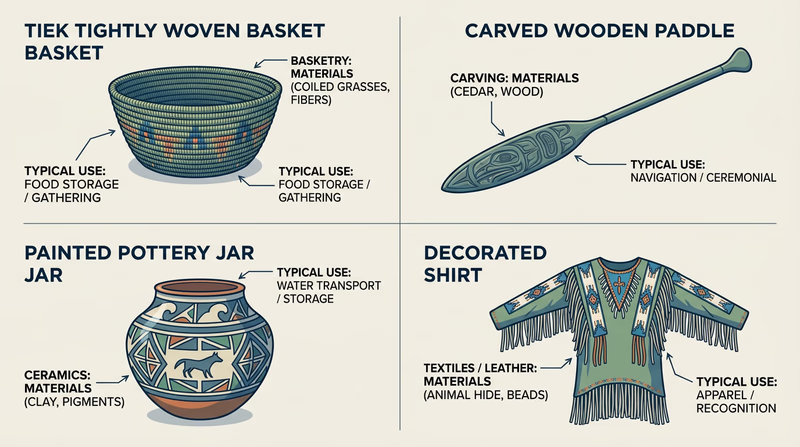
A museum case can look quiet at first glance, but it is full of clues. The shape of a bowl, the weave of a basket, the curve of a canoe paddle, or the design on a shirt can tell you about materials, climate, travel, trade, and ceremony. This requirement is really about learning to observe carefully instead of walking past objects too fast.
What to Look For
Pick two exhibitions or collection areas if possible. As you move through them, slow down and ask the same questions each time:
- Which nation or region is this object connected to?
- What material is it made from?
- About how big is it?
- What shape stands out right away?
- What was it used for: food, travel, clothing, ceremony, storage, play, or art?
- What does it suggest about daily life or environment?
If you are identifying 10 artifacts, variety helps. A stronger set might include clothing, tools, containers, art, and transportation items rather than ten objects that all serve the same purpose.
Museum note-taking guide
Use this structure for each artifact you record- Artifact name or short description
- Nation or tribe
- Shape
- Approximate size
- Material
- Use
- What you learned from it
In Person or Virtual
An in-person museum gives you scale, texture, and room layout. A virtual exhibit lets you zoom in, revisit objects, and sometimes read more detailed labels. Either way, take notes while you observe. Do not count on memory later.
When you discuss two exhibitions with your counselor, compare them. One exhibit might focus on clothing and identity, while another highlights travel, dwellings, or ceremonial life. That comparison shows you were paying attention to themes, not just collecting artifact names.
🎬 Video: The Witness Blanket: Weaving Together Healing and History — Spotlight Features — https://www.youtube.com/watch?v=67sP4EvEhyU
After a museum visit, you will probably notice objects more carefully everywhere else too. The other option for this requirement focuses less on artifacts and more on respectful behavior at a living community event.
Req 5b — Contemporary Gathering
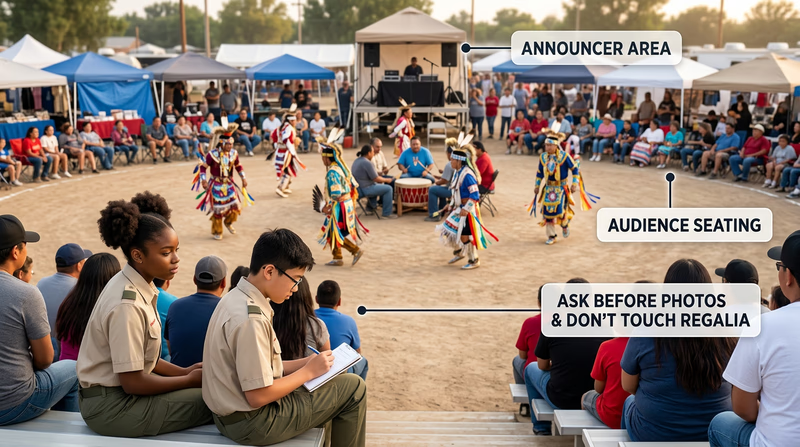
A contemporary Native gathering is not a historical reenactment. It is a real community event with its own purpose, rules, and tone. Depending on the event, you may see dancing, singing, vendors, honoring ceremonies, food, regalia, social visiting, and announcements that connect the present-day community to older traditions.
The most important skill in this requirement is respectful attention. You are a guest. That means watching carefully, listening first, and following the event’s expectations.
Proper Etiquette
Etiquette can vary by nation, organizer, and event, so read the event information ahead of time if possible. In general, these are strong rules to follow:
Guest etiquette at a Native gathering
Follow local rules first if they differ- Listen to the announcer. Public instructions often explain when visitors may enter, sit, stand, or take photos.
- Ask before photographing people. Some events welcome it in certain moments, while others limit it.
- Do not touch regalia, drums, or display items unless you are invited.
- Dress neatly and act respectfully. This is not the place for jokes, costumes, or pretending to imitate what you see.
- Support respectfully. If there are vendors, artists, or food booths, treat them the way you would want your own community treated.
What to Observe
You do not need to understand everything at once. Choose a few things to notice well:
- What was the purpose of the event?
- Which parts seemed ceremonial, competitive, social, or educational?
- What did the announcer say that helped you understand what was happening?
- What sounds, colors, movements, and symbols stood out?
- How did people show respect for elders, veterans, dancers, singers, or the host community?
- What did the event show you about Native life today?
The last question matters most. Your discussion with your counselor should make clear that Native cultures are living cultures, not museum pieces.
🎬 Video: Celebration of Powwow | The Living History of Native American Gatherings — NBC News — https://www.youtube.com/watch?v=N2CmYbpjIz8
A live event can challenge stereotypes faster than any textbook because you see people leading, creating, honoring, teaching, and celebrating in the present tense. That is a strong way to end the badge.
Extended Learning
A. Congratulations
You finished a badge that asks for more than memorization. You practiced comparison, research, observation, and respectful listening. If you keep going, Indian Lore can change the way you read maps, visit museums, and understand the people and places around you.
B. Deep Dive: Learn Your Local Indigenous History
One of the best next steps is to study the Native history of the place where you live. Start with your town, county, or watershed and ask which nations are connected to that land. Then ask harder questions: Which language families are tied to the area? Were there treaties? Forced removals? Reservations? Urban Native communities today? Schools often skip those local details, but local history is where the subject becomes real.
A strong project is to compare three layers of the same place. First, learn the Indigenous name or names for the area if you can find them. Second, study the colonial and state history that changed the area. Third, look at what Native presence there looks like now through tribal governments, cultural centers, language programs, public art, or annual events. That three-layer approach helps you avoid a flat “then versus now” story.
You can also connect this work to Scouting. A troop campout, service site, or favorite trail all sit somewhere with Indigenous history. Knowing that history does not solve everything, but it makes you more aware of whose stories shaped the land before you arrived.
C. Deep Dive: Study Native Art as Problem-Solving
It is easy to look at baskets, beadwork, pottery, carving, or weaving and think only about decoration. Look again. Native arts are often engineering, storage, identity, memory, and teaching all at once. A tightly woven basket may reflect knowledge of what must be carried and how small seeds behave. A parka or moccasin design may reveal climate, terrain, and available materials. A carved paddle, cradleboard, or fish trap can show generations of testing and improvement.
Try choosing one object type and studying it across several nations. For example, compare baskets from California, pottery from the Southwest, or canoes from different coasts and river systems. Ask what stays the same and what changes. Which materials are local? Which shapes fit the job best? Which patterns carry identity or status? This turns art into evidence of design thinking.
If you like making things, this is also a great way to connect with another badge. Wood Carving, Basketry, Pottery, Leatherwork, and Art all become richer when you compare your own making process to the deep knowledge Native makers developed over centuries.
D. Deep Dive: Follow Language Revitalization Efforts
Many Native communities are rebuilding language fluency after generations of pressure from boarding schools, forced assimilation, and language loss. That makes language revitalization one of the most important stories in Native life today. Some communities run immersion schools. Others record elders, build dictionaries, create apps, or hold family language nights. None of that is just about vocabulary. It is about identity, belonging, and cultural continuity.
You can follow this work respectfully by learning from public language programs, museum partnerships, or tribal education pages. Pay attention to how communities describe their goals. Some focus on everyday conversation. Others focus on ceremonial knowledge, youth teaching, or returning traditional place names to the landscape. The key lesson is that language work is community work.
This deep dive also sharpens your thinking about history. If a language nearly disappeared in one generation and then begins returning in the next, you can see both the damage of past policies and the strength of community leadership today.
E. Real-World Experiences
- Visit a tribal museum or cultural center. Smaller local museums can be especially powerful because they often connect directly to one nation instead of trying to cover all Native history at once.
- Attend a public lecture or exhibit opening. Universities, libraries, and museums sometimes host Native artists, historians, and educators.
- Explore your state’s Native history sites. Battlefields, missions, trading posts, village sites, and treaty locations all become more meaningful when you ask whose story is being told.
- Watch for Native arts markets or public festivals. These can help you experience living creativity, not just historical collections.
- Look for language or story programs. Some libraries and museums host public sessions led by Native educators.