Insect Study Merit Badge — Complete Digital Resource Guide
https://merit-badge.university/merit-badges/insect-study/guide/
Introduction & Overview
A meadow can sound quiet until you stop and notice what is really happening. Bees are visiting flowers, ants are carrying food, dragonflies are patrolling the air, and beetles are breaking down dead wood under your feet. Insect Study helps you see that tiny animals are doing huge jobs in almost every habitat on Earth.
This badge turns you into a better observer. You will learn how to tell insects from other small creatures, follow their life cycles, watch them in the field, and understand how they affect farms, forests, gardens, and people. Once you begin noticing insects, hikes, camps, and even your backyard become much more interesting.
Then and Now
Then — Curiosity, Cabinets, and Hand Lenses
People have been studying insects for centuries. Early naturalists often collected specimens in jars and cabinets so they could compare wing shapes, mouthparts, and body segments. Before cameras and field apps existed, careful drawings and pinned collections were the main way to identify species and share discoveries.
That older style of insect study taught scientists a lot. It helped them organize insects into groups, describe new species, and understand how insects live. But it also relied heavily on collecting, even when observation alone might have been enough.
Now — Observation, Conservation, and Citizen Science
Today, insect study includes field notebooks, digital photography, community science projects, and habitat restoration. A Scout can photograph a bee on a flower, identify it with a field guide or app, and then learn whether that insect is a pollinator, a predator, or part of an important migration.
Modern insect study also asks a bigger question: how do we learn about insects without harming the places they live? That is why this badge connects science with ethics, safety, and conservation. You are not just learning names. You are learning how to observe living systems responsibly.
Get Ready!
You do not need to be an expert to start. You just need patience, curiosity, and a willingness to look closely at the world around you. By the end of this guide, you will have the tools to notice details most people walk right past.
Kinds of Insect Study
Insect study is much broader than catching bugs in a net. Here are some of the main ways people explore this field.
Field Observation
This is the heart of the badge. You watch live insects in their habitats and record what you see. Field observation teaches patience and attention to detail. It also helps you notice behavior, such as feeding, pollinating, nesting, or hunting.
Anatomy and Identification
Some insect study focuses on body structure. You learn how to recognize the head, thorax, abdomen, antennae, legs, and wings, then use those clues to sort insects into major orders. This is the part that helps you answer, “What am I looking at?”
Life Cycles and Metamorphosis
A caterpillar and a butterfly can look like two completely different animals, but they are stages of the same insect. Studying life cycles shows how insects grow, change, and survive. It also explains why some insects damage crops in one stage and pollinate flowers in another.
Social Insects
Some insects live alone, but others build colonies with queens, workers, brood chambers, and shared tasks. Ants, termites, and many bees show what happens when tiny animals work together like a super-organism.
Conservation and Human Connections
Insects pollinate crops, recycle nutrients, feed birds and fish, and sometimes create big challenges for people. Studying them means learning both their benefits and the problems they face, from habitat loss to pesticide exposure.
Ready to begin? Start with the most important rule for any field naturalist: stay safe while you are learning.
Req 1 — Ants, Bees, and Field Safety
This requirement covers the two safety problems Scouts are most likely to face while studying insects: ordinary bites and stings, and rare but serious allergic emergencies. Start by learning how to avoid trouble in the field, then make sure you know what to do if someone is stung or has a dangerous reaction.
Requirement 1a
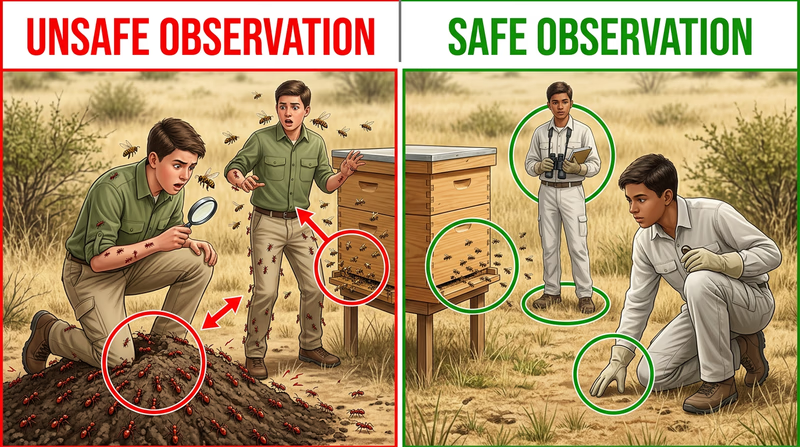
An ant hill can look harmless until you kneel in it, and a bee colony can seem calm until a Scout swats at one of its workers. Most insect-study injuries are not dramatic. They come from being surprised, getting too close, or forgetting that you are working around wild animals that defend themselves.
The two biggest risks are bites or stings and accidental disturbance of nests or colonies. Ant hazards depend on the species. Many ants just pinch or bite, but fire ants can sting repeatedly and leave painful welts. Bee hazards also vary. Honey bees usually sting when they think the hive is threatened, while some wasps and hornets are quicker to defend a nest.
To anticipate hazards, scan the area before you start. Look for ant mounds, lines of ants crossing a log, flowering shrubs full of bee activity, or hive boxes in an apiary. Listen, too. A louder buzz often means you are too close to a concentrated group of bees.
To help prevent trouble, keep these habits in mind:
Safe habits around ants and bees
Simple choices prevent most problems- Watch where you place your hands and knees: Do not grab rocks, logs, or fence posts without checking first.
- Wear the right clothing: Closed-toe shoes, long pants, and light-colored clothing help outdoors. In a hive setting, use the protective gear your leader requires.
- Move slowly: Swatting, stomping, or sudden movements can make bees defensive.
- Do not block entrances: Avoid standing directly in front of a hive opening or over an active ant trail.
- Skip scented products: Strong perfumes, lotions, or hair sprays can attract attention from some insects.
Mitigation means reducing danger once you notice it. If you find active ants where your group planned to sit, move the activity. If bees are foraging on a patch of flowers, give that area space. If someone in the group has a known allergy, make sure leaders know it before the outing begins and know where that person’s medicine is stored.
Responding well matters just as much as preventing the problem. If you are bitten or stung, leave the area first so you are not stung again. Wash the spot if you can. A cold pack can help with pain and swelling. If a honey bee stinger is left in the skin, remove it quickly by scraping sideways with a fingernail, plastic card, or similar flat object. Then keep watching for signs that the reaction is becoming more serious.
🎬 Video: Insects, Bites, and Stings (video) — https://www.youtube.com/watch?v=-_c7225EkbA
Requirement 1b
A sting is not automatically an emergency, but it is never something to ignore. This requirement asks you to know the difference between a local reaction and a whole-body allergic reaction.
A local reaction happens at the sting or bite site. You might see redness, swelling, itching, burning, or pain. That is common. Prevention starts with the same habits you learned in 1a: staying alert, keeping distance from colonies, wearing suitable clothing, and avoiding rough handling of equipment or habitat.
Basic treatment for a normal sting or bite is straightforward. Move away from the insects. Remove a honey bee stinger if one is still present. Wash the area with soap and water. Use a cold pack wrapped in cloth to reduce swelling. If itching is the main problem, an adult may help with an over-the-counter treatment approved for that person.
Ant bites can be different from bee stings. Fire ants often grab the skin with their jaws and sting several times in a circle. That can leave multiple raised spots that later form small blisters. Scratching can break the skin and raise the risk of infection, so keeping the area clean matters.
The most serious health concern is anaphylactic shock, often shortened to anaphylaxis. This is a severe allergic reaction that affects the whole body. It can happen quickly, sometimes within minutes. Warning signs include trouble breathing, wheezing, swelling of the lips or throat, dizziness, fainting, rapid pulse, vomiting, or a feeling that something is very wrong.
Even if symptoms improve after epinephrine, the person still needs medical care. A second wave of symptoms can happen later.
This requirement connects strongly to First Aid skills. If you have also worked on the /merit-badges/first-aid/ badge, you already know that recognizing the emergency early is one of the most important steps.
🎬 Video: Anaphylactic Shock: Symptoms, Triggers, and Life-Saving First Aid Tips ( video) — https://youtu.be/tIQGcVpAFvM?si=FQuPgmqx0GSGi_L9
🎬 Video: First Aid for a Bee Sting ( video) — https://www.youtube.com/watch?v=Adx9mKSoBNU
Before you head into the field, make sure your group knows who has allergies, what emergency plans are in place, and how to reach help. Safe insect study starts before the first insect is ever observed.
Req 2 — Insect Anatomy and Orders
This requirement gives you the basic language of insect study. You will learn how to separate insects from other animals, compare them with spiders and millipedes, identify the main body parts, and notice the traits that sort insects into major orders.
Requirement 2a
If you can explain what makes an insect an insect, you are already thinking like an entomologist. Insects belong to a huge group of animals called arthropods, which are animals with jointed legs and an external skeleton called an exoskeleton. But not every arthropod is an insect.
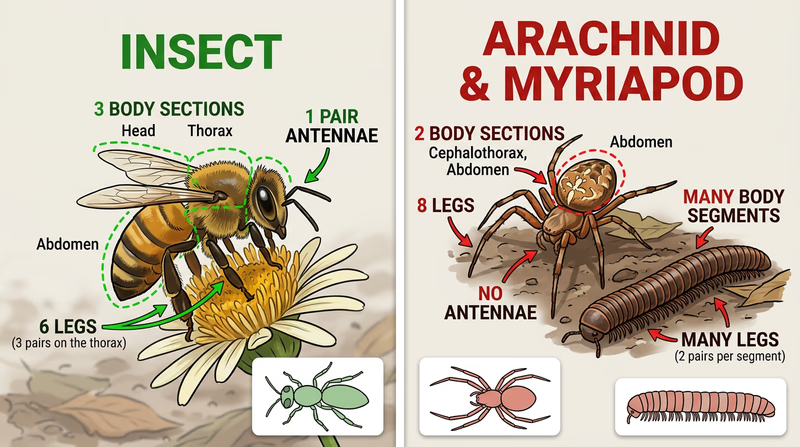
The classic insect body plan has three main body sections: head, thorax, and abdomen. Insects also have six legs, one pair of antennae, and usually one or two pairs of wings as adults. That combination is what sets them apart from vertebrates like birds and mammals, from worms and snails, and even from other arthropods.
Another big difference is growth. Insects do not grow the way mammals do. Their hard exoskeleton does not stretch, so they must molt, shedding the old outer covering so a larger one can form. Many insects also go through major life-stage changes, including metamorphosis.
You can explain this requirement by naming a few clear traits:
What makes an insect an insect?
Use these features in your counselor discussion- Six legs: Three pairs attached to the thorax.
- Three body regions: Head, thorax, and abdomen.
- One pair of antennae: Important for touch, smell, and sensing the environment.
- Exoskeleton: A hard outside covering instead of an internal skeleton.
- Often wings: Many adult insects have wings, though not all do.
🎬 Video: Insect Anatomy ( video) — https://www.youtube.com/watch?v=B4oL9P0J8eA
Requirement 2b
This part matters because beginners often call every small crawling creature a bug. In science, that is not accurate. Spiders are arachnids, millipedes belong to a different arthropod group, and neither one is an insect.
Spiders have eight legs, not six. They have two main body sections, not three, and they do not have antennae. Many spiders also have fangs and silk-producing spinnerets, which insects do not.
Millipedes look very different again. They have long bodies made of many repeating segments, and most body segments carry two pairs of legs. They also lack the three-part body plan of insects. A millipede is more like a walking train of segments, while an insect has a more clearly separated head, thorax, and abdomen.
A quick comparison can help:
| Group | Legs | Body Sections | Antennae | Other clues |
|---|---|---|---|---|
| Insects | 6 | 3 | Yes | Often wings as adults |
| Spiders | 8 | 2 | No | Spinnerets, no wings |
| Millipedes | Many | Many segments | Yes | Two pairs of legs on most segments |
🎬 Video: Insects vs Arachnids ( video) — https://www.youtube.com/watch?v=91x0CV9CkFw
Requirement 2c
For this requirement, you should be able to look at a picture, model, or real insect and identify the major parts. Start with the big three body sections.
- The head holds the eyes, antennae, and mouthparts.
- The thorax is the middle section and carries the legs and wings.
- The abdomen is the rear section, where many organs are located.
From there, learn a few more visible parts: compound eyes, simple eyes on some insects, antennae, mandibles or other mouthparts, wings, and legs. If you can point to those confidently, you are in good shape.
🎬 Video: Basic Insect Anatomy: Head, Thorax, and Abdomen (video) — https://youtu.be/bC9a35k1uFo?si=RD2MLMXIBaX72XC_
Requirement 2d
An order is a major category of insects. You do not need to memorize every insect order on Earth, but you should know that orders are sorted by traits such as wing structure, mouthparts, body shape, and how the young develop.
A few major orders show up often in basic insect study:
- Coleoptera — beetles. Front wings hardened into protective covers.
- Lepidoptera — butterflies and moths. Wings covered in tiny scales.
- Diptera — true flies. One pair of wings instead of two.
- Hymenoptera — ants, bees, and wasps. Narrow waists are common, and many are social.
- Orthoptera — grasshoppers and crickets. Strong hind legs for jumping.
- Odonata — dragonflies and damselflies. Long bodies, big eyes, strong flight.
You do not have to list every detail perfectly. What matters is that you can explain the kinds of clues a scientist uses to sort one order from another.
🎬 Video: Top 5 Insect Orders and How to Identify Them (video) — https://www.youtube.com/watch?v=h9sKpQNd8DI
By now you have the body-plan knowledge you need for later requirements. When you start observing twenty live insects in Req 4, these anatomy clues are what will help you sort them into orders instead of just calling them “little brown bugs.”
Req 3 — Life Cycles and Rearing
This requirement asks you to do two related things. First, compare two insects that grow in very different ways. Then use that knowledge in real life by raising an insect through complete metamorphosis and watching the changes happen stage by stage.
Requirement 3a
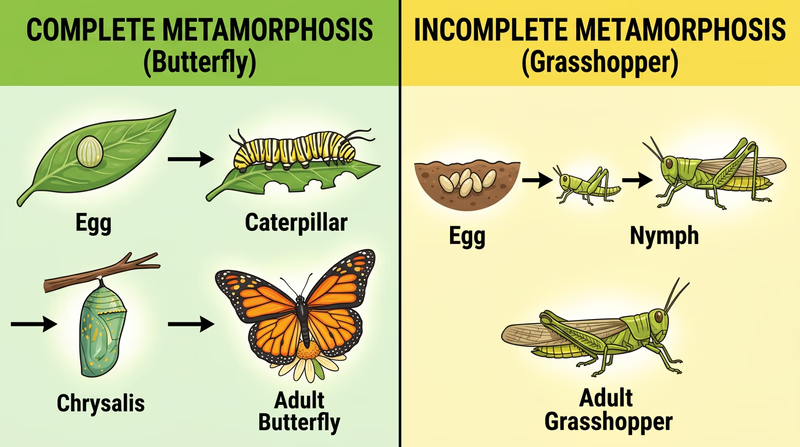
A butterfly and a grasshopper may both start as eggs, but after that their lives follow different patterns. A butterfly goes through complete metamorphosis, which means it changes through four very different stages: egg, larva, pupa, and adult. A grasshopper goes through incomplete metamorphosis, which means it changes more gradually: egg, nymph, and adult.
The butterfly’s larva is a caterpillar. It does one main job: eat and grow. Later it forms a chrysalis, which is the pupal stage. Inside that stage, the body is reorganized in a dramatic way before the adult butterfly emerges.
A grasshopper develops in a less dramatic-looking pattern. The young stage is called a nymph. A nymph already resembles a small wingless version of the adult. With each molt it grows larger, gains more developed wings, and becomes more like the final adult form.
The biggest difference is that the butterfly has a pupal stage and the grasshopper does not. Another important difference is appearance. A caterpillar looks nothing like an adult butterfly, while a grasshopper nymph already looks like a miniature adult.
🎬 Video: The Life Cycle of Butterflies and Moths (video) — https://www.youtube.com/watch?v=b-ZzAuda8dU
🎬 Video: The Life Cycle of a Grasshopper! (video) — https://www.youtube.com/watch?v=a9awFvTafnE
Butterfly vs. grasshopper
A simple way to explain the comparison- Butterfly: Complete metamorphosis — egg, larva, pupa, adult.
- Grasshopper: Incomplete metamorphosis — egg, nymph, adult.
- Butterfly young: Caterpillar looks very different from the adult.
- Grasshopper young: Nymph looks like a smaller, wingless adult.
- Major change point: Butterfly transforms during the pupal stage; grasshopper changes gradually through molts.
Requirement 3b
Watching metamorphosis happen in front of you is one of the coolest parts of this badge. It also teaches patience. You are not just keeping an insect alive. You are creating a safe, suitable setup so you can observe natural development without causing harm.
A good project usually starts with a common species that can be raised legally and responsibly. Many Scouts use a caterpillar that feeds on a plant already growing nearby or a kit approved by their counselor. The key is matching the insect to the right food and habitat conditions.
Here is the general process:
- Choose a species carefully with your counselor.
- Confirm it is legal and ethical to collect or raise it.
- Provide the right food plant for the larval stage.
- Keep the container clean, ventilated, and escape-proof.
- Record changes every day so you can explain what happened.
- Release it appropriately if that is the correct and legal next step.
One of the most useful things you can do is keep a simple observation log. Record the date, what the larva ate, whether it molted, when it formed a chrysalis or cocoon, and when the adult emerged. Photos can help, but written notes matter too because they show you noticed the sequence of events.
Req 3 sets you up well for Req 4, where you will observe many live insects in the field. Once you understand how insects change over time, you become much better at recognizing why young insects and adults can look so different.
Req 4 — Observe, Record, and Interpret
This requirement is where insect study becomes real fieldwork. You will apply outdoor ethics, observe live species in their habitats, organize those observations into a scrapbook, and then think about what those insects are doing in the ecosystem.
Requirement 4a
Insect study can be low-impact science, but only if you make good choices. The Leave No Trace Seven Principles and the Outdoor Code remind you that learning about nature does not give you permission to damage it.
For insect study, the most important ideas are simple: plan ahead, stay on durable surfaces when possible, leave what you find unless collection is necessary and approved, respect wildlife, and think about how your actions affect the habitat. Flipping every rock in a stream bank, trampling wildflowers to chase butterflies, or tearing apart rotten logs just to get a closer look is bad science because it damages the very system you are trying to understand.
The Outdoor Code matters too. Being clean in your outdoor manners means not wrecking a site for the next visitor. Being careful with fire and gear means not creating avoidable hazards. Being conservation-minded means protecting habitat, not just enjoying it.
Leave No Trace Basics ( video) Introduces the core Leave No Trace ideas you can apply directly to observation, handling, and habitat protection. Link: Leave No Trace Basics ( video) — https://vimeo.com/1115216743/63b20c0b33?share=copy🎬 Video: Leave No Trace Outdoor Ethics ( video) — https://www.youtube.com/watch?v=jXO1uY0MvmQ
Requirement 4b
This is a field-observation challenge, not a race. The goal is to notice living insects where they actually belong. You are more likely to succeed if you visit several micro-habitats instead of standing in one place and hoping for twenty species.
Try looking in these places:
- flowers for bees, flies, butterflies, and beetles
- grassy edges for grasshoppers and leafhoppers
- ponds and wet ground for dragonflies and water-associated insects
- bark, leaf litter, and rotting wood for beetles and ants
- porch lights at night for moths and other nocturnal species
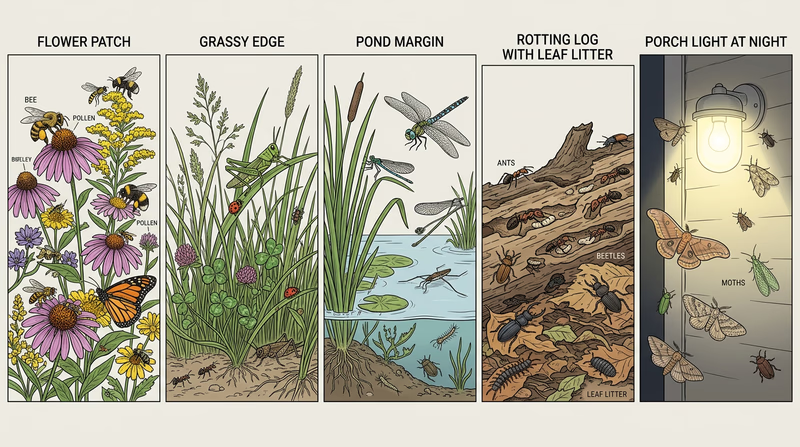
Pay attention to behavior, not just appearance. An insect perched on a stem, one carrying pollen, and one dragging prey all tell different stories. Those notes also help later when you identify ecosystem roles in 4d.
🎬 Video: Insect Orders ( video) — https://www.youtube.com/watch?v=RFMA3u-lZ3U
🎬 Video: Crash Course in Entomology: The "Big Four" Insect Orders ( video) — https://www.youtube.com/watch?v=HOhbf5JtCGo
🎬 Video: An Introduction to Insect Orders ( video) — https://www.youtube.com/watch?v=Ogh7_ITZ3Xg
Requirement 4c
Your scrapbook is the evidence that your observations were organized and thoughtful. It does not need to look fancy, but it does need to be clear. A strong scrapbook page for one insect usually includes a photo or sketch, the date and place observed, the common name, the scientific name if you can determine it, the insect order, and one or two notes about behavior or habitat.
If you cannot identify every insect all the way to species, be honest about it. It is better to label one as “syrphid fly, family Syrphidae” than to guess wrong. Your counselor wants to see careful work, not fake certainty.
🎬 Video: How to Start a Bug Collection (video) — https://youtu.be/_Ep2ronR_io?si=VWUcH8SZodx_njzz
🎬 Video: How to Make an Insect Collection: Spreading ( video) — https://www.youtube.com/watch?v=KFacqZ9CM4w
🎬 Video: Collecting Insects: Tools and Supplies (Video) — https://www.youtube.com/watch?v=CcBOm6DQ20g
🎬 Video: Insect Collecting - Tools & Tips ( video) — https://www.youtube.com/watch?v=hB9lyBkWaEE
What to include for each scrapbook entry
Keep every page useful and easy to review- Common name: The everyday name people use.
- Scientific name: Include it when you can identify it reliably.
- Order: Helps prove you covered four or more insect orders.
- Where observed: Meadow, garden, trail edge, pond, tree bark, and so on.
- Behavior note: Feeding, flying, pollinating, hiding, carrying food, or mating.
Requirement 4d
This is where you move from naming insects to understanding their jobs. Insects can be pollinators, decomposers, predators, prey, herbivores, scavengers, or parasites. Some do more than one job during different life stages.
For example, a bee may act as a pollinator. A lady beetle may be a predator that helps control aphids. A carrion beetle helps recycle dead material. A caterpillar is often an herbivore, while the adult butterfly may become a pollinator. Dragonflies are predators both as aquatic nymphs and flying adults.
The best way to answer this part is to connect each insect to something you actually observed or know about its biology. If you saw a bee moving from flower to flower with pollen on its legs, that supports its pollinator role. If you found an ant carrying a dead insect, that suggests scavenging or food transport within the colony.
🎬 Video: Why Insects Are So Crucial to Life on Earth ( video) — https://www.youtube.com/watch?v=6QwiYfqX1sg
🎬 Video: Why Are Insects Important? (website) — https://www.youtube.com/watch?v=19iEWe-qH5o
Req 4 gives you a field notebook scientist’s mindset. You are no longer just spotting insects. You are recording evidence, organizing it, and asking what each organism is doing in its environment.
Req 5a — Social vs. Solitary Insects
A praying mantis, tiger beetle, or many kinds of wasps live mostly on their own. An ant colony or honey bee hive works in a completely different way. That difference is the heart of this requirement.
A solitary insect spends most of its life without cooperating in a colony. It may find food, build a nest, lay eggs, and protect itself alone. The adult usually does not share labor with a large group or raise young as part of a community.
A social insect lives as part of an organized group. Different members may do different jobs. In many colonies there is a queen focused on reproduction, while workers handle foraging, brood care, nest building, and defense. The colony functions almost like one large living system.
The biggest traits that set social insects apart are:
Signs of social insect life
What to mention to your counselor- Living in colonies: Many individuals share one nest or hive.
- Division of labor: Different members do different jobs.
- Cooperative care of young: Adults help raise brood together.
- Communication: Social insects use touch, chemicals, sound, or dance-like behavior to share information.
- Group defense: A colony can protect food, brood, and nest space as a team.
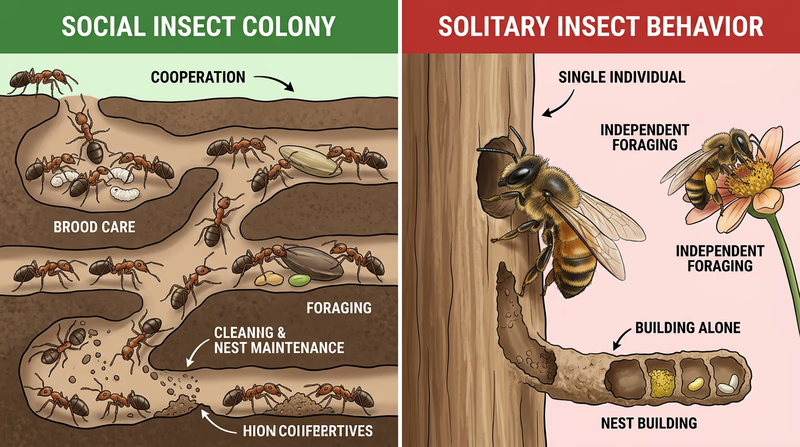
Ants and honey bees are classic social insects. Many termites are social too. By contrast, many butterflies, dragonflies, and beetles are solitary. Even if they gather in the same area, that does not automatically make them social. True social behavior means ongoing cooperation, not just being nearby at the same time.
Social Insects (website) Explains the major traits of social insects and gives examples you can compare with solitary species. Link: Social Insects (website) — https://genent.cals.ncsu.edu/bug-bytes/social-insects/ What Are Social Insects? (website) Breaks down colony behavior, caste roles, and the key features that define insect social life. Link: What Are Social Insects? (website) — https://www.thoughtco.com/what-are-social-insects-1968157This idea prepares you for Req 5b. Once you understand what social insects are, you can choose whether you want to study that teamwork in an ant colony or a bee hive.
Req 5b — Pick Your Colony Project
You must choose exactly one option for this requirement. Both options teach you how social insects organize a colony, but they do it in different settings and with different equipment, risks, and observation styles.
Your Options
- Req 5b1 — Inside an Ant Colony: Observe a formicarium, locate the queen and worker ants, and explain what the different chambers in the colony are used for. This option builds close-up observation skills and is easier to do indoors or in a classroom setting.
- Req 5b2 — Reading a Bee Hive: Study a real hive, inspect combs, find the queen, estimate brood, count queen cells, and judge how much honey is present. This option gives you direct beekeeping experience and a stronger look at how insects connect with agriculture.
How to Choose
Choosing between ants and bees
Think about safety, access, and what you want to learn- Safety: If you are allergic to bee stings, choose the ant option. The requirement itself tells you to do that.
- Equipment and support: Ant study usually needs only a formicarium and patient observation. Bee study requires protective gear and an experienced beekeeper or counselor.
- Observation style: Ants are great for watching chambers, trails, and worker roles up close. Bees are great for seeing brood patterns, food storage, and colony management in a working hive.
- What you will gain: The ant option builds strong colony-structure observation skills. The bee option introduces practical hive-reading skills and a closer look at pollinators that affect our food supply.
Whichever path you choose, focus on function. Do not just point to insects or chambers. Explain what each part of the colony is doing and why the colony needs it.
Req 5b1 — Inside an Ant Colony
- Observe an ant colony in a formicarium (ant farm). Find the queen and worker ants. Explain to your counselor the different chambers found within an ant colony.
An ant formicarium lets you see something most people miss: the inside life of a colony. Instead of watching ants only as tiny dots on the ground, you can study how they divide space, care for young, and move food through the nest.
Start by finding the queen. She is often larger than the workers, with a thicker thorax or abdomen depending on the species. In some colonies she stays deeper in the nest, especially near brood. The workers are the ones you will usually see moving the most. They forage, carry food, clean chambers, and care for larvae and pupae.
Different chambers serve different purposes. Not every ant species builds the same layout, and not every formicarium will show every chamber clearly, but you can often explain several functional areas:
- Brood chambers where eggs, larvae, and pupae are kept
- Food storage areas where food is gathered or processed
- Resting or queen areas where the queen spends much of her time
- Tunnels and travel routes that connect the chambers and allow ants to move efficiently
- Waste areas where some species place dead ants or debris away from brood
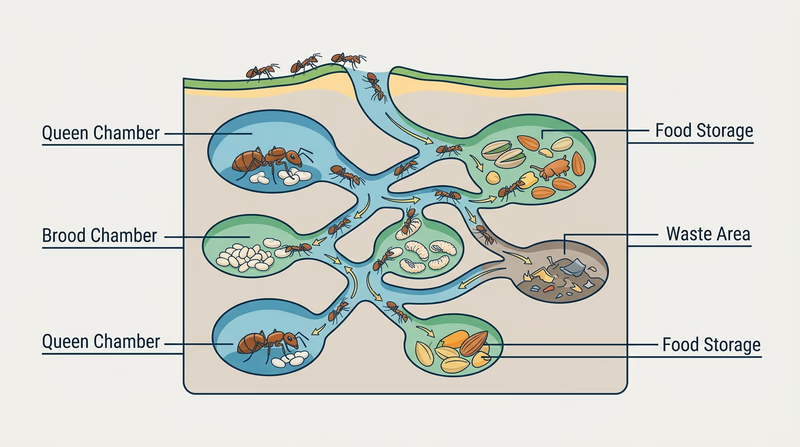
The goal is not just to point and name. Watch how ants use the space. Are workers clustering around brood? Are they carrying food toward one part of the colony? Are there chambers used more often than others?
🎬 Video: Inside the Ant Colony ( video) — https://www.youtube.com/watch?v=vG-QZOTc5_Q
This option pairs nicely with Req 5a because it gives you direct evidence of what social behavior looks like. The colony is not just a crowd. It is an organized system.
Req 5b2 — Reading a Bee Hive
- Study a hive of bees. Remove the combs and find the queen. Estimate the amount of brood and count the number of queen cells. Explain how to determine the amount of honey in the hive. (If you are allergic to bee stings, pick option 1 above.)
Opening a hive is one of the most impressive hands-on experiences in this badge, but it only works well when done with trained supervision. A bee hive is not random. Each frame gives clues about the colony’s health, growth, and food supply.
The first task is finding the queen. She is usually longer than the workers, with an abdomen that extends farther back. She may be surrounded by attendants, but she often keeps moving, so be patient. Many beekeepers inspect frames in a careful pattern so they do not miss her.
Next, estimate the amount of brood, which means eggs, larvae, and capped pupal cells. Brood shows whether the colony is actively growing. A frame with a solid, even brood pattern usually suggests a strong, productive queen. Sparse or patchy brood can mean something else is going on.
Queen cells are special cells raised for developing new queens. They are larger and shaped differently from ordinary worker cells. Counting them helps you understand whether the colony may be preparing to swarm or replace a queen.
To judge the amount of honey, beekeepers look at how much of the comb is filled and capped. Capped honey is stored food that has been processed and sealed with wax. One frame may be nearly full, partly full, or mostly empty, so estimating honey is partly a matter of comparing how much comb area is filled across the hive.
🎬 Video: Beekeeping 101 ( video) — https://youtu.be/C2h4fYL73_M?si=GSvoxnXeVd8E9MA4
What to notice on each frame
A simple inspection checklist- Queen present or not: Did you see her directly?
- Brood pattern: Dense, scattered, large, or limited?
- Queen cells: Present, absent, or concentrated on certain frames?
- Stored honey: How much comb surface is capped with honey?
- Worker behavior: Calm, defensive, clustered, or highly active?
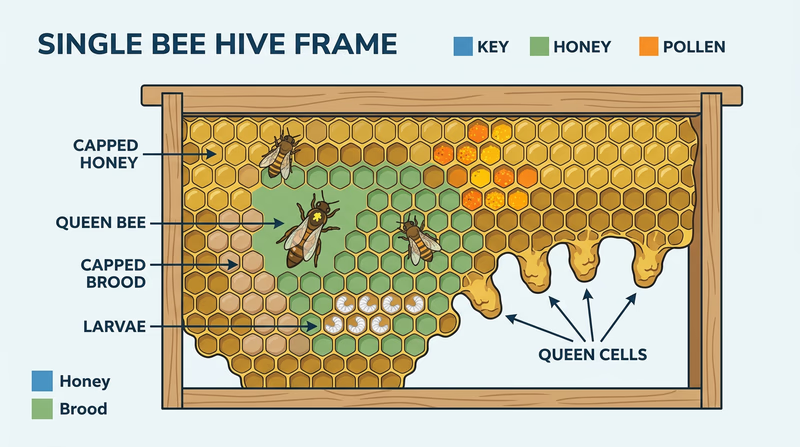
This option connects well with Req 7a, where you will learn more about bees and people. Hive study shows that bee colonies are not just interesting biology. They are also deeply connected to agriculture and food systems.
Req 6 — Insects in Ecosystems
This requirement moves from individual insects to whole ecosystems. You will look at insects as food, as hunters, and as pollinators — three roles that help explain why insect decline can affect much more than insects alone.
Requirement 6a
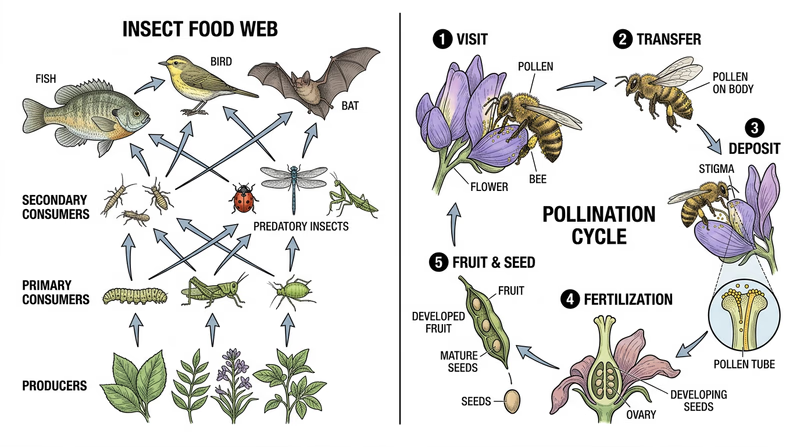
Insects are all over the food web. Some eat plants. Some hunt other insects. Some break down dead material. And many become food for animals much larger than themselves. If insects disappeared, entire food webs would wobble or collapse.
Start with other insects. Dragonflies eat smaller insects. Lady beetles eat aphids. Praying mantises ambush almost anything they can catch. That means insects are not just prey. Many are predators too.
Fish depend on insects as well, especially in streams, ponds, and lakes. Aquatic insect larvae and adult insects that fall onto the water are major food sources for many fish. That is why fly-fishing lures often imitate mayflies, caddisflies, and other insects.
Birds rely heavily on insects, especially when raising chicks. Even birds that eat seeds as adults may feed protein-rich insects to their young. Warblers, swallows, woodpeckers, and many songbirds are closely tied to insect abundance.
Mammals eat insects too. Bats catch flying insects at night. Bears, raccoons, skunks, and many small mammals dig for grubs or raid nests. Some mammals, like anteaters in other parts of the world, specialize in eating social insects.
🎬 Video: Ants and Their Role in Food Webs ( video) — https://www.youtube.com/watch?v=hRDx5HbvqvM
Requirement 6b
Pollination happens when pollen moves from one flower part to another so seeds and fruit can develop. Wind can do some of this work, but insects handle an enormous share of it. Bees are the most famous pollinators, yet butterflies, moths, flies, beetles, and wasps can pollinate plants too.
As an insect visits a flower for nectar or pollen, some pollen sticks to its body. When that insect visits the next flower, part of that pollen rubs off. That simple transfer can make fruits, vegetables, nuts, and seeds possible.
Different pollinators are matched to different flowers. A long-tongued insect may reach deep nectar tubes. A fuzzy bee body can carry lots of pollen. A night-flying moth may pollinate pale flowers that open or release fragrance after dark. That means plant and insect life are often closely linked.
🎬 Video: The Power of Pollinators ( video) — https://www.youtube.com/watch?v=eDxZojp9yNg
Why pollinating insects matter
More than just pretty flowers- Food crops: Many fruits, nuts, and vegetables depend on insect pollination.
- Wild plants: Pollinators help reproduce the plants that support habitats.
- Biodiversity: Plant reproduction supports food and shelter for many other animals.
- Human systems: Farms, gardens, and orchards benefit directly from healthy pollinator populations.
Req 6 ties closely to Req 7 and Req 8. Once you see insects as part of food webs and plant reproduction, it becomes easier to understand why colony collapse disorder, pesticides, habitat loss, and migration problems matter so much.
Req 7 — Bees, Crops, and Pest Control
This requirement looks at two big connections between insects and human life. First, bees and people depend on each other in important ways. Second, farmers and gardeners need ways to protect crops without relying only on insecticides.
Requirement 7a
A symbiotic relationship is a close connection between living things. In this case, bees benefit from flowering plants and human-managed landscapes, while people benefit from pollination. Honey bees gather nectar and pollen for food. As they do that, they pollinate crops and wild plants that humans depend on.
This relationship matters because many crops produce better yields or better-quality fruit when pollinators are active. Almonds, apples, blueberries, melons, pumpkins, and many other foods are linked to insect pollination. That does not mean every bite of food comes directly from bees, but it does mean bees support a large share of the variety in our diets.
Colony collapse disorder (CCD) is a condition in which most worker bees in a colony suddenly disappear, leaving behind the queen, food stores, and immature bees. Scientists do not point to one single cause. Instead, CCD and other colony losses appear to involve several stressors acting together.
Possible causes include:
- parasites such as Varroa mites
- diseases spread within or between colonies
- pesticide exposure
- poor nutrition from limited floral variety
- stress from transport or management practices
- habitat loss and environmental change
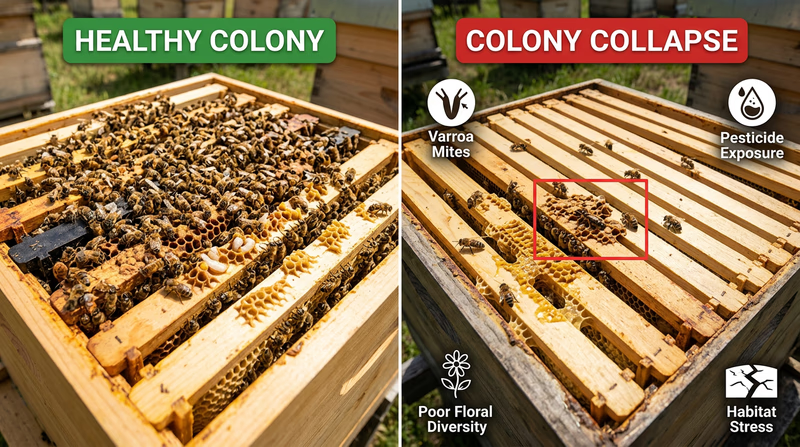
When bee colonies struggle, pollination can drop. That can reduce crop yields, raise costs for farmers, and shrink the supply of certain foods. Even when managed honey bees are brought in to help, weaker bee populations mean more pressure on the food system.
🎬 Video: Hundreds of Millions of Bees Mysteriously Dying ( video) — https://youtu.be/qWsBZbnt_4A?si=cYkszuDmpwAm3ELw
🎬 Video: Why Are the Bees Dying? (video) — https://youtu.be/Eelf07i3ESA?si=yzK6c2on91pQjr_o
Requirement 7b
Insecticides are only one tool, and sometimes not the best first choice. Farmers often use integrated pest management, or IPM, which combines several methods to reduce damage while limiting harm to helpful insects and the environment.
Three strong alternatives to insecticides are:
Biological control
This means using living organisms to control pests. Lady beetles eating aphids is one example. Parasitoid wasps and beneficial nematodes are others.
- Advantage: Can target pests while reducing chemical use.
- Disadvantage: May work more slowly and can be affected by weather or timing.
Physical or mechanical control
This includes row covers, traps, hand removal, barriers, or tilling at key times. In a garden, even knocking pests into a bucket of soapy water counts as mechanical control.
- Advantage: Immediate, visible, and often low in chemical risk.
- Disadvantage: Can take a lot of labor and may be harder on large farms.
Cultural control
This means changing how crops are grown so pests have a harder time succeeding. Crop rotation, planting resistant varieties, adjusting planting times, and improving soil health all fit here.
- Advantage: Prevents problems before they start and can work across whole seasons.
- Disadvantage: Requires planning and may not solve a severe outbreak quickly.
🎬 Video: Ultimate Pest Control Guide for Farmers (Video) — https://www.youtube.com/watch?v=AVSs-EkYTCo
🎬 Video: 4 Ways Nuclear Techniques Help Feed the World ( video) — https://youtu.be/2ef83qy2R6I?si=_MDuPzsxkk6a0Z8v
Req 7 is really about balance. People need healthy crops, but they also need healthy pollinator populations and functioning ecosystems. The best pest-control plans protect food production without treating every insect as the enemy.
Req 8 — Migration and Conservation
This requirement asks you to look at insect survival on a bigger scale. One part focuses on migration, where insects travel huge distances through connected habitats. The other focuses on threatened or endangered species and what people can do to help them.
Requirement 8a
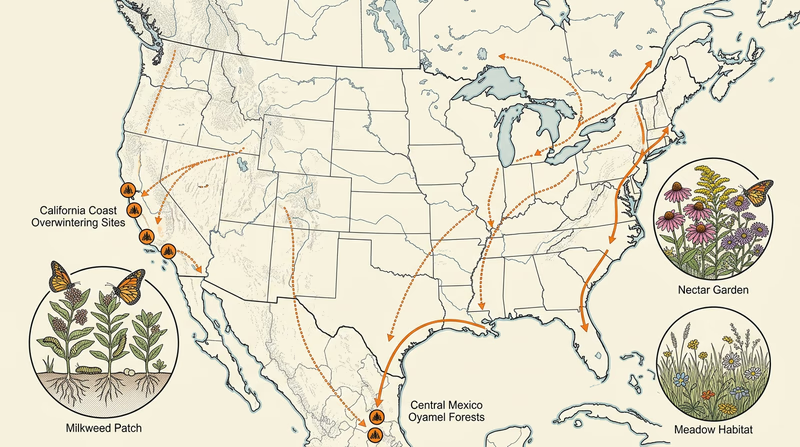
The monarch butterfly is the best-known example because its migration is astonishing. Monarchs east of the Rocky Mountains generally travel south toward central Mexico for the winter, while many western monarchs move toward the California coast. In spring, later generations travel north again. No single monarch usually completes the whole round trip. Instead, the migration is spread across several generations.
That route only works if connected habitats exist along the way. Monarchs need milkweed for caterpillars and nectar plants for adults. Remove too many of those stopover resources, and the journey gets harder.
Major challenges include habitat loss, pesticide use, extreme weather, drought, and climate shifts that affect timing and plant availability. A migrating insect may survive one stretch of the trip only to fail later if it cannot find food or shelter.
Scouts can help in practical ways. Planting native milkweed and nectar flowers, reducing unnecessary pesticide use, joining community science projects, and protecting natural areas all make a difference. Even a small pollinator garden can become part of a much larger migration network.
Ways Scouts can help migrating insects
Small actions matter when many people do them- Plant native host plants: Support caterpillars as well as adults.
- Add nectar sources: Fuel insects during migration.
- Protect habitat patches: Even roadside edges and school gardens can help.
- Share observations: Citizen science records help researchers track changes.
Requirement 8b
For this part, choose one species and learn its story well. It might be a butterfly, beetle, bee, or another insect whose numbers have dropped badly. The exact species matters less than your ability to explain the pressures it faces and what conservation actions help.
Common threats include habitat destruction, pesticide exposure, invasive species, light pollution, disease, and climate change. Some insects depend on one host plant or one habitat type, so even a small change can hit them hard. Others need very specific soil, moisture, or fire conditions.
A strong discussion with your counselor will include:
- what the species is and where it lives
- why it is threatened or endangered
- what people are doing to protect it
- what ordinary people, including Scouts, can do to help
Req 8 turns insect study into stewardship. Once you understand migration and threatened species, you are not just observing insects anymore. You are asking how to keep their populations strong enough for the future.
Req 9 — Careers or Hobbies
You must choose exactly one option here. One path asks you to research a career that uses insect-study knowledge. The other asks you to think about how insect study could become a personal hobby with goals, costs, and useful organizations.
Your Options
- Req 9a — Research an Insect Study Career: Explore jobs such as entomologist, beekeeper, pest management specialist, agricultural inspector, or conservation biologist. This option helps you think like a planner and compare training, salary, and career growth.
- Req 9b — Turn Insect Study into a Hobby: Look at ways to keep learning for fun, such as photography, butterfly gardening, beekeeping, raising moths, or community science. This option helps you build a realistic path from curiosity to regular practice.
How to Choose
Choosing the right option
Pick the one that matches what you want to explore next- If you like researching jobs and future planning: Choose Req 9a.
- If you want to imagine yourself doing this for fun right away: Choose Req 9b.
- Time and effort: Career research involves comparing education, costs, and job outlook. Hobby research focuses more on gear, training, organizations, and personal goals.
- What you will gain: Req 9a builds career-awareness skills. Req 9b helps you design a hobby you could actually start and grow.
Either way, finish the badge by thinking forward. Merit badges are not just about earning a patch. They are also a way to discover interests that might grow into a future job, volunteer role, or lifelong hobby.
Req 9a — Research an Insect Study Career
Not every insect-study career looks like a scientist with a butterfly net. Some careers happen in labs, some in crop fields, some in forests, and some in public-health work. This requirement is really about connecting the badge to real-world jobs.
Three career directions you could name include:
- Entomologist — studies insects in research, agriculture, ecology, or public health
- Beekeeper or apiculture specialist — manages bee colonies for honey, pollination, or breeding
- Pest management specialist — identifies pest problems and recommends control methods
- Agricultural inspector — helps prevent harmful species from spreading through trade and travel
- Conservation biologist — protects habitats and species, including insects and pollinators
After naming three, pick one and go deeper. Good research usually covers five areas: training, cost, job outlook, pay, and what daily work is actually like.
For example, an entomologist often needs a college degree in biology, entomology, ecology, or agriculture. Some research jobs require graduate school. A beekeeper may learn through mentoring, courses, state associations, or hands-on work rather than a single formal degree path. A pest management specialist may need licensing or certification depending on the state and the type of work.
🎬 Video: Meet an Entomologist ( video) — https://www.youtube.com/watch?v=bz1QM5Y9aqk
🎬 Video: Occupational Video - Entomologist ( video) — https://www.youtube.com/watch?v=bQ0yAZQF0mE
Questions to answer for your chosen career
Bring these notes to your counselor- What education is needed? High school, college, trade training, licensing, or graduate school?
- What does it cost to prepare? Tuition, tools, gear, travel, or exam fees?
- What is the starting point? Internships, apprenticeships, seasonal jobs, or entry-level positions?
- What are the prospects? Is demand growing, steady, or limited?
- What could advancement look like? Supervising, specializing, teaching, or running your own business?
When you talk with your counselor, be honest about whether the career appeals to you. Saying “I like the science but not the amount of schooling” or “I would enjoy the outdoor part of this job” shows you thought about the fit, not just the facts.
Req 9b — Turn Insect Study into a Hobby
A hobby is one of the best outcomes of a merit badge because it keeps going after the requirement is done. Insect study can grow into several hobbies, and they do not all require the same level of cost or commitment.
Some possible hobby paths include:
- macro insect photography
- butterfly or pollinator gardening
- moth-lighting and nighttime observation
- beekeeping
- raising caterpillars responsibly
- community science projects such as pollinator counts
- sketching and journaling insects in the field
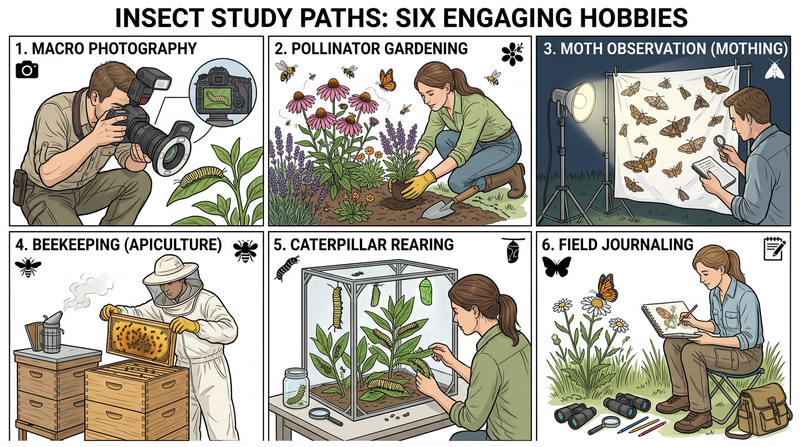
The right hobby depends on what you enjoyed most in the badge. If you liked Req 4, photography or field journaling may fit. If you were fascinated by Req 5 and Req 7, beekeeping might interest you. If you liked conservation, a pollinator garden or citizen-science project may be the best next step.
🎬 Video: Beekeeping 101 - Quick Guide for Beginners (video) — https://youtube.com/shorts/WagGi28NJzY?si=Qkhv6Bu_X6WEeff1
Research the practical side too. A photography hobby may require a camera or phone lens attachment and practice with lighting. Beekeeping requires much more: hive equipment, protective gear, training, suitable space, and often local rules or association support. Pollinator gardening may cost less at first, but it still benefits from native-plant knowledge and seasonal planning.
Build a realistic hobby plan
What your counselor will want to hear- What hobby would you pursue? Be specific.
- What would you need to learn next? Courses, guides, mentoring, or club meetings.
- What would it cost? Starter gear, plants, books, association dues, or travel.
- Who could help you? Local clubs, nature centers, beekeeping associations, or online communities.
- What are your goals? One short-term goal and one long-term goal make your plan stronger.
This is a great place to mention organizations that could help you keep going, such as local native plant societies, beekeeping clubs, youth naturalist programs, or community science projects. You do not have to become an expert right away. You just need a next step that is realistic and exciting enough to continue.
Extended Learning
A. Keep Looking Closer
Congratulations on finishing the Insect Study guide. You have already learned to observe, compare, classify, and think about how insects connect to ecosystems and people. If this badge sparked your curiosity, you have only scratched the surface.
B. Insects as Engineers
Insects do more than survive in habitats. Many of them actively shape those habitats. Ants tunnel through soil, which can improve airflow and move nutrients deeper underground. Termites and some beetles break down wood that would otherwise take much longer to decompose. Dung beetles bury waste and help return nutrients to the soil. Gall-forming insects can even change how a plant grows by triggering the plant to build a specialized structure around them.
Studying insects as ecosystem engineers changes the way you look at a trail, garden, or forest floor. A log is no longer just a fallen piece of wood. It is a food source, a nesting site, and a recycling center. A patch of bare ground may be a nesting area for solitary bees. A healthy meadow is not just colorful. It is a network of flowering plants and pollinators that support one another.
This is a great deep-dive topic because it helps explain why insect loss can change entire landscapes. If you remove pollinators, seed production changes. If you remove decomposers, nutrients cycle more slowly. If you remove insect prey, birds and fish feel the impact. Insects are small, but the work they do is not small at all.
C. Night Insects and the Hidden Half of the Day
Many Scouts finish this badge after observing mostly daytime insects. That leaves out a huge part of insect life. At night, moths, beetles, katydids, fireflies, and many other species become active. Some pollinate flowers that open only after sunset. Others avoid daytime predators by feeding and mating in darkness.
Night observation can become a hobby of its own. A porch light, a white sheet with a safe light source, or a simple walk with a flashlight can reveal species you never notice during the day. Moths alone come in an amazing range of sizes, colors, and wing patterns. Fireflies add another layer by communicating with light signals that are species-specific.
This topic also leads to a real conservation issue: light pollution. Artificial lights can confuse insects, interrupt mating, pull them away from normal habitat use, and make them easier targets for predators. Looking at nighttime insects helps you understand that conservation is not only about land. It can also involve darkness, timing, and how people manage outdoor lighting.
D. Insects, Climate, and Change Over Time
Insects respond quickly to environmental change, which makes them useful indicators. A shift in average temperature can change when species hatch, migrate, or pollinate. Drought can shrink nectar sources. Flooding can alter breeding habitat. Warmer winters may let some pest species survive in places where they used to die off.
That makes long-term observation incredibly valuable. When naturalists, Scouts, and community scientists record first sightings, migration timing, and pollinator activity year after year, they help build a picture of change. A single observation may not seem important, but thousands of observations across time can reveal major patterns.
This is one reason insect study matters beyond personal curiosity. Insects can tell us how healthy an ecosystem is and how quickly it is shifting. They are early-warning signals for larger environmental changes. If you want to keep learning, try tracking one seasonal event every year, such as the first monarch, the first firefly flashes, or the first bee activity in a certain patch of flowers.
E. Real-World Experiences
Visit a pollinator garden
Watch which insects visit different flowers and compare activity in morning, midday, and evening. You may notice that one patch attracts bees at one hour and butterflies at another.
Join a community science count
Look for local butterfly counts, bee surveys, or seasonal observation projects where your records can support real science. This is a great way to keep using the observation skills from Req 4.
Tour a nature center or insect zoo
Many nature centers have live displays, pinned collections, or staff naturalists who can help you learn identification skills. Seeing labeled specimens can sharpen your field observations.
Attend a beekeeping club meeting
Even if you do not plan to keep bees, you can learn how local beekeepers read hives and protect colony health. It is also a good way to see how insects connect to agriculture in your own community.
Build a season-long insect journal
Pick one place and visit it repeatedly so you can notice how insect life changes across spring, summer, and fall. The same trail can look completely different as species emerge, migrate, and disappear.