Req 3 — Life Cycles and Rearing
This requirement asks you to do two related things. First, compare two insects that grow in very different ways. Then use that knowledge in real life by raising an insect through complete metamorphosis and watching the changes happen stage by stage.
Requirement 3a
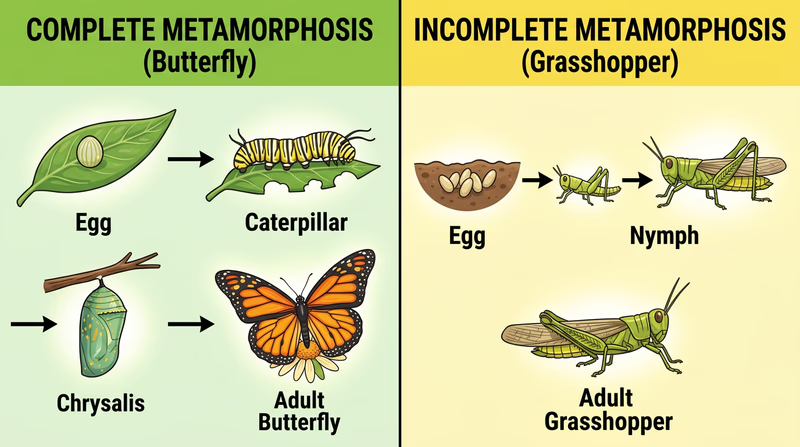
A butterfly and a grasshopper may both start as eggs, but after that their lives follow different patterns. A butterfly goes through complete metamorphosis, which means it changes through four very different stages: egg, larva, pupa, and adult. A grasshopper goes through incomplete metamorphosis, which means it changes more gradually: egg, nymph, and adult.
The butterfly’s larva is a caterpillar. It does one main job: eat and grow. Later it forms a chrysalis, which is the pupal stage. Inside that stage, the body is reorganized in a dramatic way before the adult butterfly emerges.
A grasshopper develops in a less dramatic-looking pattern. The young stage is called a nymph. A nymph already resembles a small wingless version of the adult. With each molt it grows larger, gains more developed wings, and becomes more like the final adult form.
The biggest difference is that the butterfly has a pupal stage and the grasshopper does not. Another important difference is appearance. A caterpillar looks nothing like an adult butterfly, while a grasshopper nymph already looks like a miniature adult.
Butterfly vs. grasshopper
A simple way to explain the comparison
- Butterfly: Complete metamorphosis — egg, larva, pupa, adult.
- Grasshopper: Incomplete metamorphosis — egg, nymph, adult.
- Butterfly young: Caterpillar looks very different from the adult.
- Grasshopper young: Nymph looks like a smaller, wingless adult.
- Major change point: Butterfly transforms during the pupal stage; grasshopper changes gradually through molts.
Requirement 3b
Watching metamorphosis happen in front of you is one of the coolest parts of this badge. It also teaches patience. You are not just keeping an insect alive. You are creating a safe, suitable setup so you can observe natural development without causing harm.
A good project usually starts with a common species that can be raised legally and responsibly. Many Scouts use a caterpillar that feeds on a plant already growing nearby or a kit approved by their counselor. The key is matching the insect to the right food and habitat conditions.
Here is the general process:
- Choose a species carefully with your counselor.
- Confirm it is legal and ethical to collect or raise it.
- Provide the right food plant for the larval stage.
- Keep the container clean, ventilated, and escape-proof.
- Record changes every day so you can explain what happened.
- Release it appropriately if that is the correct and legal next step.
One of the most useful things you can do is keep a simple observation log. Record the date, what the larva ate, whether it molted, when it formed a chrysalis or cocoon, and when the adult emerged. Photos can help, but written notes matter too because they show you noticed the sequence of events.
Req 3 sets you up well for Req 4, where you will observe many live insects in the field. Once you understand how insects change over time, you become much better at recognizing why young insects and adults can look so different.